
How to Backtest a Bitcoin Strategy
Learn how to backtest a Bitcoin trading strategy using a simple 50 EMA / 200 EMA crossover example. Discover which metrics matter most, common mistakes to avoid, and best practices for evaluating trading performance before risking real capital.
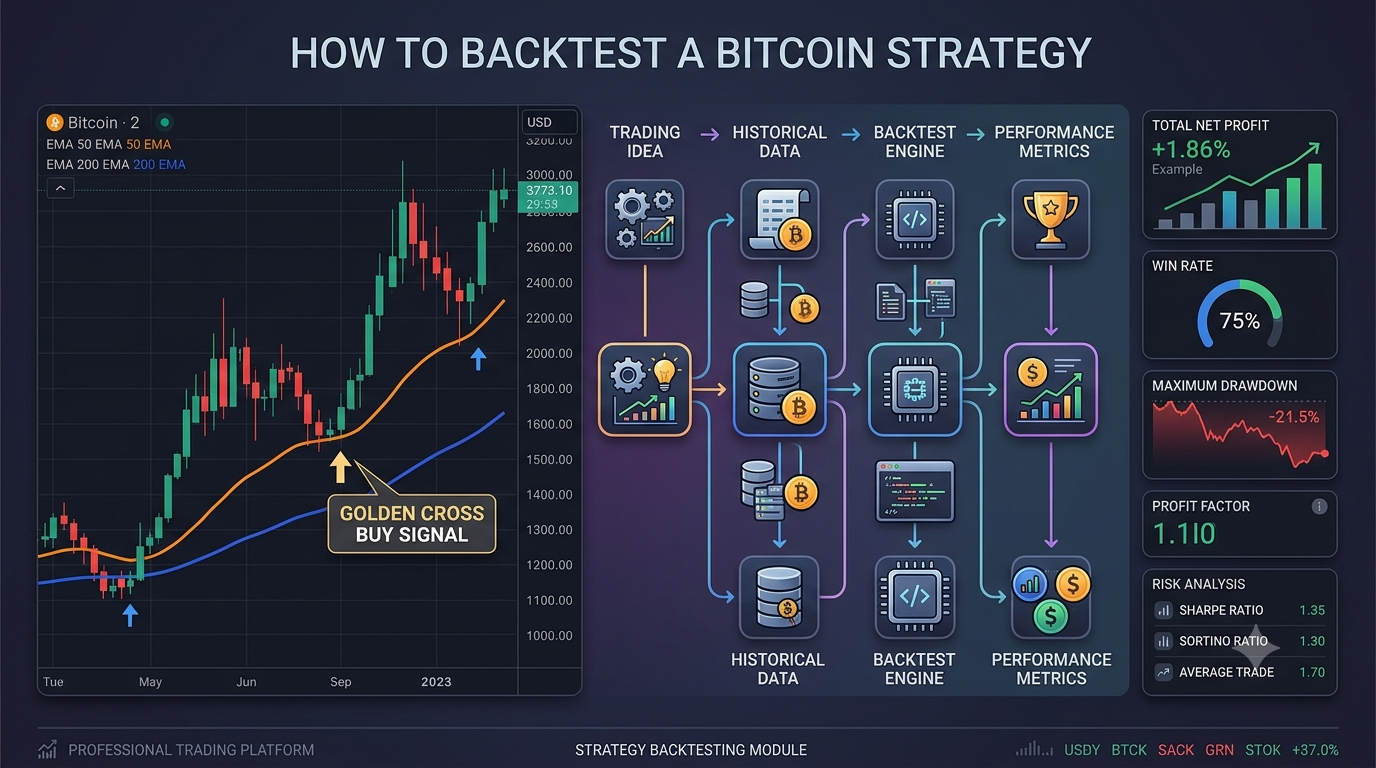
Backtesting is one of the most important skills every trader should learn before risking real money. Instead of guessing whether a strategy works, backtesting allows you to evaluate its historical performance using past market data. Whether you trade Bitcoin for the long term or prefer swing trading, a proper backtest can help you identify strengths, weaknesses, and potential risks before entering the market.
This guide explains how to backtest a Bitcoin strategy using a simple 50 EMA / 200 EMA crossover example. It also covers the most important metrics to analyze, common mistakes beginners make, and how to improve your strategy over time.
What Is Backtesting?
Backtesting is the process of applying a trading strategy to historical market data to see how it would have performed in the past. While historical performance never guarantees future profits, it helps traders determine whether a strategy has a statistical edge.
Instead of relying on emotions or opinions, traders can make decisions based on data.
Why Every Bitcoin Trader Should Backtest
- Build confidence before trading live
- Identify profitable and losing market conditions
- Reduce emotional decision-making
- Optimize risk management
- Compare different strategies objectively
- Understand drawdowns before experiencing them with real capital
Example Strategy: 50 EMA / 200 EMA Crossover
The 50 EMA and 200 EMA crossover is one of the best-known trend-following strategies.
Buy Signal
- 50 EMA crosses above the 200 EMA
- Open a long position
Sell Signal
- 50 EMA crosses below the 200 EMA
- Close the position
This strategy works best during strong market trends but may generate false signals during sideways markets.
Illustration
Figure: Simplified example showing a Golden Cross where the 50 EMA crosses above the 200 EMA. This illustration is for educational purposes only.
Preparing Your Backtest
Before running a backtest, make sure all parameters are clearly defined.
| Setting | Recommended Value |
|---|---|
| Market | BTC/USDT |
| Timeframe | 1 Day |
| Date Range | At least 3-5 years |
| Initial Capital | $10,000 (example) |
| Position Size | 100% or fixed percentage |
| Trading Fees | Exchange fees included |
| Slippage | 0.05% - 0.20% |
How to Perform a Backtest
- Select Bitcoin as your trading market.
- Choose your timeframe (Daily candles are a good starting point).
- Define your strategy rules.
- Set realistic trading fees.
- Add slippage to simulate real execution.
- Select your historical testing period.
- Run the backtest.
- Analyze every performance metric before making conclusions.
You can perform Bitcoin strategy backtests on Trade-Strategy.com/app. The platform also offers a free account, making it a good place for beginners to test strategies before trading with real money.
How to Read Backtest Results
| Metric | What It Means |
|---|---|
| Net Profit | Total strategy return. |
| Win Rate | Percentage of winning trades. |
| Profit Factor | Gross profit divided by gross loss. |
| Maximum Drawdown | Largest portfolio decline. |
| Average Trade | Average profit or loss per trade. |
| Number of Trades | Total executed positions. |
| Exposure Time | How long the strategy stayed invested. |
What Makes a Good Backtest?
- Large amount of historical data.
- Different market conditions.
- Realistic trading fees.
- Slippage enabled.
- Clear entry and exit rules.
- No manual adjustments after seeing results.
Common Beginner Mistakes
- Ignoring exchange fees.
- Ignoring slippage.
- Using only bull market data.
- Changing parameters until the strategy looks perfect (overfitting).
- Testing on very short datasets.
- Risking too much capital per trade.
Advantages of Backtesting
- Objective strategy evaluation.
- Improves trading discipline.
- Builds confidence.
- Helps compare multiple strategies.
- Supports better risk management.
Limitations of Backtesting
- Past performance does not guarantee future results.
- Market conditions change over time.
- Unexpected news events cannot be predicted.
- Real trading psychology is impossible to simulate.
- Poor quality historical data may produce misleading results.
Best Practices
- Always include trading fees.
- Use several years of historical data.
- Test different market cycles.
- Keep strategy rules simple.
- Forward test before using real capital.
- Avoid optimizing every parameter.
Final Thoughts
Backtesting is one of the most valuable habits a trader can develop. Instead of relying on opinions, social media posts, or emotions, traders can make decisions supported by historical data. Even a simple strategy like the 50 EMA / 200 EMA crossover becomes much more useful when tested properly under realistic market conditions.
Whether you are building your first Bitcoin trading system or improving an existing one, learning how to interpret backtest results is just as important as creating entry and exit rules. Start with a simple strategy, test it across multiple market cycles, analyze every metric carefully, and only consider live trading after consistent results have been achieved.
 2026-08-07
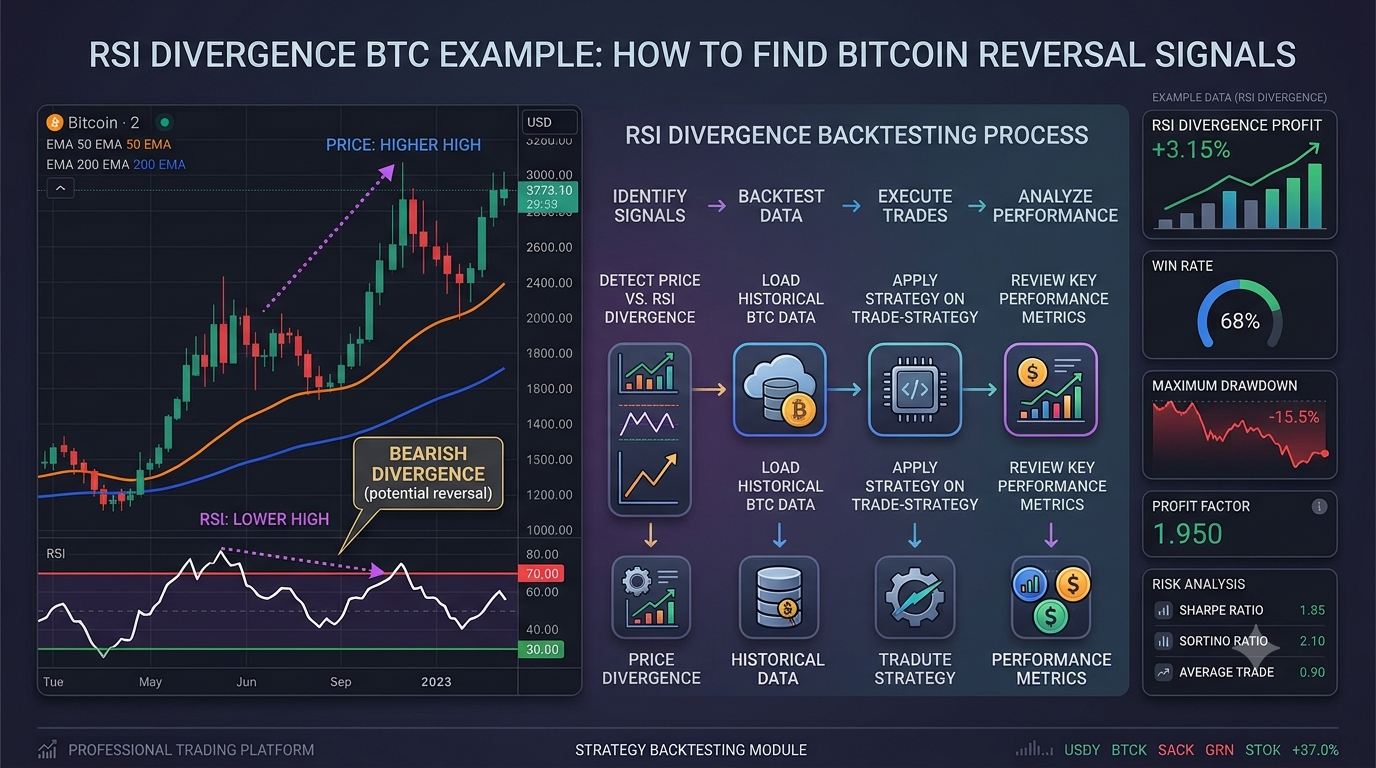
RSI Divergence BTC Example: How to Find Bitcoin Reversal Signals
Learn how to identify RSI divergence on Bitcoin charts, how traders use this signal to detect potential market reversals, and how to backtest an RSI divergence strategy using historical BTC data. This beginner-friendly guide explains real chart examples, strategy rules, performance analysis, advantages, limitations, and how to test the strategy using Trade-Strategy.com
2026-08-07BTC Paper Trading Strategy: How to Test Bitcoin Trading Without Risking Real Money
Discover how BTC paper trading works and why every beginner trader should use simulation before risking real money. Learn how to build a Bitcoin paper trading strategy, analyze historical data, evaluate backtest results, and test your ideas using Trade-Strategy.
 2026-08-06
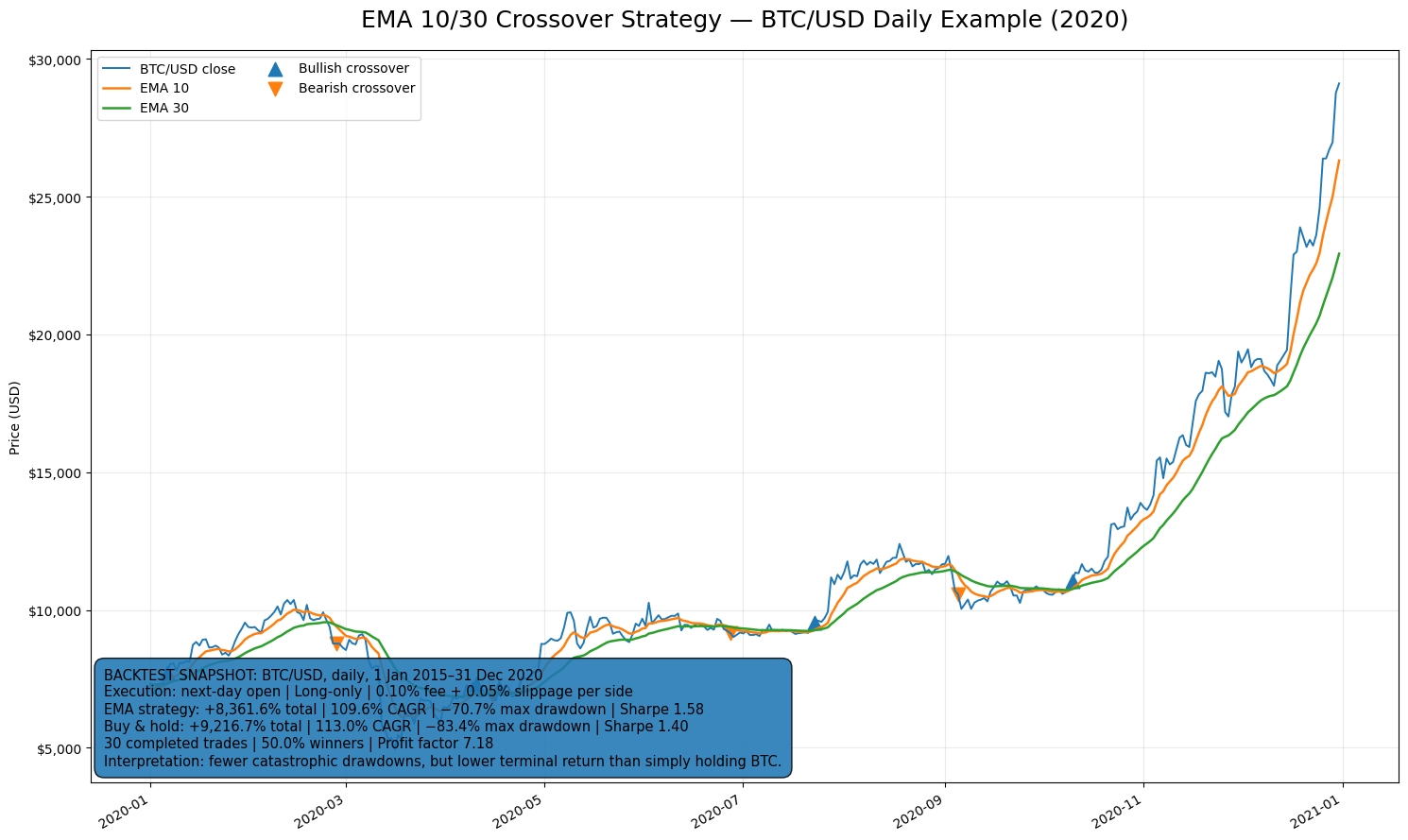
EMA 10/30 Crossover Strategy: A Beginner-Friendly Guide with Examples and Backtest Results
Learn how the EMA 10/30 crossover strategy works with real BTC/USD examples, historical backtest results, performance metrics, advantages, risks, and practical tips for beginner traders.