
BTC Paper Trading Strategy: How to Test Bitcoin Trading Without Risking Real Money
Discover how BTC paper trading works and why every beginner trader should use simulation before risking real money. Learn how to build a Bitcoin paper trading strategy, analyze historical data, evaluate backtest results, and test your ideas using Trade-Strategy.
Many beginner traders enter the cryptocurrency market with a strategy they found online, but without testing whether that strategy actually works. Paper trading is one of the safest ways to practice Bitcoin trading because it allows traders to simulate real market conditions without risking real money.
A good BTC paper trading strategy combines three important elements: a clear trading plan, historical testing, and disciplined execution. Instead of making emotional decisions, traders can follow predefined rules and collect data about their performance.
This guide explains how to create a Bitcoin paper trading strategy, how to combine paper trading with backtesting, how to analyze results, and how to prepare before moving to live trading.
What Is Bitcoin Paper Trading?
Paper trading is a method of practicing trading using virtual money instead of real capital. The trader follows the same process as live trading: analyzing charts, opening positions, setting stop losses, and tracking results.
The main difference is that no real money is involved. This makes paper trading an ideal learning environment for beginners.
For example, a trader may start with a simulated $10,000 account and test a BTC strategy for several months. Every trade is recorded as if it happened on a real exchange.
Paper Trading vs Backtesting
| Feature | Backtesting | Paper Trading |
|---|---|---|
| Data Source | Historical market data | Live market conditions |
| Execution | Simulation based on past candles | Manual or automated simulated orders |
| Main Purpose | Check if a strategy had an edge | Practice execution and discipline |
| Emotions | Limited psychological pressure | Closer to real trading emotions |
Example BTC Paper Trading Strategy
A simple strategy for beginners is a trend-following Bitcoin strategy using moving averages.
Strategy Rules
- Market: BTC/USDT
- Timeframe: Daily candles
- Indicator: 50 EMA and 200 EMA
- Entry: Buy when 50 EMA crosses above 200 EMA
- Exit: Sell when 50 EMA crosses below 200 EMA
- Risk management: Maximum 2% account risk per trade
Historical Bitcoin Example
Bitcoin has experienced several strong trend cycles where moving average strategies performed differently depending on market conditions.
For example, during strong bullish periods, trend-following systems can capture large price movements because they remain invested while the market continues higher. During sideways periods, the same strategy may produce several false signals.
This is why traders should not judge a strategy from one market event. A proper analysis should include different conditions: bull markets, bear markets, and consolidation phases.
BTC Paper Trading Chart Example
The example above shows the basic idea behind paper trading: identify a setup, simulate the trade, manage risk, and review the result.
How to Backtest a BTC Paper Trading Strategy
Before using a paper trading account, traders should test whether their strategy has historically produced acceptable results.
You can perform Bitcoin strategy backtests using Trade-Strategy.com/app. The platform can also be used with a free account, allowing beginners to test strategy ideas before risking real capital.
Basic Backtest Process:
- Select BTC/USDT market.
- Choose historical data period.
- Select timeframe.
- Add indicators and trading rules.
- Set starting capital.
- Include trading fees.
- Add realistic risk parameters.
- Run the simulation.
- Analyze performance metrics.
Example BTC Paper Trading Backtest Results
When evaluating a Bitcoin strategy, traders should look beyond the final profit percentage. A professional analysis includes multiple performance metrics that show profitability, risk, and consistency.
The following table demonstrates how a trader could organize and review paper trading and backtesting results. These numbers are an educational example of the type of information that should be analyzed, not a guarantee of future performance.
| Metric | Example Result | Explanation |
|---|---|---|
| Starting Capital | $10,000 | Initial simulated account balance |
| Trading Period | 12 months | Length of the simulation |
| Total Trades | 36 | Number of simulated positions |
| Winning Trades | 21 | Trades closed with profit |
| Losing Trades | 15 | Trades closed with loss |
| Win Rate | 58% | Percentage of profitable trades |
| Maximum Drawdown | Tracked | Largest decline from account peak |
| Profit Factor | Above 1.0 | Relationship between profits and losses |
| Average Risk Per Trade | 2% | Capital protection rule |
Important Metrics Every Beginner Should Understand
A paper trading account gives you data. However, data is only useful when you know how to interpret it.
| Metric | Why It Matters |
|---|---|
| Net Profit | Shows the total return generated by the strategy. |
| Win Rate | Shows how often the strategy produces profitable trades. |
| Maximum Drawdown | Shows the worst historical losing period. |
| Profit Factor | Shows whether profits are larger than losses. |
| Average Trade | Shows the expected result of a single trade. |
| Number of Trades | Helps determine if the sample size is large enough. |
Advantages of BTC Paper Trading
Paper trading has several important benefits, especially for beginners who are still developing their trading skills.
- No financial risk: Traders can practice without losing real money.
- Strategy testing: Different approaches can be compared before choosing one.
- Improved discipline: Traders learn to follow rules instead of making emotional decisions.
- Better understanding of markets: Beginners can experience different Bitcoin market conditions.
- Trading journal development: Every simulated trade can be analyzed and improved.
Limitations of Paper Trading
Although paper trading is an excellent learning tool, it has several limitations.
- No real emotional pressure: Losing virtual money feels different from losing real capital.
- Execution differences: Real markets include liquidity problems, spreads, and slippage.
- Overconfidence risk: A successful simulation does not guarantee future profits.
- Market conditions change: A strategy that worked historically may perform differently in the future.
- Human behavior changes: Traders may behave differently when real money is involved.
Common Beginner Mistakes in BTC Paper Trading
Many beginners use paper trading incorrectly. The goal is not to create unrealistic profits but to build a repeatable trading process.
- Using unrealistic position sizes.
- Ignoring trading fees.
- Moving stop losses after entering trades.
- Taking only the best-looking historical examples.
- Changing strategy rules after every losing trade.
- Not keeping a trading journal.
How to Move From Paper Trading to Real Trading
The transition from simulated trading to live trading should be gradual. A trader should first prove that the strategy works consistently and that they can follow the rules.
A good progression looks like this:
| Stage | Goal |
|---|---|
| Backtesting | Check if the strategy has historical potential. |
| Paper Trading | Practice execution and discipline. |
| Small Live Position | Experience real market emotions with limited risk. |
| Scaling | Increase capital only after consistent performance. |
Professional Checklist Before Trading Bitcoin With Real Money
- Have you tested your strategy on historical data?
- Do you understand your maximum possible drawdown?
- Do you have clear entry and exit rules?
- Do you know how much you risk per trade?
- Have you completed enough paper trades?
- Can you follow your strategy during losing periods?
Final Thoughts
BTC paper trading is one of the best tools for beginner cryptocurrency traders because it creates a safe environment for learning. Instead of risking money while still developing skills, traders can test ideas, analyze mistakes, and build confidence.
The most successful traders understand that a strategy is not only about finding good entries. It is also about risk management, consistency, and emotional control.
Combining backtesting with paper trading creates a complete preparation process. Historical testing shows how a strategy behaved in the past, while paper trading helps traders practice executing the plan in real market conditions.
Platforms such as Trade-Strategy allow traders to analyze Bitcoin strategies before using real capital. Using a free account, beginners can experiment with different ideas, study results, and develop better trading habits.
Remember: the purpose of paper trading is not to prove that every trade will be profitable. The purpose is to build a process that can survive different market conditions and prepare you for responsible trading.
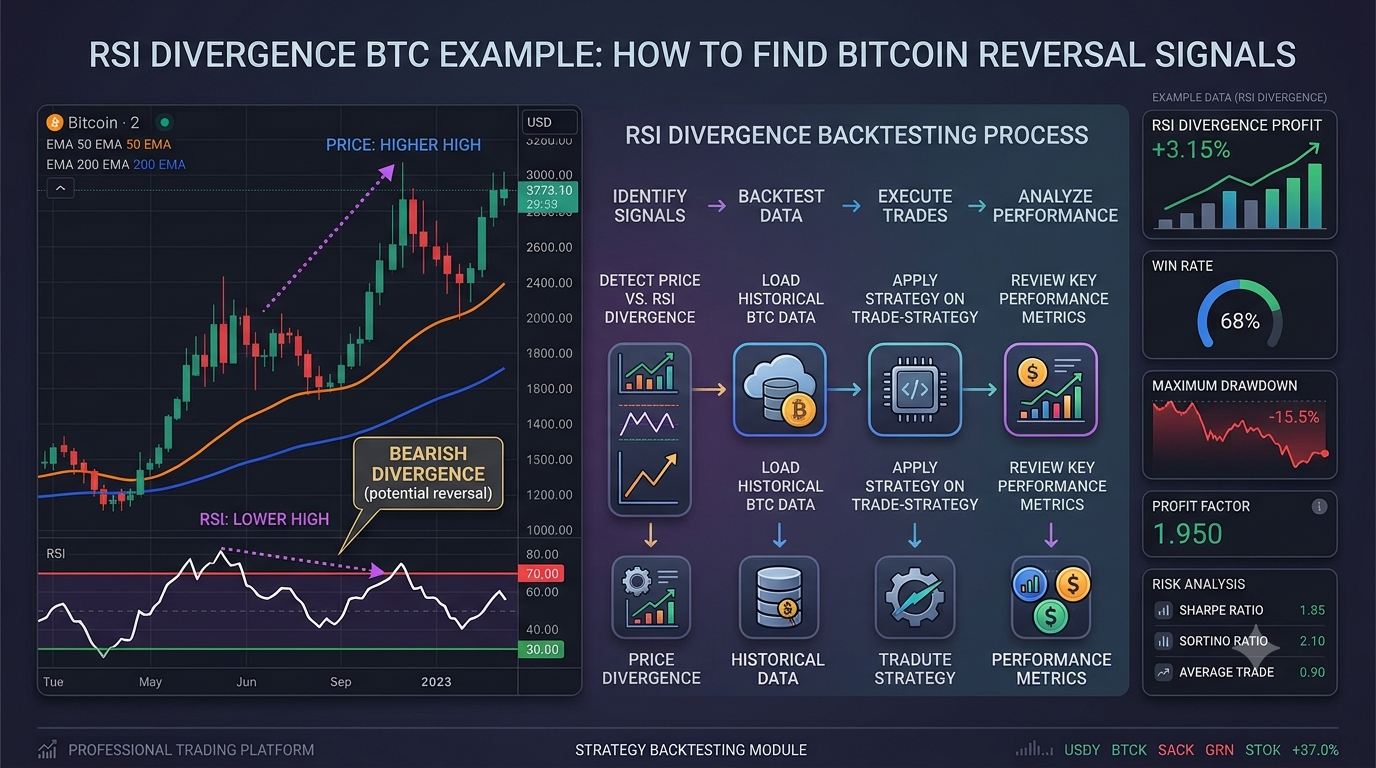
2026-08-07RSI Divergence BTC Example: How to Find Bitcoin Reversal Signals
Learn how to identify RSI divergence on Bitcoin charts, how traders use this signal to detect potential market reversals, and how to backtest an RSI divergence strategy using historical BTC data. This beginner-friendly guide explains real chart examples, strategy rules, performance analysis, advantages, limitations, and how to test the strategy using Trade-Strategy.com
 2026-08-07
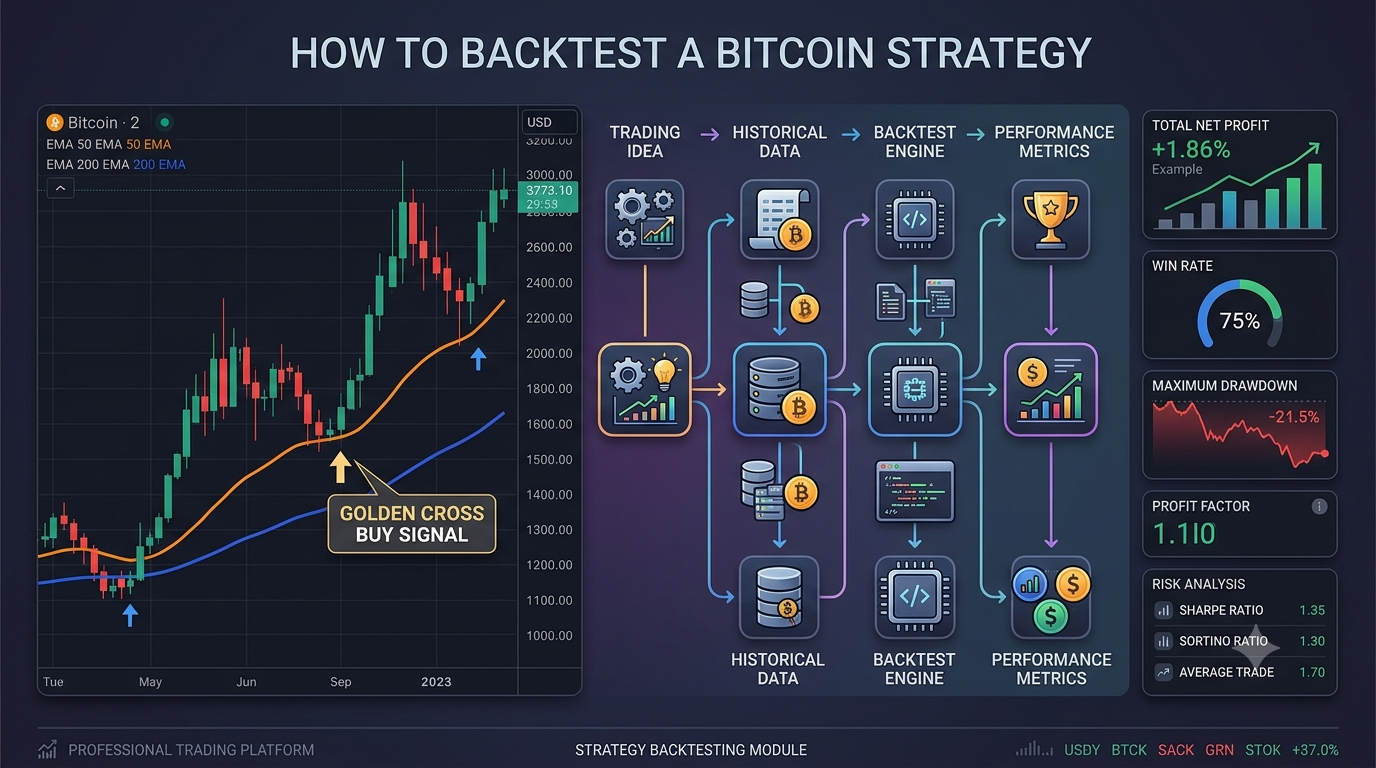
How to Backtest a Bitcoin Strategy
Learn how to backtest a Bitcoin trading strategy using a simple 50 EMA / 200 EMA crossover example. Discover which metrics matter most, common mistakes to avoid, and best practices for evaluating trading performance before risking real capital.
 2026-08-11
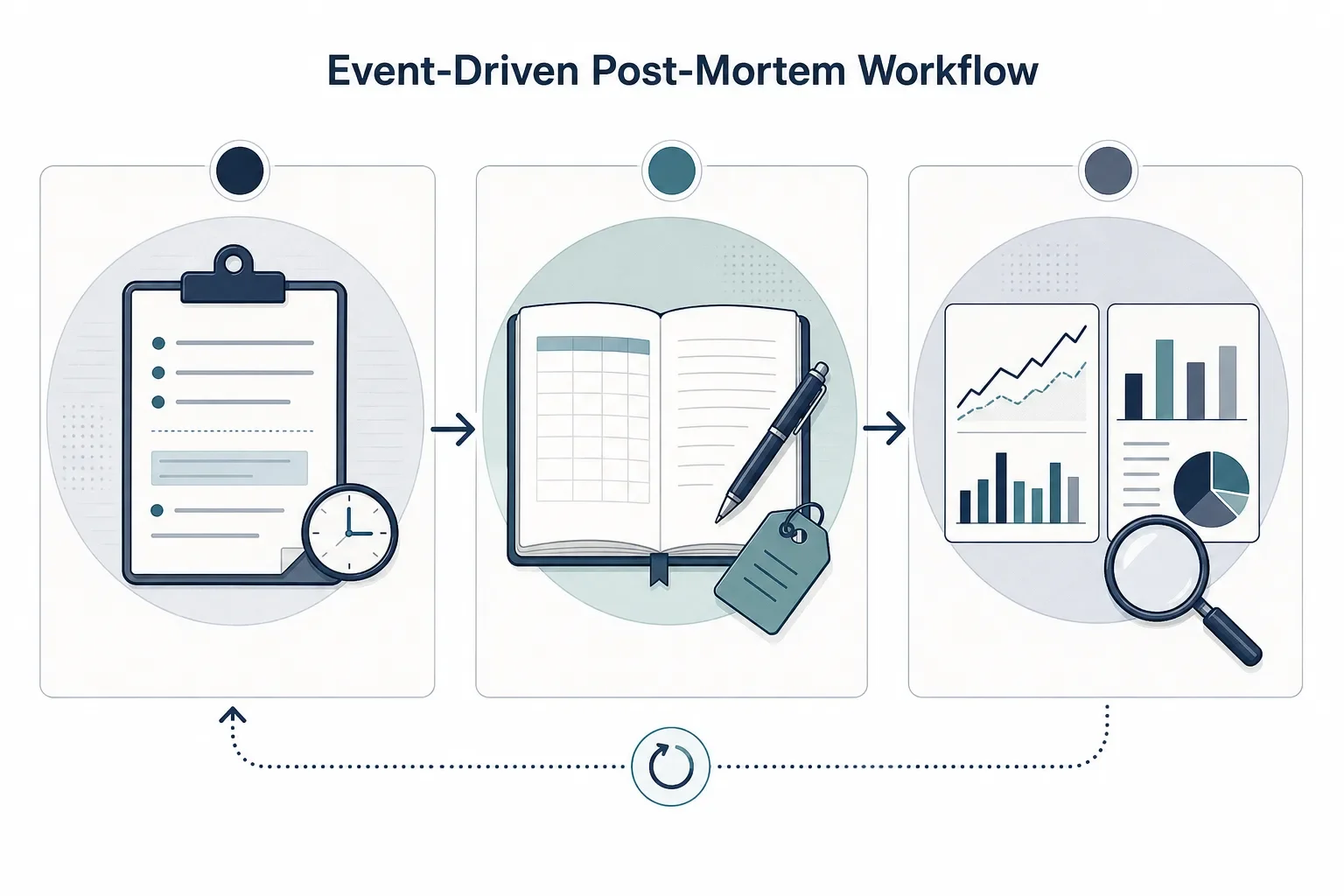
How to run an event-driven post‑mortem for your BTC strategy (step‑by‑step)
A step‑by‑step workflow for BTC event‑driven post‑mortems: record rules, log trades, compare pre/event/post windows using Trade Strategy to identify rule breakpoints and create testable updates.