
How to Audit and Tag DeFi Strategies for Regulatory Exposure
Practical, step‑by‑step workflow to map DeFi protocol touchpoints, tag regulatory exposure, preserve audit trails with documented rules and historical results, and prepare playbooks to respond quickly to enforcement events.
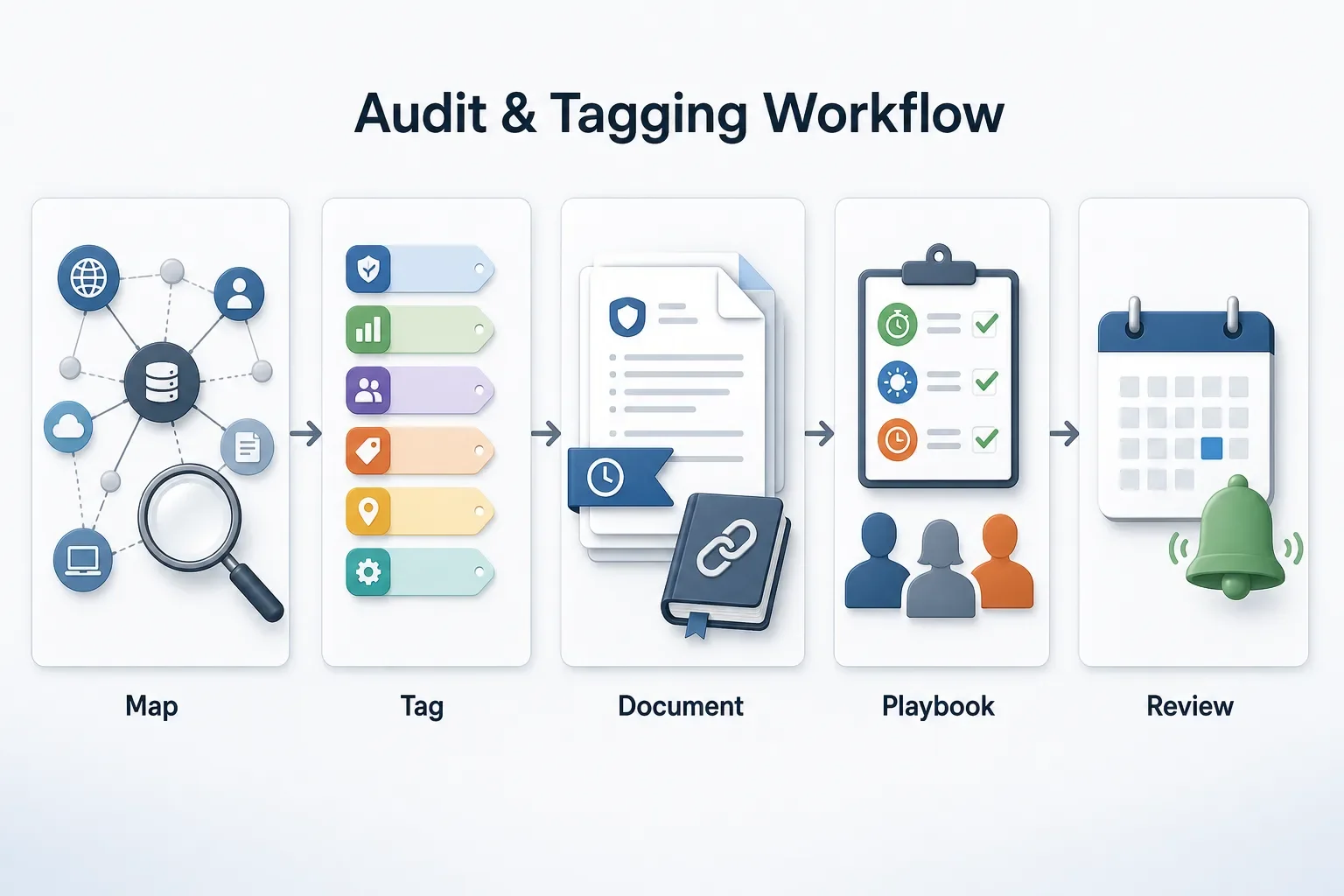
# How to Audit and Tag DeFi Strategies for Regulatory Exposure
Map your vault and lending exposure before enforcement action forces the change.
The SEC and other regulators have signaled closer scrutiny of some on‑chain lending and vault arrangements. For traders, quant PMs, dev teams building yield strategies and ops/compliance groups, that means operational and model risk: sudden liquidity changes, governance freezes, delistings or yield compression can materially affect performance and require rapid, documented decisions. This step‑by‑step guide helps you map protocol touchpoints, add compliance‑risk tags, preserve auditability with documented rules and historical results, and prepare playbooks for rapid response.
## Why audit DeFi strategies for regulatory exposure
Regulatory outcomes are uncertain; the concrete impacts are not. An enforcement action or inquiry can reduce liquidity, pause redemptions, change token economics or create governance disputes. Auditing exposure in advance does not remove risk, but it shortens response time, preserves institutional memory and improves decision quality when markets move.
## Step 1 — Map protocol touchpoints for every strategy
Treat each strategy like a dependency graph. For every strategy, document:
- Protocols and smart contracts used (vaults, lending pools, staking contracts, oracles).
- Token flows and wrapped/peg arrangements.
- Typical transaction flows (deposits, withdrawals, rollovers, liquidations).
- Governance exposure (which token controls protocol governance and how votes are executed).
Practical example
- Strategy: USDC lending + yield‑vault rotation
- Touchpoints: Lending pool A (borrow/lend), Vault B (auto‑compound), Price oracle X.
- Failure modes: vault freeze, oracle manipulation, lending pool liquidity shortfall.
This touchpoint map is the foundation for tagging, scenario work and playbooks.
## Step 2 — Add consistent compliance‑risk tags
Create a small, consistent tag taxonomy you can apply across strategies and instruments. Start simple:
- Exposure Level: High / Medium / Low (concentration and leverage).
- Regulated Feature: Governance Token / Centralized Custody / On‑chain Lending / Yield Aggregator.
- Liquidity Sensitivity: High / Medium / Low.
- Jurisdictional Flags: US‑sensitive / EU‑sensitive / Global.
Tagging example
- A vault that auto‑compounds a basket of lending yields: Exposure Level: High; Regulated Feature: Yield Aggregator; Liquidity Sensitivity: Medium; Jurisdictional Flags: US‑sensitive.
Practical tips
- Make tags machine‑readable (consistent values, no freeform values) so you can filter and report programmatically.
- Record a one‑line rationale for every tag to preserve auditability.
## Step 3 — Preserve audit trails with documented rules and historical results
Maintain explicit, versioned strategy documentation: entry/exit rules, sizing rules, risk controls and assumptions about protocol behavior. Pair documentation with a historical results journal so every change and its performance impact is traceable.
How to organize this effectively
- Record the strategy rule set and the date each rule version went live.
- Log protocol events that affect performance (governance proposals, upgrades, on‑chain incidents) in your historical results journal with links to evidence.
- Retain rationale and approval records for tactical changes (who approved reducing exposure and why).
How this helps during a regulatory event
- Auditors and internal reviewers will expect a clear chain of decisions. Documented rules plus a results journal show that changes were deliberate, time‑stamped and tied to observed events.
Trade Strategy fit
- Users can create and organize trading strategies.
- Users can document strategy rules and assumptions.
- Users can record and monitor historical strategy results.
- Users can compare strategies using saved information and historical results.
Use these capabilities to store touchpoint maps, notes about compliance tags and your results journal so audit trails are preserved and searchable.
Note on future roadmap items
As a planned roadmap item, Trade Strategy plans AI‑assisted BTC market analysis. The roadmap also includes probabilistic direction suggestions. These are described as planned features and should be treated as roadmap items rather than current capabilities.
## Step 4 — Build playbooks and scenario responses
Create concise, role‑based playbooks for the first hour, first day and first 72 hours after an adverse regulatory event.
Playbook example
- First hour: Pause automatic processes that touch affected protocols; notify trading desk, ops and legal; snapshot positions and relevant on‑chain states.
- 24 hours: Execute pre‑approved wind‑down or exposure‑reduction plays if liquidity permits; begin communications with counterparties; update risk registers.
- 72 hours: Reconcile P&L impact; perform post‑mortem; update tags and documentation.
Scenario testing
- Manually test a small set of scenarios against historical results: simulate a vault freeze, a 50% cut in lending APR, or a seven‑day redemption halt. Record the hypothetical P&L and the operational steps.
- Use a separate lab or paper‑trading environment to validate assumptions without risking live funds.
Note: some teams use commercial tools or internal scripts for advanced scenario testing. Keep those tools and live environments separate from production until validated.
## Step 5 — Set review cadences and triggers
Make your review cadence explicit:
- Weekly: Monitor governance calendars and volatility signals for High Exposure protocols.
- Monthly: Reassess tag assignments, concentration limits and assumptions.
- Event‑driven: Re‑tag and run playbooks when a governance vote, legal filing or on‑chain incident occurs.
Automate snapshots and alerts where possible, but preserve human judgment for final decisions.
## Practical 30‑day checklist
1. Inventory all strategies and list protocol touchpoints.
2. Apply a first‑pass tag taxonomy and capture a one‑line rationale for each tag.
3. Ensure every strategy has a documented rule set and version history.
4. Start logging protocol events in your historical results journal.
5. Draft a one‑page playbook for the highest‑exposure strategies and rehearse it.
## Conclusion
Regulatory uncertainty increases operational risk for DeFi strategies, but structured audits, consistent tagging, versioned strategy documentation and simple playbooks improve response speed and institutional readiness. Start small: inventory, tag, document and rehearse. Over time you can add automated monitoring and disciplined scenario testing to the workflow.
If you want to preserve audit trails today, make tagging and documentation part of your standard process. Trade Strategy supports creating and organizing strategies, documenting rules and assumptions, recording historical results and comparing strategies—capabilities you can use to map regulatory exposure and keep decision history intact.
Read the full guide and start mapping exposure with your strategy records: https://trade-strategy.com/blog
 2026-08-11
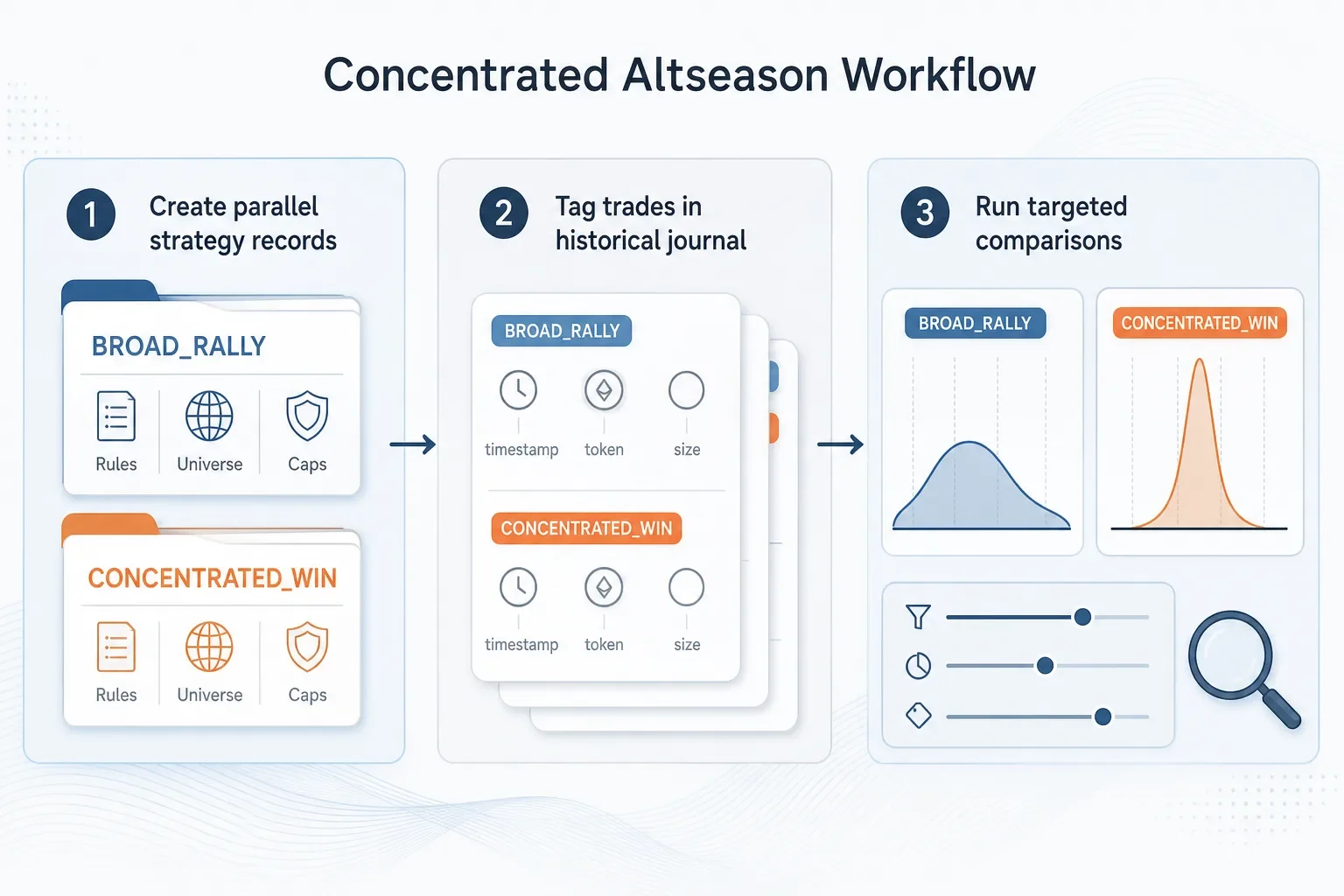
How to Adapt Your Strategies for a More Concentrated Altseason
Step-by-step workflow to adapt trading strategies for a concentrated altseason: create regime-specific strategy records, tag outcomes in a historical journal, compare results across token subsets, and apply concentration-aware sizing and monitoring.
 2026-08-11
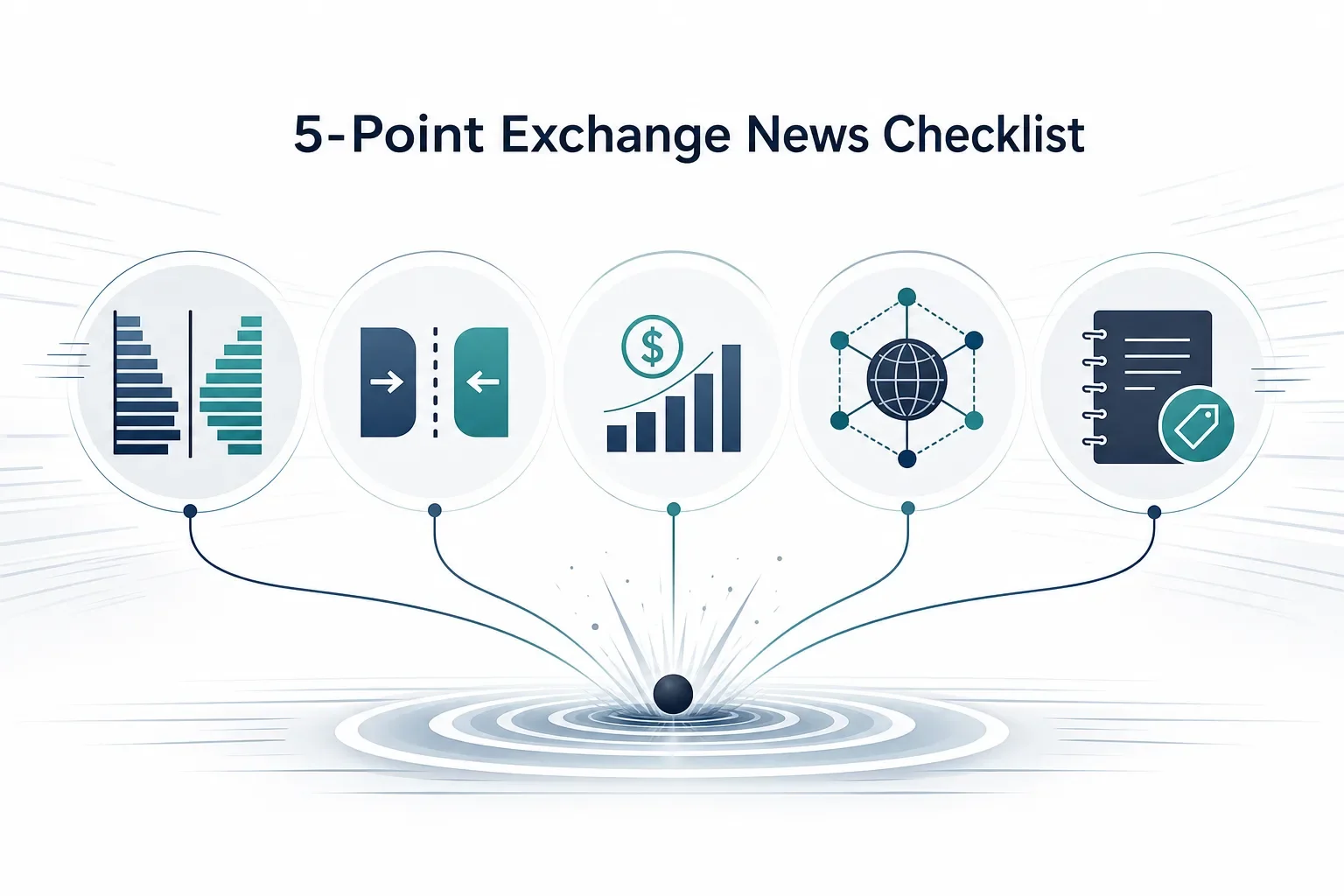
Exchange News Trading Checklist: A Practical 5‑Point Playbook
A fast, repeatable 5‑point checklist to assess liquidity, tag event trades, and stress-test strategy variants after exchange revenue misses or similar venue shocks.
 2026-08-01
How ETF Flows and Geopolitics Move Bitcoin - Quantifying the Effect for Strategy Builders
A practical walkthrough for traders: combine manual news annotations with Trade Strategy’s released tools to quantify whether ETF flows or geopolitical headlines caused BTC drawdowns. Includes a post-mortem template and demo dataset.