
How to Evaluate and Adapt Your Strategy for Binance Gold Options
A practical playbook for traders: how to vet Binance gold options listings, collect the right data (liquidity, IV, volume), adapt rules for Greeks and expiry, and document results so you can compare options vs futures objectively.

# How to Evaluate and Adapt Your Strategy for Binance Gold Options
New commodity options on major venues create opportunity — if you can quickly vet listings, adapt rules to options mechanics, and record results for fair comparison. This playbook walks you from hypothesis to documented result: the market data to collect for newly listed gold and silver options, how to adjust strategy rules for expiry and Greeks, a checklist to vet exchange listings, and a step‑by‑step journal template so you can compare options vs futures or spot approaches objectively.
## 1. Start with a clear hypothesis
Before trading a new series of contracts, write a concise hypothesis. Examples:
- "Short-dated ironed-out implied volatility will compress after major economic data, making short premium strategies attractive over 10 trading days."
- "Buying calls around volatility spikes will outperform a spot long when IV mean‑reverts within two weeks."
A clear hypothesis drives what data you collect and which performance comparisons matter.
## 2. Checklist to vet a new exchange listing
When an exchange lists new commodity options, confirm these items before committing capital:
- Contract specs: underlying asset (gold/silver reference), contract size, tick size, and minimum lot.
- Settlement and exercise: cash vs physical settlement, settlement time, and exercise style (European vs American).
- Expiry schedule and available tenors (weekly, monthly, quarterly).
- Trading hours and calendar — does it overlap with your risk windows?
- Fee structure and margin rules specific to options.
- Market microstructure: displayed book depth, minimum quote sizes, and tick behavior.
- Historical trade and quote (TAQ) availability — can you download or stream historical quotes/volumes?
- Counterparty and clearing details if available — who clears or guarantees settlement?
If any item is unclear, reach out to exchange support and document the response in your strategy assumptions.
## 3. Market data to collect (minimum viable dataset)
For newly listed options you should track at least:
- Volume and open interest by strike and expiry (daily).
- Bid/ask spread and displayed depth at top-of-book (snapshot at regular intervals).
- Implied volatility surface: IV by strike and expiry, or IV percentiles over your lookback window.
- IV Rank/IV Percentile relative to whichever history is available.
- Skew (put/call skew) to detect one-sided demand.
- Underlying spot/futures price and realized volatility (e.g., 10/30/60-day realized vol).
- Execution slippage and fees per trade.
Capture these fields on a daily cadence at minimum; intraday sampling helps for short-dated strategies.
## 4. Adapting strategy rules for options mechanics
Options introduce Greeks and expiry dynamics that require different rules than futures or spot. Practical rule edits:
- Time decay (theta): define holding-period limits tied to theta exposure. Example rule: "Close short premium positions if average daily theta expense exceeds X% of notional over next 7 days."
- Volatility sensitivity (vega): size positions by vega notional, or set a vega cap per strategy to control IV risk.
- Delta exposure: set net delta limits or hedge schedules to keep directional risk within your tolerance.
- Gamma risk: for large short-gamma exposures, require intraday monitoring or automatic hedging triggers.
- Entry filters: require IV rank or skew thresholds (e.g., only sell premium when IV Rank > 60).
- Strike selection: map strike distance to expected move using implied vols and desired probability of expiring ITM.
- Early assignment and settlement considerations: add rules around exercising/assignment windows if applicable.
Practical example: converting a futures momentum rule to options
- Futures rule: "Enter long when price breaks MA20 on rising volume."
- Options version: "Buy a 25-delta call when spot breaks MA20 and IV Rank < 40; cap position vega to Y; exit after 10 calendar days or when delta > 40."
## 5. Documenting trades and outcomes: a reproducible journal template
Use a consistent results journal so you can compare across instruments and venues. Required fields:
- Strategy name and version
- Hypothesis (short)
- Instrument (e.g., Binance Gold Options — strike, expiry, leg structure)
- Entry timestamp, exit timestamp
- Entry IV / Exit IV, underlying price at entry/exit
- Position size, vega exposure, net delta
- Fees and realized slippage
- Gross P/L and net P/L (after fees)
- Max drawdown during trade
- Notes on execution, market events, deviations from rules
Record these for each trade and aggregate by strategy to compute fairness metrics (win rate, average return per trade, return per unit vega, sharpe-like ratios using trade returns and holding days).
## 6. Comparing options vs futures/spot fairly
Key adjustments to make comparisons meaningful:
- Normalize exposure: compare returns per unit of risk (e.g., per 100 delta, per vega notional, or per $1,000 of margin used).
- Include fees and realized slippage for each venue.
- Use time‑weighted returns or returns per day to account for different holding periods.
- Compare distributions, not just averages: look at drawdowns, skew, and tail outcomes.
Example: if an options strategy yields 2% over 7 days with average vega exposure of V, compare that to a futures strategy by computing return per unit of vega-equivalent or per unit of realized volatility exposure.
## 7. Practical workflow: hypothesis → rules → record → compare
1. Define hypothesis and success metrics.
2. Vet listing with the checklist and collect an initial history.
3. Translate your rules to include Greeks, expiry rules, and execution limits.
4. Run a small live trial or paper trades while recording every field in your journal.
5. After a sample of trades, compare strategies using normalized metrics and refine rules.
## Conclusion
New gold and silver options listings present actionable opportunities, but they also demand disciplined vetting, rules that account for expiry and Greeks, and reproducible documentation so you can judge outcomes objectively. Use a clear hypothesis, collect the minimum viable dataset, adapt strategy rules to options mechanics, and keep a consistent results journal so comparisons with futures or spot are meaningful.
Trade Strategy supports this workflow by letting you create and organize strategy definitions, record and monitor historical results, and compare strategies using saved information and recorded results. When you're ready to formalize your playbook and track outcomes, try Trade Strategy for free: https://trade-strategy.com
 2026-08-11
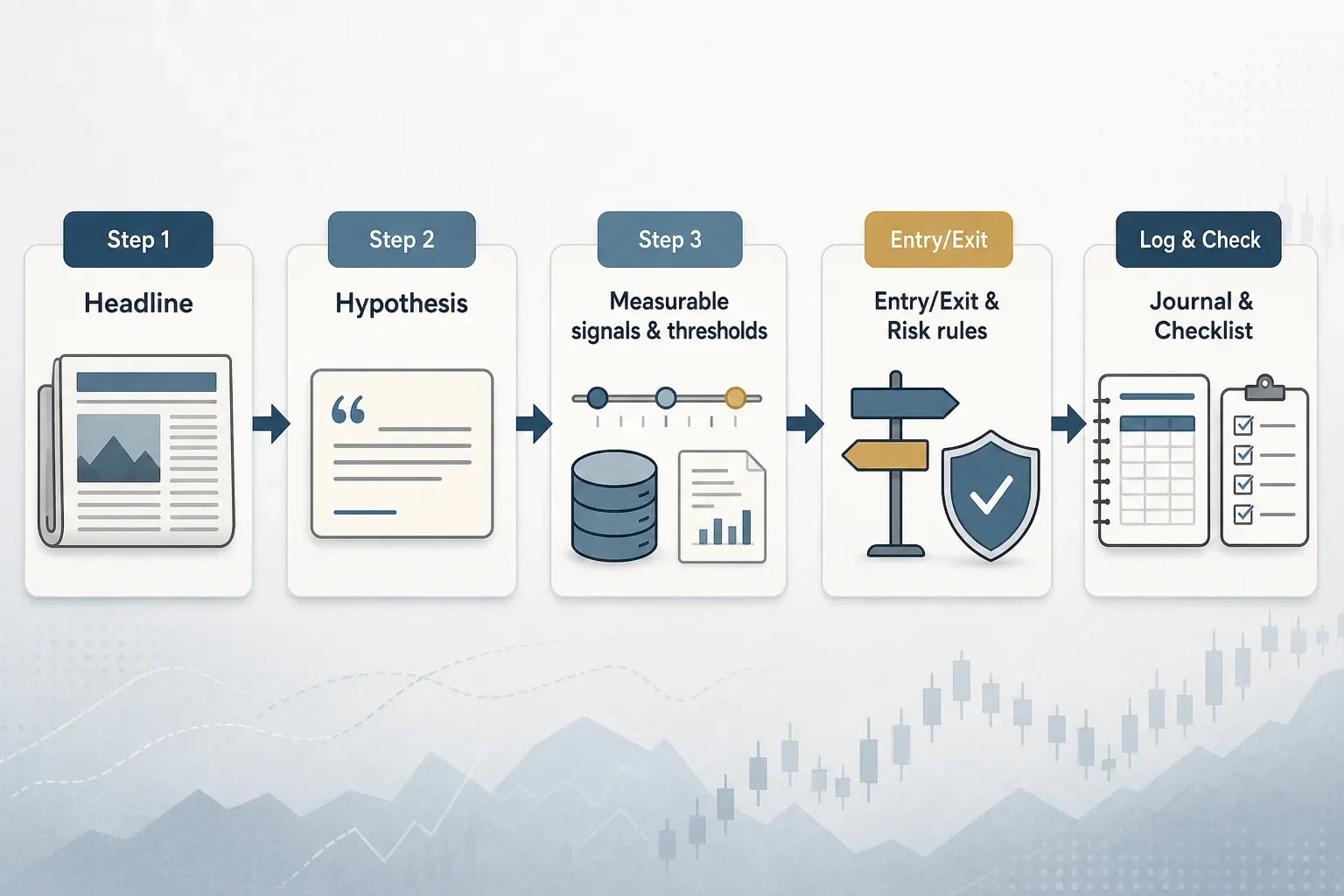
How to Turn BTC ETF Inflows and ETH Outflows into Testable Trade Hypotheses
A step-by-step guide for turning BTC ETF inflow and ETH outflow headlines into measurable trade hypotheses, with a practical template and checklist to log, test and iterate.
 2026-07-30
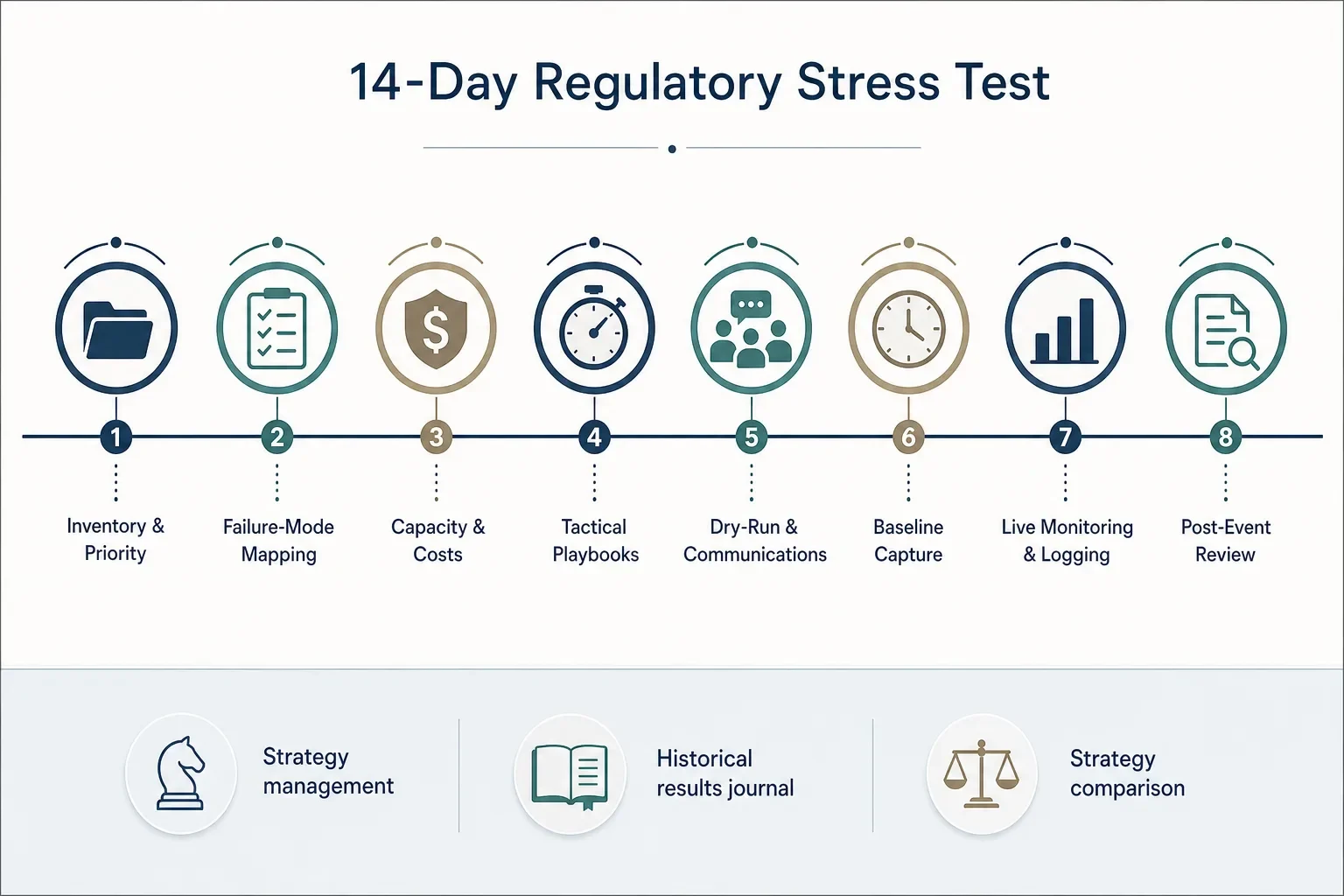
How to Stress‑Test Your Crypto Strategies Before a Regulatory Deadline
Practical step‑by‑step checklist and templates to stress‑test crypto strategies ahead of a regulatory deadline. Document rules, log pre/post results and compare adaptations using Trade Strategy’s released features.
 2026-08-11
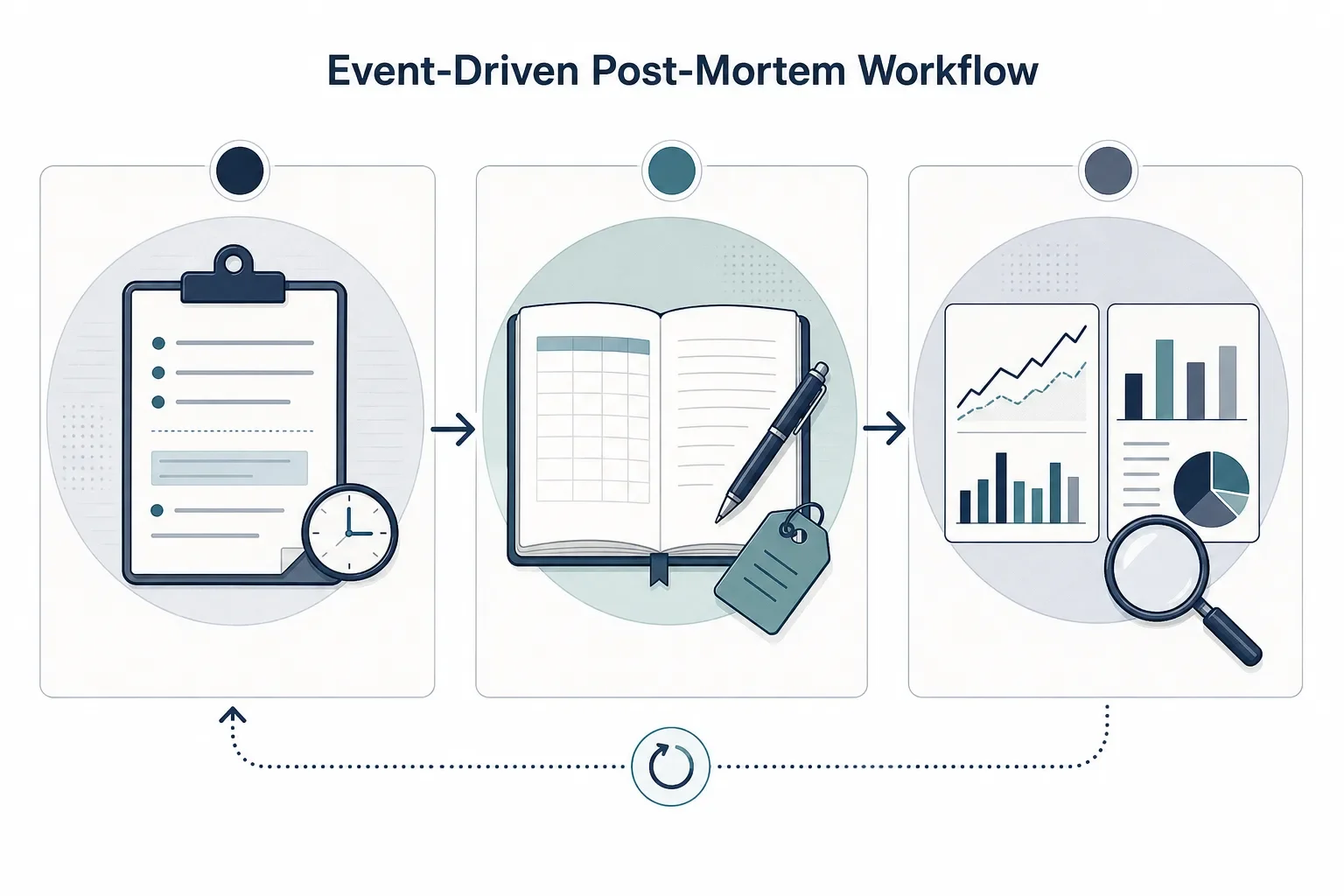
How to run an event-driven post‑mortem for your BTC strategy (step‑by‑step)
A step‑by‑step workflow for BTC event‑driven post‑mortems: record rules, log trades, compare pre/event/post windows using Trade Strategy to identify rule breakpoints and create testable updates.