
How to Stress‑Test Your Crypto Strategies Before a Regulatory Deadline
Practical step‑by‑step checklist and templates to stress‑test crypto strategies ahead of a regulatory deadline. Document rules, log pre/post results and compare adaptations using Trade Strategy’s released features.
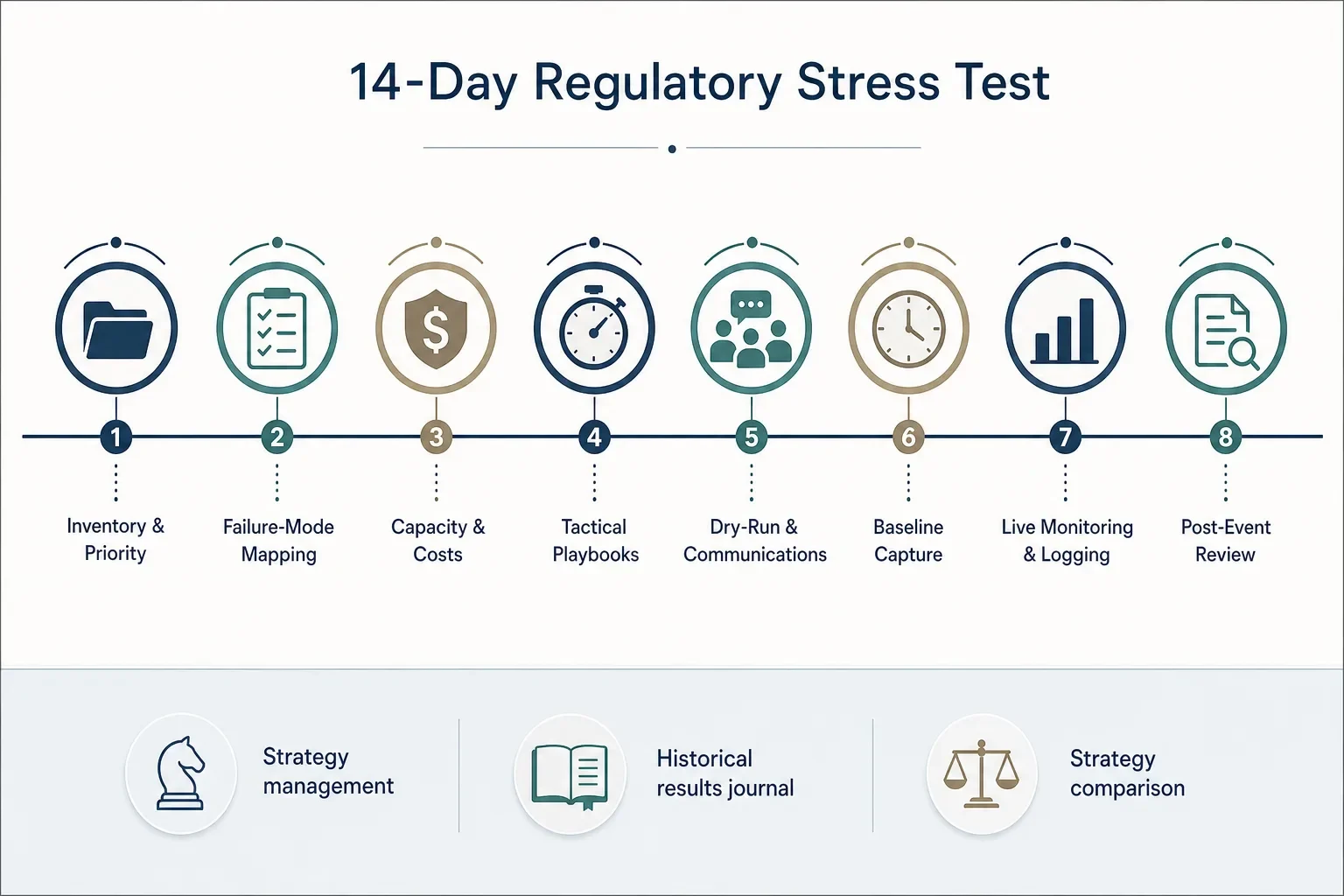
# Two weeks until policy clarity — is your strategy documented, stress‑tested and ready?
Regulatory deadlines create short, sharp windows of uncertainty. Volatility can spike, liquidity can shift, and previously reliable assumptions about execution, funding or market structure may no longer hold. For active traders, quants and portfolio managers the practical question is simple: can you evidence the decisions you make now, measure how they perform across the event, and compare adaptations objectively afterward?
This guide offers a step‑by‑step crypto regulatory stress test checklist, templates you can use to document rules and assumptions, and an anonymized two‑week timeline showing what to do before, during and after a policy‑driven market event. It also explains how to capture pre/post performance and compare strategy variants using Trade Strategy’s released features: Strategy management, Historical results journal and Strategy comparison.
## Why a focused stress test matters now
A regulatory clarity event is not just another volatility spike. It can change incentives for market makers, affect on‑chain flows, and create new operational constraints for counterparties. That combination increases model risk: assumptions that underpinned your edge may be invalidated for a period.
A short, evidence‑based stress test helps you:
- Make decisions under uncertainty instead of reacting instinctively.
- Record why changes were made and what was assumed at the time.
- Measure how adaptations performed, so you can reopen or retire them objectively after the dust settles.
This is about governance and repeatable decision‑making, not guaranteed outcomes.
## Crypto regulatory stress test checklist (step‑by‑step)
Use this checklist to structure a 10–14 day program. Each step includes a practical note on how to capture the work in Trade Strategy.
1) Inventory and priority review (Day −14 to −12)
- List all live strategies and classify them by exposure to the regulatory change (high, medium, low).
- Document strategy rules, assumptions and critical parameters (margin, funding sensitivity, concentration limits).
- How to capture: Create or update entries in Strategy management to record rules and assumptions for each strategy.
2) Failure‑mode mapping (Day −12 to −10)
- Identify worst‑case and plausible scenarios: exchange delisting, custody restrictions, sudden liquidity withdrawal, widened spreads.
- For each scenario, list trigger conditions and immediate tactical responses (reduce size, increase stop spacing, pause entries).
- How to capture: Add a "Failure modes" section to each strategy note in Strategy management.
3) Quantify short‑term capacity and costs (Day −10 to −8)
- Recalculate slippage, funding cost and execution capacity under stress assumptions.
- Run scenario P&L sensitivity for adjusted fills and fees.
- How to capture: Record scenario assumptions and estimated impacts in the strategy’s documentation. Use the Historical results journal to tag prior trades with similar conditions for reference.
4) Create pre‑approved tactical playbooks (Day −8 to −6)
- Define clear, non‑ambiguous tactical rules you can enact quickly (e.g., "If BTC spreads > X and funding > Y, reduce target exposure by Z %").
- Prefer durable, rule‑based actions over ad‑hoc decisions.
- How to capture: Save playbooks as updates in Strategy management and annotate expected outcomes.
5) Dry‑run and communications (Day −6 to −4)
- Run tabletop dry‑runs with trading, risk and ops: who executes playbook steps and who approves deviations?
- Prepare internal communication templates (position notices, counterparty checks).
- How to capture: Attach meeting notes and approval roles to each strategy record in Strategy management.
6) Baseline performance capture (Day −4 to 0)
- Record pre‑event performance, realized slippage and typical fills for the prior period.
- Tag these baseline entries in the Historical results journal as "Pre‑policy baseline."
7) Live monitoring and decision logging (Event window)
- Record each tactical change with a timestamp, rationale and responsible party.
- Keep copies of market snapshots (spreads, on‑chain flows, funding rates).
- How to capture: Enter actions and rationale into the Historical results journal and update the strategy record.
8) Post‑event review (Day +1 to +7)
- Compare actual performance to baseline and to the scenario expectations.
- Decide to revert, iterate or retire each adaptation.
- How to capture: Use Strategy comparison to evaluate variants side‑by‑side using saved strategy metadata and Historical results entries.
### Templates included
The downloadable checklist and templates include:
- Strategy assumptions template: fields for rules, exposures, failure modes and recovery triggers.
- Tactical playbook template: pre‑approved actions, roles and communication text.
- Results tagging guide: how to label pre/event/post trades in the Historical results journal for straightforward comparison.
Get these at the CTA link below.
## An anonymized two‑week timeline (example)
Day −14: Inventory shows three live BTC strategies. Two have material funding sensitivity — classified High.
Day −12: Failure‑mode mapping flags reduced market‑making capacity on a major derivatives venue.
Day −10: Quantify costs — estimate slippage doubles in stressed liquidity. Draft playbook: reduce new allocations by 50% if realized slippage exceeds threshold A.
Day −6: Dry‑run executed; communications template approved by operations.
Day 0 (policy clarity announced): Spreads widen, funding spikes. Traders enact playbook: pause new entries for two High strategies, reduce exposure for the third by 30%. Each action logged in the Historical results journal with rationale and snapshots.
Day +3: Market stabilizes. Using Strategy comparison, team reviews pre/post performance and decides to resume one strategy with adjusted size, and to iterate stop placement on the other.
This anonymized timeline illustrates the cadence: inventory → scenario → playbook → execute → review.
## Capture and compare outcomes with Trade Strategy
Trade Strategy can help you make the stress‑test repeatable and auditable:
- Strategy management: create and organize strategy records, document rules, assumptions and failure modes so decisions are visible later.
- Historical results journal: record trades, tags and decision logs to create a searchable pre/post dataset tied to strategy entries.
- Strategy comparison: compare saved strategy versions and their tagged historical results to evaluate which adaptations worked best.
These released features are meant to support decision documentation and objective reviews; they do not execute trades. Trade Strategy also plans AI‑assisted BTC market analysis and probabilistic direction suggestions on the roadmap to support future decision workflows.
## Post‑event governance: what to keep and what to retire
After the event, focus on three things:
- Evidence: keep decision logs and market snapshots supporting why each adaptation was made.
- Metrics: compare realized vs expected slippage, execution cost and P&L impact using tagged Historical results entries.
- Policy: update your strategy documentation and playbooks based on what worked; retire measures that were overly conservative or infeasible.
A short, documented retrospective reduces hindsight bias and improves readiness for the next structural event.
## Conclusion
Regulatory deadlines compress time to decide. A short, disciplined stress‑test — inventory, failure modes, playbooks, dry‑run, live logging and a structured post‑event review — gives you a repeatable framework to act under uncertainty and to learn afterward. Use documented rules and recorded results to make post‑mortems objective instead of emotional.
Download the free stress‑test checklist and Trade Strategy templates at the link below to get a ready set of templates and tagging guidance for your next policy‑driven event.
 2026-08-11
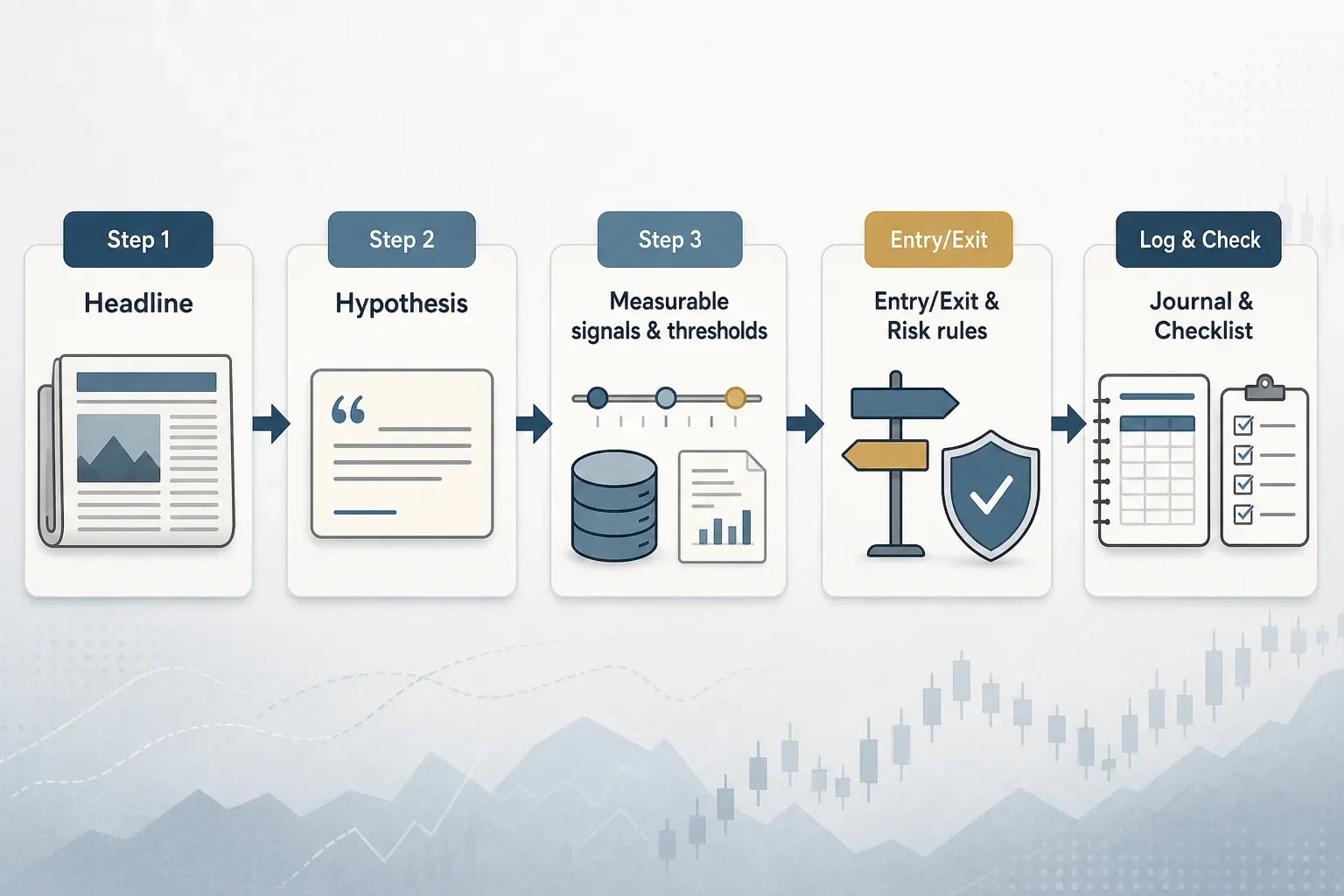
How to Turn BTC ETF Inflows and ETH Outflows into Testable Trade Hypotheses
A step-by-step guide for turning BTC ETF inflow and ETH outflow headlines into measurable trade hypotheses, with a practical template and checklist to log, test and iterate.
 2026-08-11
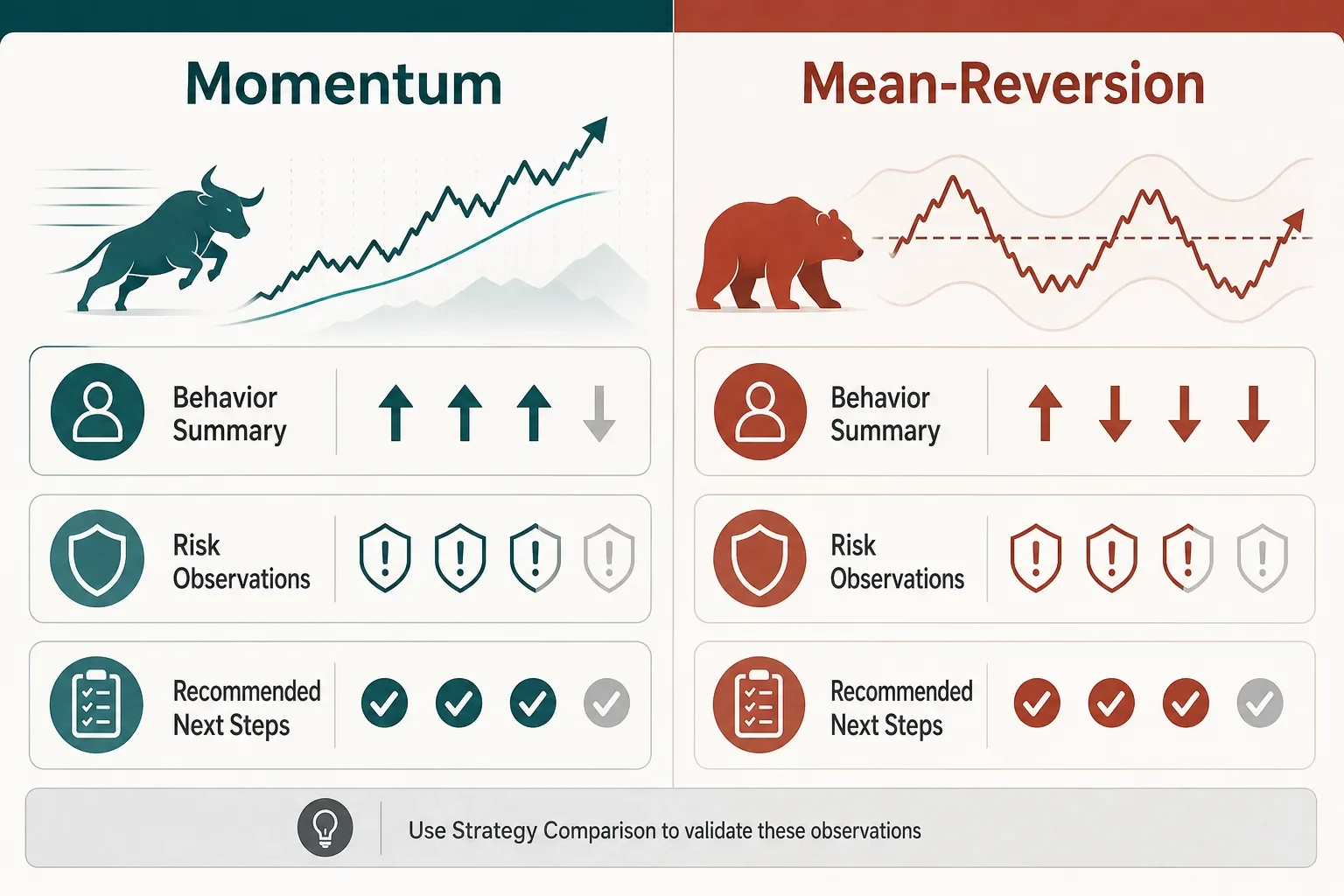
When Markets Decouple: A Trader’s Checklist for Post‑Event Strategy Reviews
A step‑by‑step playbook for post‑event reviews: capture hypotheses, tag trades by catalyst, log outcomes, and use Strategy Comparison to see what held up during the Korea chip crash vs. Bitcoin rally.
 2026-08-11
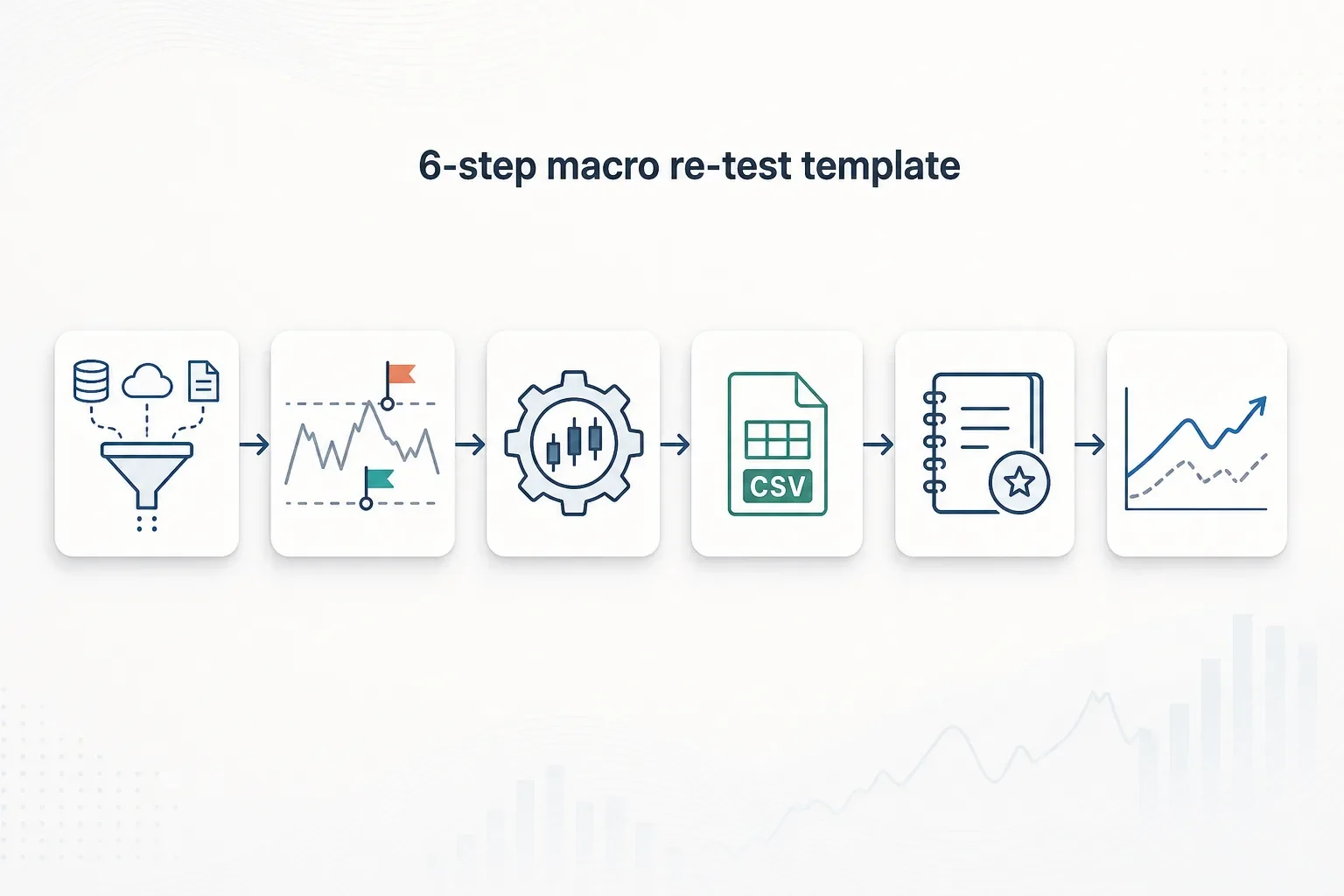
How to Backtest Crypto Strategies Against Rising Rates and Oil Shocks — A Practical Template
A hands-on template for re-testing crypto strategies when rates and oil spike: ingest macro time series, run variant backtests, record results in Trade Strategy, and compare outcomes to adapt sizing rules.