
From Rally to Range: A Practical Checklist for Bitcoin Traders
A short, action-focused bitcoin consolidation checklist and strategy triage template to decide which BTC strategies to keep, pause or adapt as the market shifts from a rally into a range.
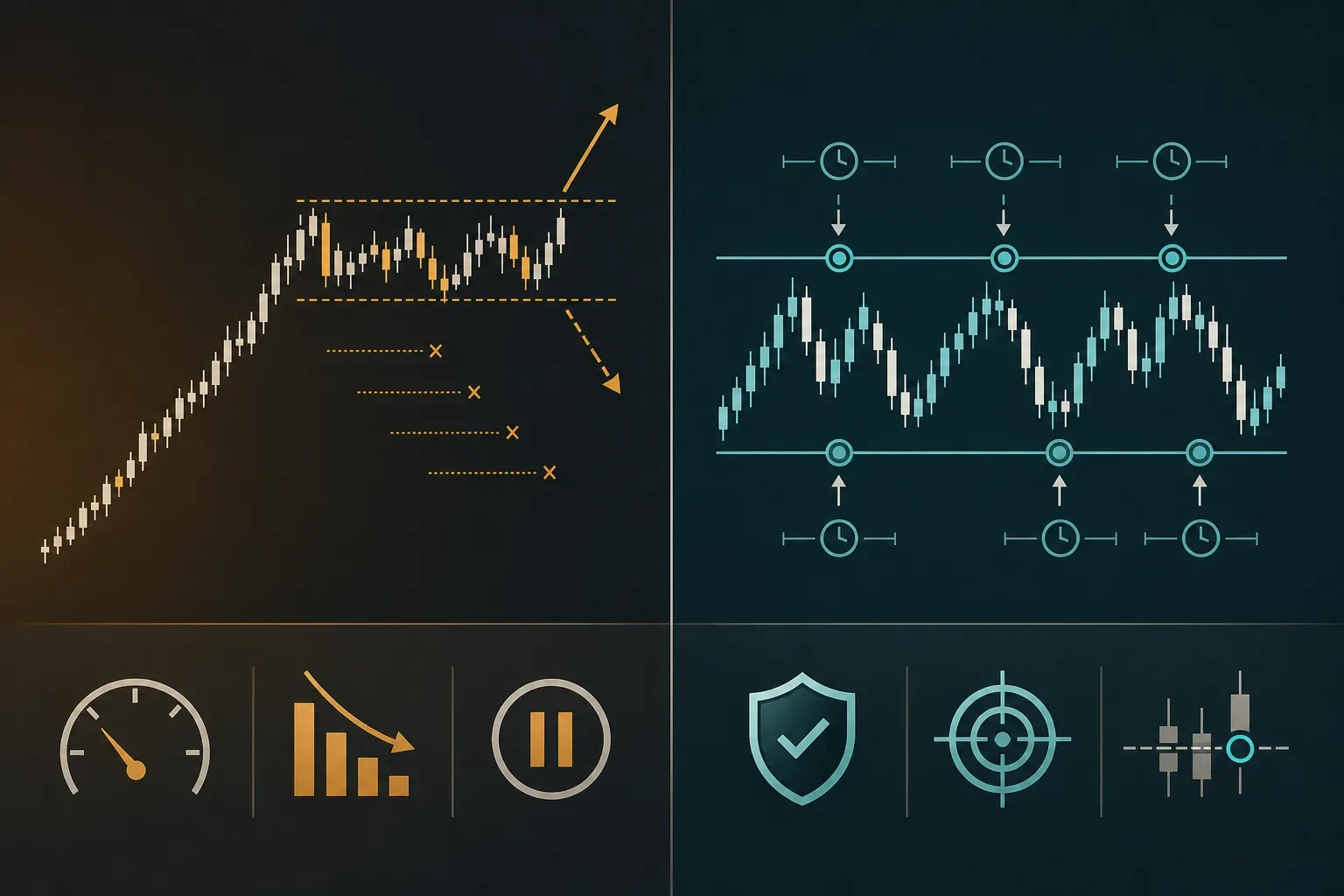
# From Rally to Range: A Practical Checklist for Bitcoin Traders
Bitcoin's July rally has given way to a holding pattern. For traders who built or ran strategies through the momentum phase, the question becomes operational: which systems should you keep running, which should be paused, and which need adaptation? This article provides a short, action-focused "bitcoin consolidation checklist," a strategy triage template you can use immediately, and an anonymous example case study that shows how to record and compare results between a rally and a consolidation.
## Why a checklist matters now
Market regimes change. Rules that work well in trending, high-volatility rallies often underperform during low-volatility consolidation. Without a disciplined decision process you risk:
- Running too many strategies that are poorly suited to the current regime.
- Failing to document why a decision was made (so you can’t learn from it).
- Letting short-term discomfort derail a strategy that’s still fit for purpose.
A compact checklist and a simple triage worksheet reduce friction and create repeatable decisions.
## Bitcoin consolidation checklist (actionable steps)
Use this checklist before you change live positions or pause a strategy. Treat it as a forced review rather than an instant reaction.
1. Confirm regime change
- Review price action across at least two timeframes (e.g., daily and 4H). Look for range boundaries, lower ATR/volatility and reduced directional conviction.
- Check volume for a drop relative to the recent rally.
2. Inventory active strategies
- List all active BTC strategies and their stated assumptions (timeframe, signal type, stops, sizing).
- Note which strategies were explicitly designed for trending vs range-bound conditions.
3. Pull recent historical results
- For each strategy, record recent results in your journal: trade counts, average holding period, win/loss qualitative balance, drawdown behavior, and any behavioral observations (e.g., frequent false breakouts).
- Mark trades that relied on breakout confirmations vs mean-reversion entries.
4. Match strategy assumptions to the observed regime
- If a strategy assumes sustained momentum and you see range-bound price, flag it for review.
- If a strategy explicitly targets mean reversion, it may be more appropriate now — validate with recent results.
5. Decide: Keep / Pause / Adapt
- Keep: Strategy assumptions still match the market structure; results remain consistent with historical edge.
- Pause: Edge appears absent and rules expose you to outsized risk or noise cost in the current regime.
- Adapt: Core idea remains valid but parameters (stops, time-in-market, sizing) should be tightened or otherwise adjusted.
6. Record the decision rationale
- For each strategy, write a one-line rationale and the action taken. Include the date and the market cues that informed your choice.
7. Set a review date
- Schedule a follow-up (e.g., 2–4 weeks). Reassess with fresh historical results and market structure.
## Strategy triage template (what to record)
Use these fields in a worksheet or your trading journal to make decisions repeatable:
- Strategy name
- Primary assumption (trend, range, volatility, correlation)
- Timeframe
- Recent behavior notes (signal frequency, false breakouts, slippage)
- Historical result summary (journal reference or link)
- Decision: Keep / Pause / Adapt
- Rationale (1–2 sentences)
- Planned adaptation (if any): parameter changes, stop adjustments, reduced size
- Next review date
Keeping this template consistent across strategies makes later comparison meaningful.
## Example case study (anonymous, qualitative)
Below is a short, anonymous example showing how to record observations for two strategies during a rally and then through consolidation. No performance claims are made — this is a workflow example.
Strategy Alpha (momentum breakout)
- Assumption: Sustained trend after high-volume breakouts.
- During the rally: Signals were frequent, with many breakouts holding for multiple bars. Trades aligned with trend; average time-in-market increased.
- During consolidation: Breakout signals occurred but held less often; stop-outs increased and signal-to-noise worsened.
- Triage decision: Pause or reduce size. Rationale: core assumption (sustained trend post-breakout) no longer matches range-bound structure. Next review: 3 weeks.
Strategy Beta (mean-reversion, short timeframe)
- Assumption: Price reverts within a defined range; profit from quick reversals.
- During the rally: Signals were rarer and occasionally collided with strong continuation moves, increasing risk.
- During consolidation: Entry opportunities increased, average holding periods shortened, and slippage reduced.
- Triage decision: Keep with minor stop tightening. Rationale: environment more consistent with mean-reversion assumptions. Next review: 2 weeks.
This qualitative record makes it clear why one strategy was paused and another continued. It also creates a clean basis for later comparison once the market shifts again.
## How Trade Strategy supports the workflow
If you use a strategy documentation tool, the triage process becomes far easier to maintain and review. Trade Strategy supports the practical steps above in three released ways:
- Users can create and organize trading strategies. Use this to store each strategy's rules and assumptions so decisions reference the original design.
- Users can record and monitor historical strategy results. Attach journal entries, trade notes and observations to each strategy to build the evidence base that informs triage decisions.
- Users can compare strategies using saved information and historical results. Side-by-side comparisons help you quantify which approaches align with different regimes.
Note on roadmap AI: Trade Strategy plans AI-assisted BTC market analysis. The roadmap also includes probabilistic direction suggestions intended as decision support only; these are planned features and not currently available.
## Practical tips for executing the checklist
- Use a short decision routine: limit each strategy review to 10–15 minutes to avoid overfitting your playbook to noise.
- Prefer clear documented rules over ad-hoc judgments. If you deviate from a rule, log the reason immediately.
- Preserve a baseline: if you pause a strategy, archive its last parameters so you can restart it cleanly when conditions return.
- Track operational costs: slippage, fees, and missed trades matter more in low-volatility regimes where edge compresses.
## Conclusion
Regime shifts from rally to consolidation are uncomfortable but manageable with a repeatable process. A compact "bitcoin consolidation checklist" and a strategy triage template help you convert uncertainty into disciplined, documented decisions. Record why you keep, pause or adapt each system and revisit those choices on a set schedule.
For a ready-to-use checklist and the sample case study worksheet, download the Decision Checklist for Consolidation and Strategy Triage template. Then explore organizing and comparing your strategies at https://trade-strategy.com/blog — try the templates and examples at your own pace.
 2026-08-11
How to run an event-driven post‑mortem for your BTC strategy (step‑by‑step)
A step‑by‑step workflow for BTC event‑driven post‑mortems: record rules, log trades, compare pre/event/post windows using Trade Strategy to identify rule breakpoints and create testable updates.
 2026-08-11
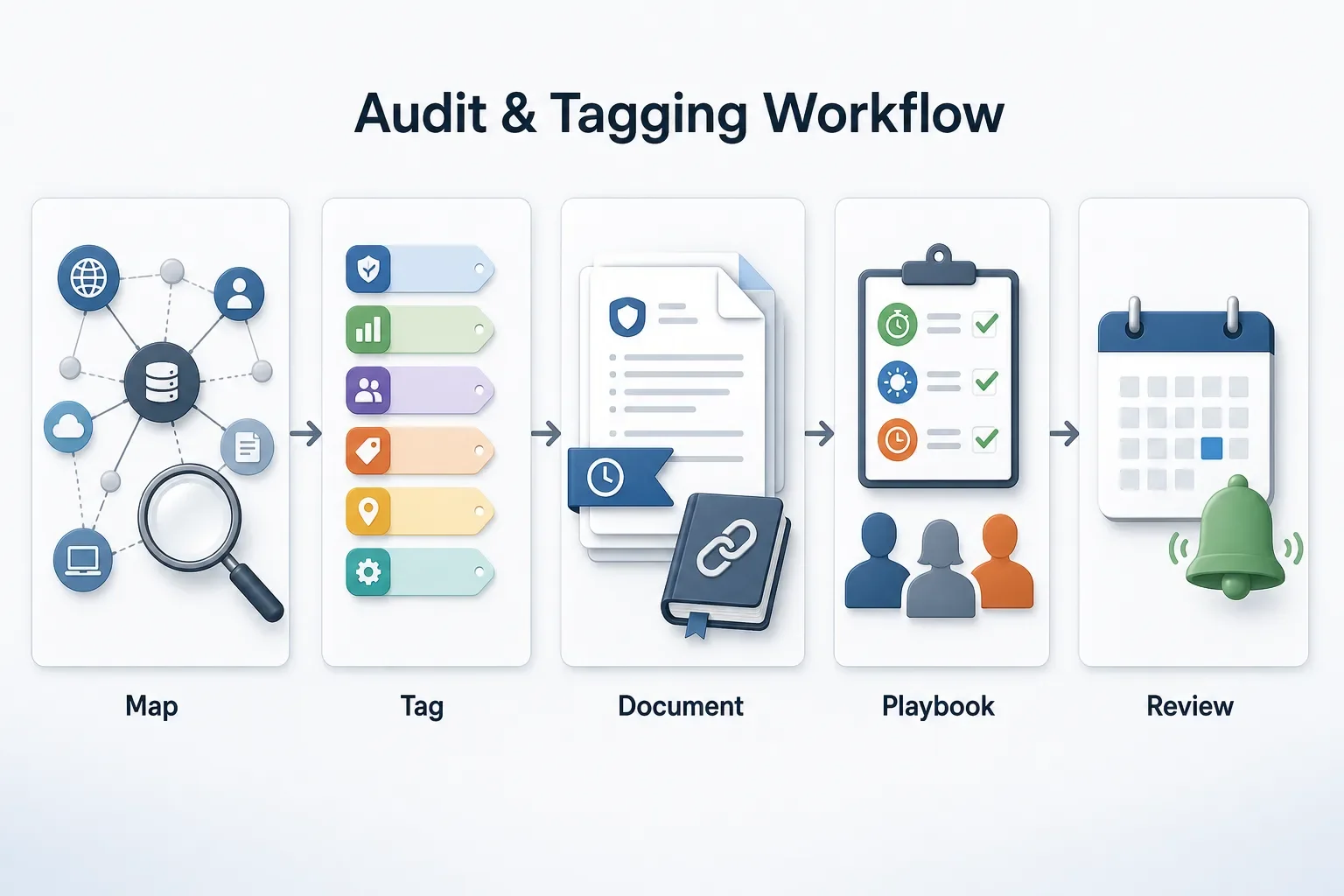
How to Audit and Tag DeFi Strategies for Regulatory Exposure
Practical, step‑by‑step workflow to map DeFi protocol touchpoints, tag regulatory exposure, preserve audit trails with documented rules and historical results, and prepare playbooks to respond quickly to enforcement events.
 2026-08-11
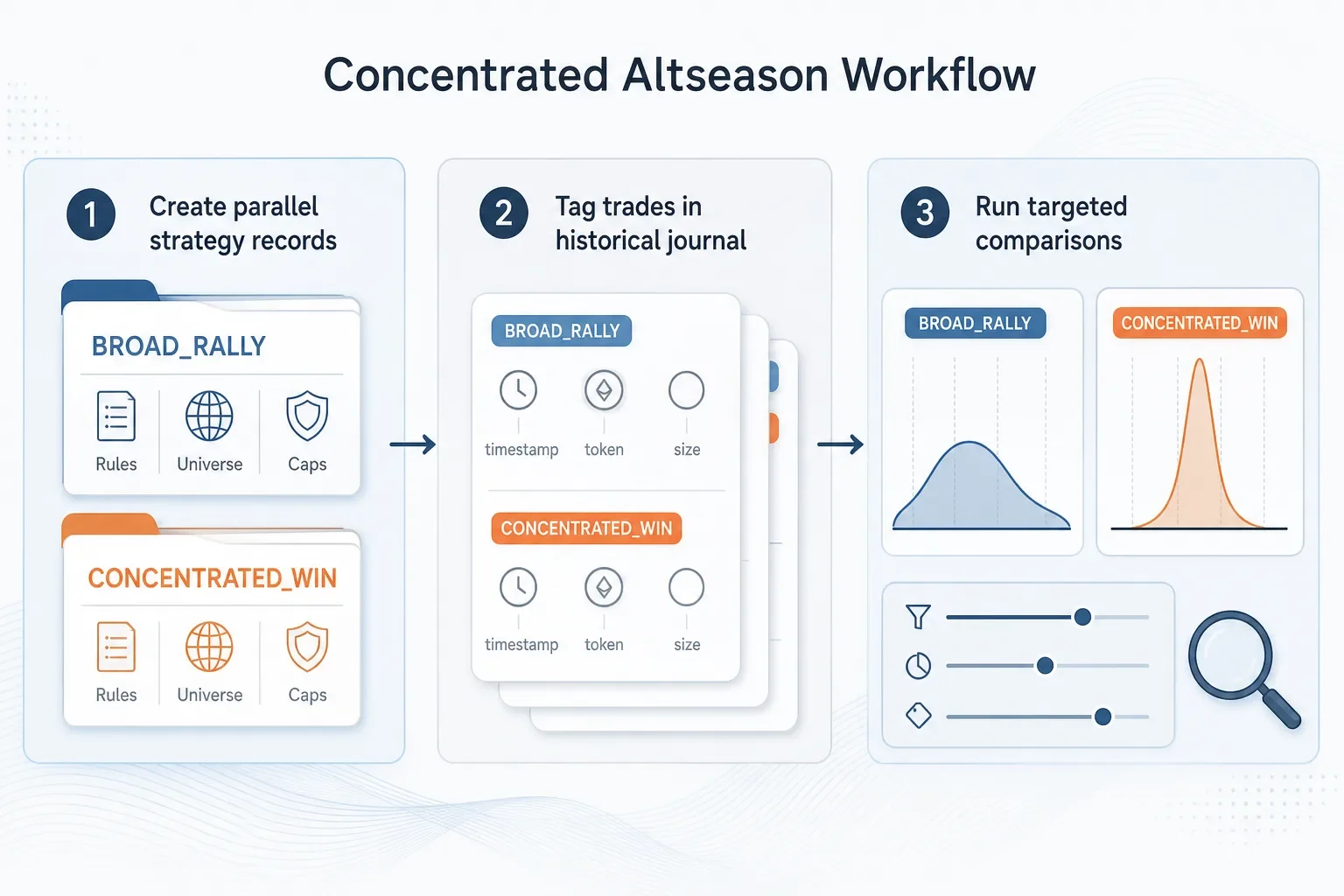
How to Adapt Your Strategies for a More Concentrated Altseason
Step-by-step workflow to adapt trading strategies for a concentrated altseason: create regime-specific strategy records, tag outcomes in a historical journal, compare results across token subsets, and apply concentration-aware sizing and monitoring.