
How Kazakhstan mining-policy reports change BTC’s short-term risk — an event-driven playbook
Reports that Kazakhstan considered mining rules tied to its national reserve highlight how jurisdictional policy can reallocate hash rate and create short-term BTC volatility. This playbook gives mechanics, if/then templates and a Regulatory Event Response checklist.
# How Kazakhstan mining-policy reports change BTC’s short-term risk — an event-driven playbook
Hook: Reports have circulated that Kazakhstan considered or proposed mining rules tied to its national reserve. At the time of writing these reports are unconfirmed — confirm original sources and dates before treating this as a finalized policy change. Traders should prepare BTC strategies for potential hash-rate and volatility shocks if such policy moves are implemented.
## Introduction
Jurisdictional mining-policy changes are classic event-driven regime shifts for Bitcoin. Even when a policy is only proposed or reported, it can alter miner behaviour, shift where hash rate is concentrated and generate short-term price volatility as market participants reassess supply-side dynamics.
This playbook explains the mechanics, summarizes past Kazakhstan-related mining disruptions at a high level (see note below), and provides ready-to-document if/then templates plus a Regulatory Event Response checklist you can use to model and backtest responses in your strategy workflow. Before applying any template, confirm the timeline and implementation details from primary sources.
Note on the Kazakhstan reporting: some media outlets and industry commentators have reported policy proposals or rule changes in Kazakhstan related to mining and state reserves. At the time of writing those reports were not universally confirmed; verify the original source and the implementation timeline before treating the reports as definitive.
## Why mining policy influences BTC price and volatility
Mining is Bitcoin’s supply-side infrastructure. Changes that affect miners’ operating costs, licensing or electricity access can influence price mechanics in three main ways:
- Hash-rate distribution: policy, power availability or licensing shifts can cause miners to pause, relocate or redeploy capacity, changing the geographic concentration of hash power.
- Miner economics and selling behaviour: new local costs or regulatory obligations can change miners’ incentives to sell their coinbase BTC, increasing short-term selling pressure.
- Sentiment and liquidity shocks: headlines about mining-policy changes can trigger rapid sentiment shifts and temporary liquidity withdrawals on exchanges, amplifying intraday moves.
These are generally catalysts for short- to medium-term dislocations rather than permanent changes to Bitcoin’s protocol-level supply schedule. Expect an initial volatility spike, a digestion phase while miners respond operationally, and a normalization phase as capacity redeploys.
## Case study: past Kazakhstan-related mining disruptions (high-level)
Kazakhstan has appeared in market commentary because it was a notable destination for miners during the mid-2021 post-China migration and experienced grid and regulatory stresses in the months that followed (reported in media during 2021–2022). Use these episodes as behavioural templates rather than precise blueprints:
- Miners often paused operations or relocated when faced with increased costs or uncertainty, rather than remaining permanently offline.
- Hash-rate migration is multi-stage: immediate pauses, transport/redeployment and eventual recommissioning elsewhere—this unfolds over weeks to months and provides an evolving signal to markets.
- Price action around these events typically showed heightened intraday and multi-day volatility driven by liquidity and sentiment rather than permanent demand shocks.
Before building rules based on a reported event, confirm the specific sources and dates for the incident you are modelling and tag them in your strategy documentation.
## Signals to track when modelling a mining-policy event
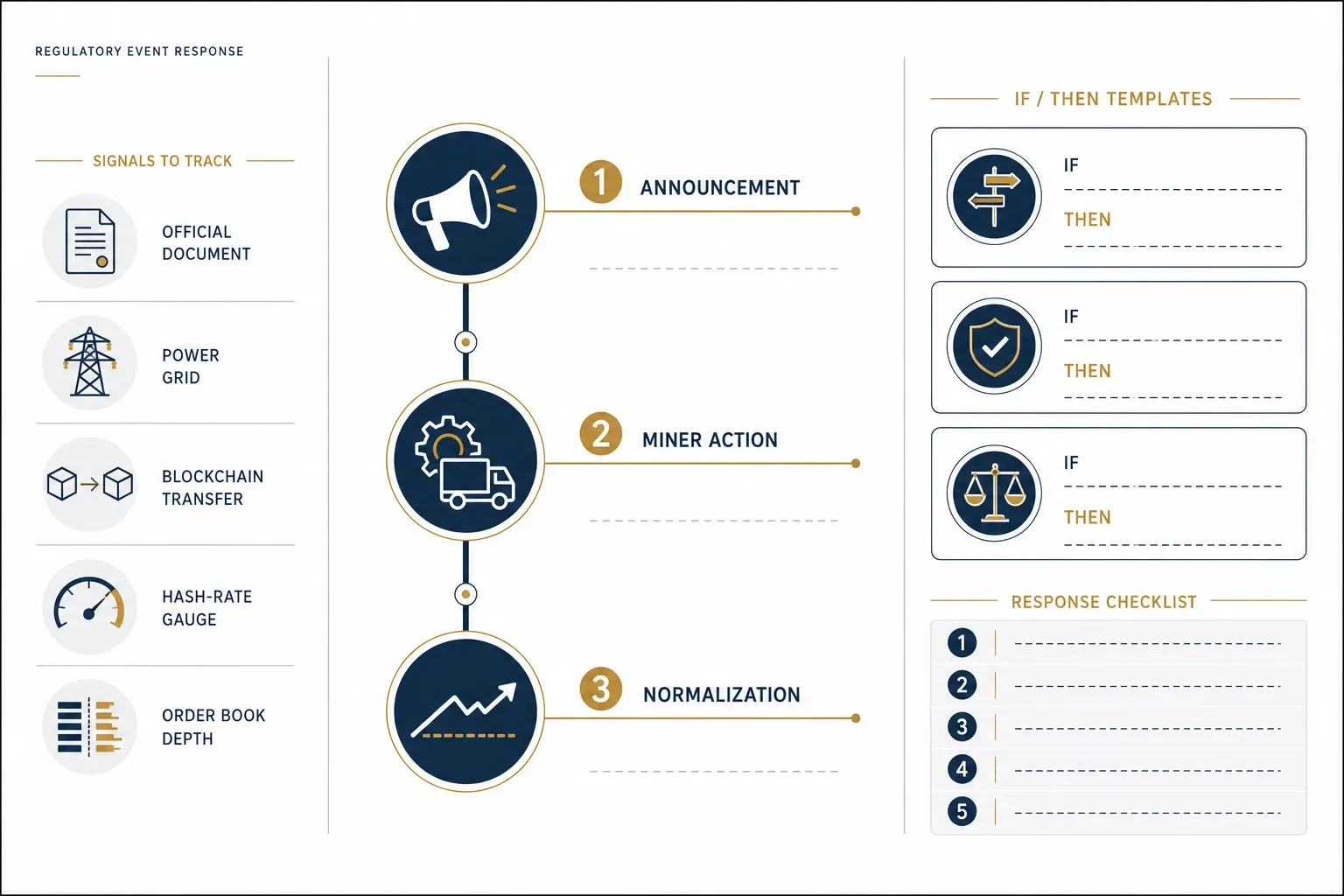
When you build scenarios, combine official and market signals:
- Official announcements and explicit implementation timelines (hard dates).
- Verified reports of miner compliance actions (shutdowns, relocations, licensing filings).
- Regional power-grid stress indicators: outages, rationing notices or public utilities statements.
- On-chain miner flows: spikes in transfers from known mining addresses to exchanges or custodians.
- Hash-rate estimates and difficulty-adjustment trends.
- Spot liquidity metrics and order-book depth on major venues.
Map each signal to a change in assumptions for volatility, liquidity or directional bias in your documented rules.
## If/Then templates for event-driven rules (ready to document)
Replace bracketed placeholders with your numeric thresholds and timeframes, and include numeric examples in the rule text as guidance (examples shown in parentheses):
- If: A verified policy announcement from a mining jurisdiction with a clear implementation date.
Then: Reduce intraday position size by [X%] (example X=30%) for the announcement-to-implementation window; widen stop-losses to account for thinner liquidity.
- If: Reports indicate sustained miner shutdowns or mass withdrawals from the jurisdiction over [Z] days (example Z=7 days).
Then: Shift directional bias to neutral for [N] trading days (example N=10) and reduce leverage; monitor on-chain miner outflows for re-entry signals.
- If: Measured hash-rate drops and difficulty-adjusted metrics indicate sustained reduction over [B] days (example B=14 days).
Then: Treat the period as an elevated-volatility window; tighten time-based exits (e.g., exit positions after [C] days unless on-chain indicators stabilise; example C=3 days).
- If: Miner coin transfers to exchanges spike above the [D]-day mean (example D=30-day mean + 2× standard deviation).
Then: Increase the probability weighting for short-term selling pressure; scale down new long entries and raise alerts for potential liquidity drains.
Document each rule in your Strategy Management workspace, record outcomes in the Historical Results Journal and use Strategy Comparison to evaluate variants against recorded outcomes.
## Regulatory Event Response checklist
1. Confirm the source, date and explicit implementation timeline; avoid acting on unverified screenshots or anonymous posts.
2. Quantify immediate market signals: hash-rate estimates, miner flows and grid reports.
3. Apply predefined if/then rules with recorded thresholds and position adjustments.
4. Log all actions, timestamps and rationale in your strategy documentation.
5. Monitor realised volatility and liquidity metrics frequently for the first 72 hours.
6. After the event window, record outcomes in the Historical Results Journal and run Strategy Comparison to evaluate alternative responses.
7. Iterate thresholds and timeframes based on recorded performance rather than intuition.
## Practical example: a short workflow
1. A reported policy announcement appears with a 30-day implementation window (tag event and archive the primary source). Apply the announcement rule to reduce intraday sizing by 30% for 30 days.
2. Over the next week, on-chain data shows increased miner transfers to exchanges (record transfer volumes and addresses in the journal). Trigger the miner-outflow rule to neutralize directional bias for 10 days.
3. After the implementation date, hash-rate and on-chain flows stabilise for X consecutive days (example X=14). Use Strategy Comparison to evaluate the original conservative rule versus a less conservative variant to inform future thresholds.
This converts reactive responses into repeatable, recorded experiments you can compare and iterate.
## Product fit and decision-support
Trade Strategy supports these steps through released features — Strategy Management, the Historical Results Journal and Strategy Comparison — so teams can document rules, record results and compare approaches over time. Trade Strategy is a decision-support platform: it lets users create and document strategy rules, record historical results and compare approaches; it does not execute trades, provide personalized financial advice, or guarantee profitable outcomes.
## Conclusion
Policy reports involving mining in jurisdictions like Kazakhstan are a clear example of events that can cause short-term hash-rate reallocation and elevated BTC volatility. Before applying any if/then template, confirm the timeline and implementation details from primary sources and tag those sources in your strategy documentation. Use disciplined, recorded experiments — not intuition — to refine your thresholds and timeframes over time.
Read the full playbook and download ready-to-import strategy templates on our blog: https://trade-strategy.com/blog
## Appendix: quick template summary (copy into your strategy workspace)
- Announcement rule: Reduce size until implementation date (example: reduce by 30%).
- Miner-outflow rule: Neutralize bias for [N] days if exchange transfers spike (example N=10).
- Hash-rate rule: Treat sustained hash-rate drops as elevated-volatility windows (example sustained < 85% of baseline for 14 days).
- Rebalance rule: Resume normal sizing only after X stable on-chain and hash-rate readings for Y days (example X=14, Y=14).
Use the checklist above to convert these templates into documented, testable strategies. Confirm all event timelines and primary sources before acting.
 2026-08-11
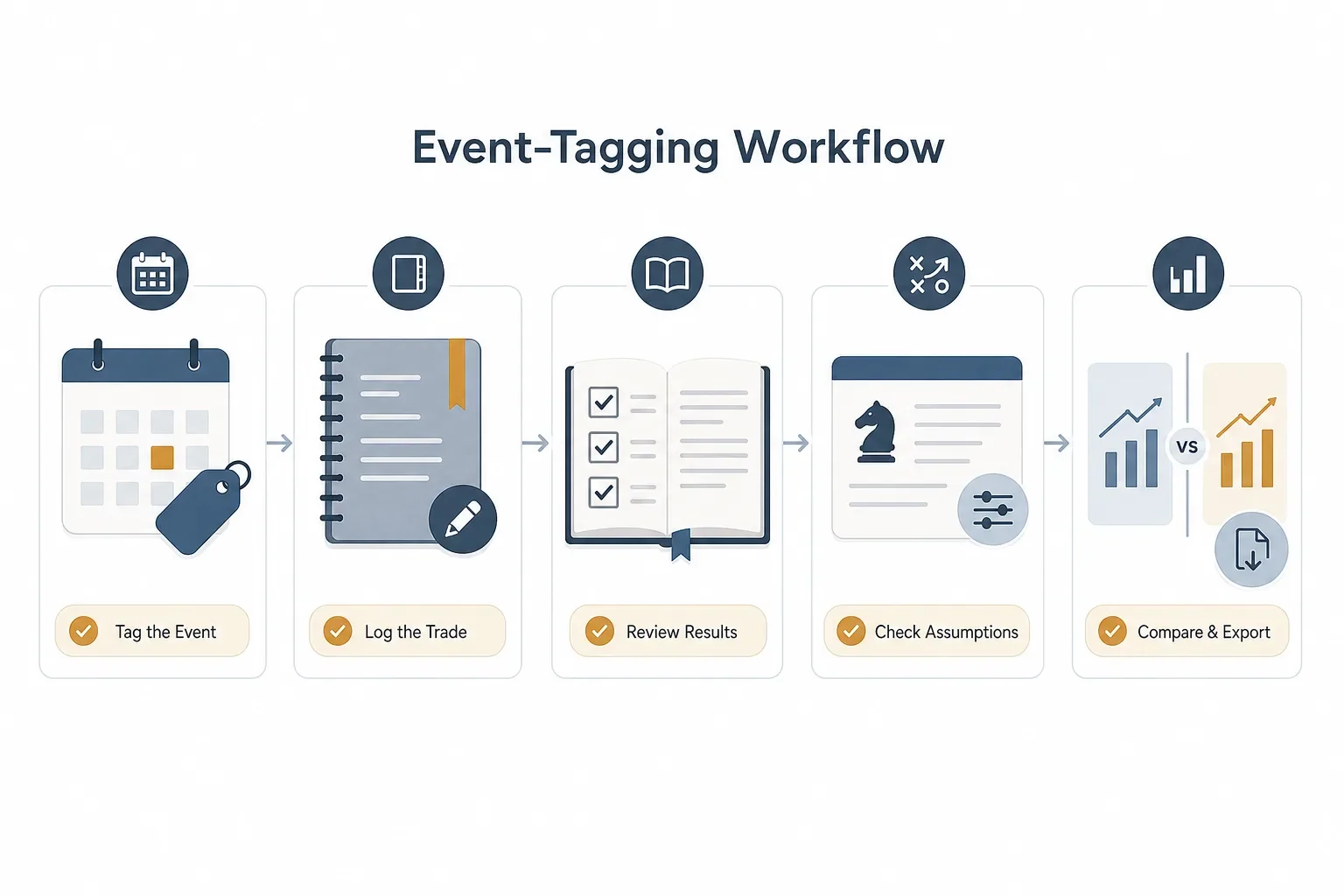
How to Audit Your Crypto Strategies After Earnings-Driven Volatility: A Step-by-Step Event-Tagging Workflow
A practical, step-by-step workflow to tag trades around earnings-driven crypto volatility, record outcomes in a Historical results journal, and use Strategy management and Strategy comparison to spot resilient rules.
 2026-08-11
When AI Flows Cool and Crypto Breaks Out: A Practical Playbook for Regime-Shift Trading
A practical playbook for detecting and responding to regime shifts when AI-driven flows cool and crypto potentially breaks out. Steps to detect, tag, re-test and compare strategies using Trade Strategy's released features.
 2026-08-11
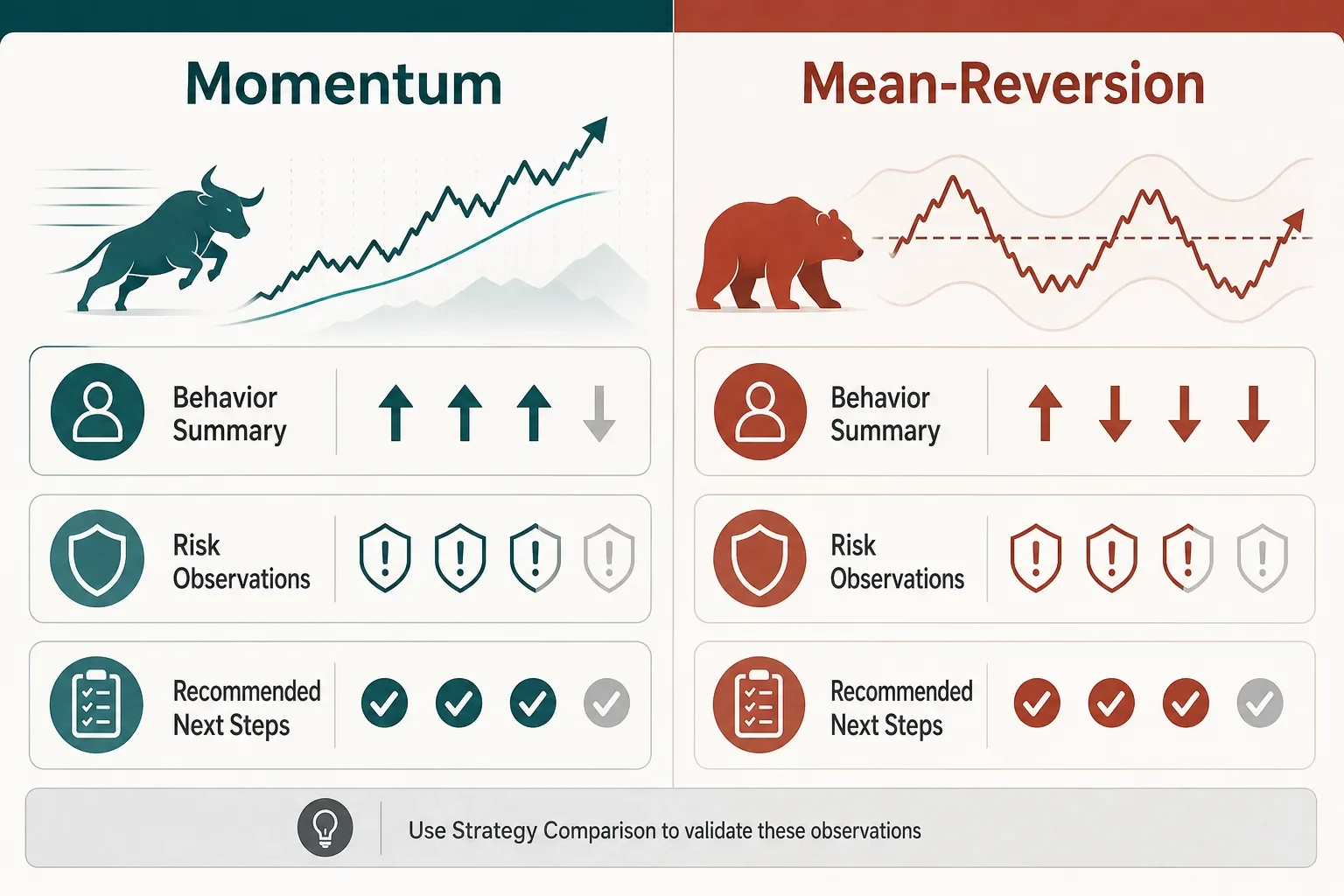
When Markets Decouple: A Trader’s Checklist for Post‑Event Strategy Reviews
A step‑by‑step playbook for post‑event reviews: capture hypotheses, tag trades by catalyst, log outcomes, and use Strategy Comparison to see what held up during the Korea chip crash vs. Bitcoin rally.