
Adapting trading strategies to regulatory shocks: a practical workflow
A step‑by‑step workflow for handling regulatory shocks: tag events, version rules with recorded rationale, and run pre/post comparisons using Trade Strategy’s Strategy Management, Historical Results Journal, and Strategy Comparison.
# Adapting trading strategies to regulatory shocks: a practical workflow
## Introduction
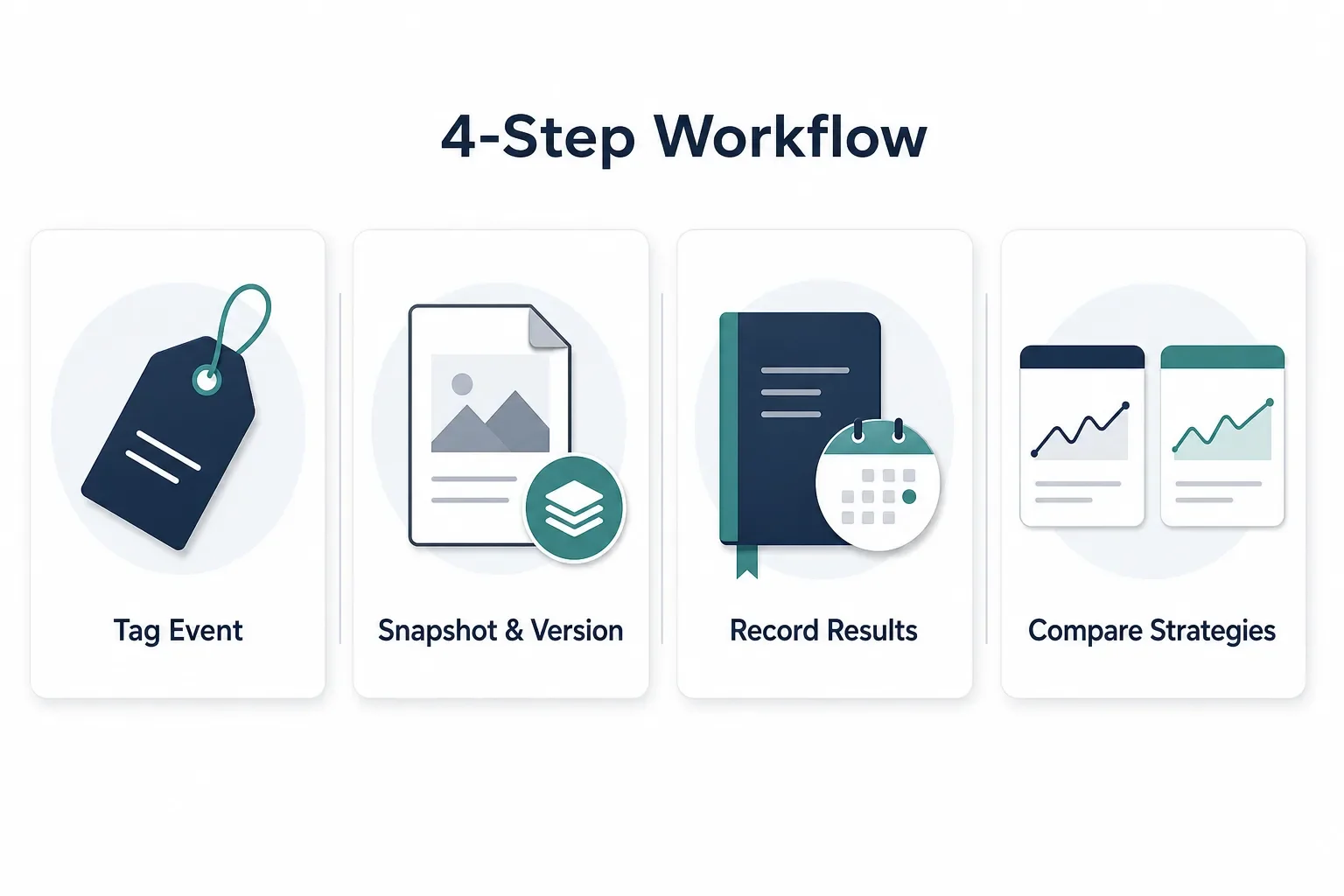
Regulatory headlines can rapidly change the market assumptions embedded in your rules. When policy moves arrive, you need a repeatable operational workflow to (1) tag the event, (2) version and document strategy changes, and (3) compare results before and after the event. This how‑to uses Trade Strategy’s released features—Strategy Management, Historical Results Journal, and Strategy Comparison—to run that workflow reliably and auditably.
## Why a repeatable workflow matters
Regulatory news creates event risk: higher volatility, liquidity shifts, and behavior changes across counterparties and venues. Ad hoc changes to live strategies are common in that environment, but unmanaged edits introduce governance gaps and make it difficult to determine whether a rule change helped or hurt performance.
A structured workflow reduces ambiguity, speeds decision-making, and preserves the evidence you need for post‑event review and compliance.
## The four-step workflow overview
1. Tag the event and create an event record.
2. Snapshot and version strategy rules with documented rationale.
3. Run or collect results and record them in the Historical Results Journal.
4. Use Strategy Comparison to assess pre/post performance and iterate.
Each step is described in practical detail below.
---
## Step 1 — Tag the event: create an auditable event record
### What to capture
Capture basic, machine-friendly metadata so you can filter and group later:
- Event ID: e.g., Reg-2026-07-24-SenateDems
- Short title: Senate Dems crypto limits coverage
- Category: Regulatory
- Severity (subjective): High / Medium / Low
- Timestamp: when the headline broke
- Immediate market observations: volatility spike, liquidity thinning, bid/ask widening
### How to implement with Trade Strategy
Use the Historical Results Journal to create an event entry or tag existing journal entries associated with the event window. Add the event ID and a short note outlining the market impact and your initial read. This gives you a persistent record you can filter by later when comparing results.
Practical tip: standardize event IDs and categories across the team so everyone tags the same way.
---
## Step 2 — Version strategy rules and document the rationale
### Snapshot before you change anything
Before modifying a live strategy, capture the current rule set and parameters. Naming conventions are important:
- StrategyName_v1.0 — baseline
- StrategyName_v1.1 — rule tweak after Reg-2026-07-24
### What to document
In Strategy Management, record:
- Exact rule changes (e.g., reduce max position size from 5% to 3%; tighten stop-loss from 3% to 2%)
- Why the change was made (link to the event ID)
- Expected failure modes and monitoring checklist
- Who approved the change and when
Documenting rationale makes post-event analysis meaningful. The goal is to record the decision logic and assumptions, not to claim predictive certainty.
---
## Step 3 — Record pre/post performance in the Historical Results Journal
### Organize results for apples-to-apples comparisons
If you already record execution or backtest outputs in the Historical Results Journal, tag those records with the event ID and the strategy version. If you don’t yet have a full automated feed, manually add summary entries for key windows (e.g., pre-event 30 days, post-event 30 days).
What to record per window:
- Time window and trade count
- Realized P&L or simulated return (label clearly)
- Maximum drawdown
- Average trade size and holding time
- Win rate and average win/loss
- Liquidity observations (slippage, fills)
### Practical example
Baseline: StrategyA_v1.0, window = 2026-06-24 to 2026-07-23
Post-event: StrategyA_v1.1, window = 2026-07-24 to 2026-08-23
Add two journal entries with the event tag Reg-2026-07-24 so you can easily pull those records into a comparison.
---
## Step 4 — Compare strategies and interpret results
### Use Strategy Comparison for structured analysis
With strategy versions and tagged journal entries in place, use Strategy Comparison to run side‑by‑side comparisons. Focus on:
- Relative change in realized return and drawdown
- Change in trade frequency and average exposure
- Any change in slippage or execution quality
- Whether the direction of performance change aligns with your hypothesis
### How to avoid false conclusions
- Compare equal-length windows and adjust for differing trade counts.
- If a strategy’s rules were tightened and trade volume fell, interpret profitability changes in context (less activity can reduce noise but also reduce opportunity capture).
- Don’t attribute all change to the regulatory event—control for other market-wide drivers where possible.
---
## Example operational timeline (playbook)
- T+0 (headline): Create event entry and tag immediately visible trades / records.
- T+1 hour: Snapshot live strategies and, if required, deploy a versioned rule change with documented rationale.
- T+1 day: Record initial market observations in the Historical Results Journal.
- T+7 days: Populate pre/post result windows and run Strategy Comparison for first-pass analysis.
- T+30 days: Complete the post-event review, record lessons, and decide whether to keep the new rule set or revert.
---
## Checklist: minimum items to capture for each regulatory event
- Event ID and timestamp
- Strategy versions affected and exact rule diffs
- Rationale and approver name
- Pre/post windows and journal entries with tags
- Strategy Comparison outputs and conclusion
Use the downloadable template to speed up adoption and ensure consistent tagging and review across your team.
---
## Roadmap note (planned features)
Trade Strategy plans AI-assisted BTC market analysis as part of the product roadmap. The product vision includes probabilistic, multi-timeframe BTC analysis and direction suggestions as decision support; these are roadmap items and not current capabilities. When available, such tools may provide additional context during event reviews.
---
## Conclusion
Regulatory shocks are inevitable. The difference between reactive chaos and controlled adaptation is a documented, repeatable workflow: tag the event, version rules with clear rationale, record results, and run structured comparisons. Using Strategy Management, the Historical Results Journal, and Strategy Comparison helps teams preserve an audit trail and make better-informed decisions after a policy surprise.
Read the full workflow and download the free event‑tagging + post‑event review template at https://trade-strategy.com/blog
 2026-08-11
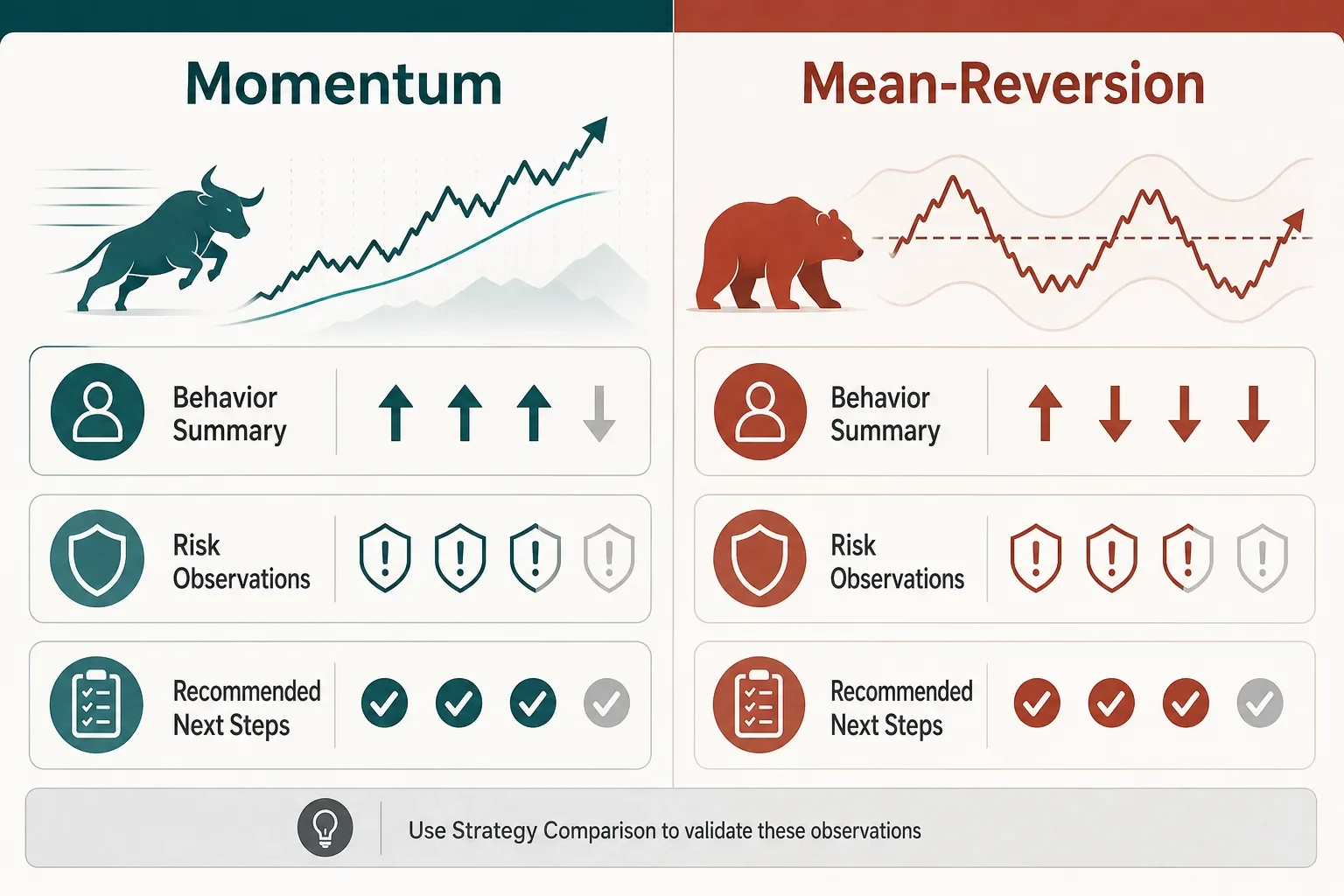
When Markets Decouple: A Trader’s Checklist for Post‑Event Strategy Reviews
A step‑by‑step playbook for post‑event reviews: capture hypotheses, tag trades by catalyst, log outcomes, and use Strategy Comparison to see what held up during the Korea chip crash vs. Bitcoin rally.
 2026-08-11
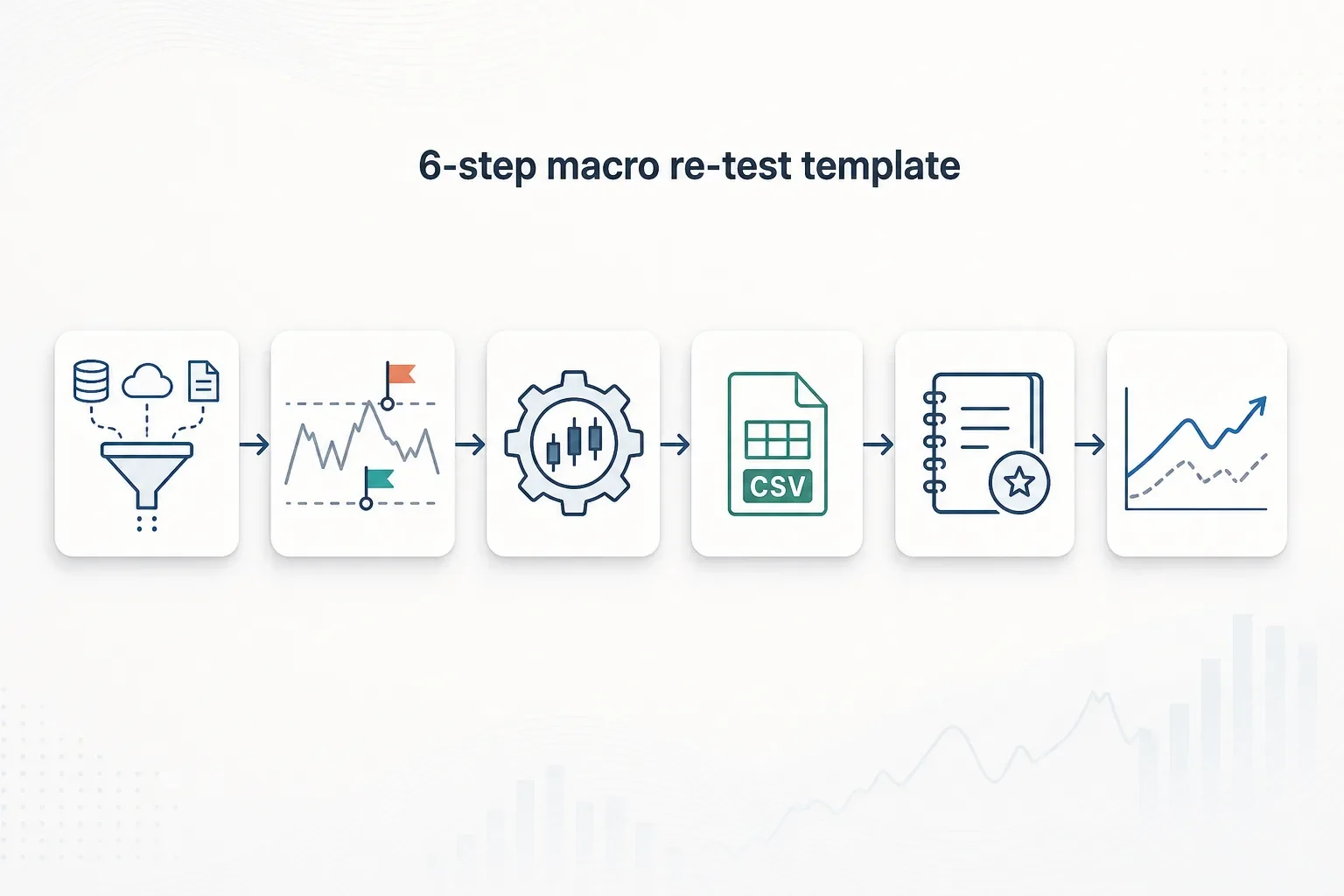
How to Backtest Crypto Strategies Against Rising Rates and Oil Shocks — A Practical Template
A hands-on template for re-testing crypto strategies when rates and oil spike: ingest macro time series, run variant backtests, record results in Trade Strategy, and compare outcomes to adapt sizing rules.
 2026-08-11
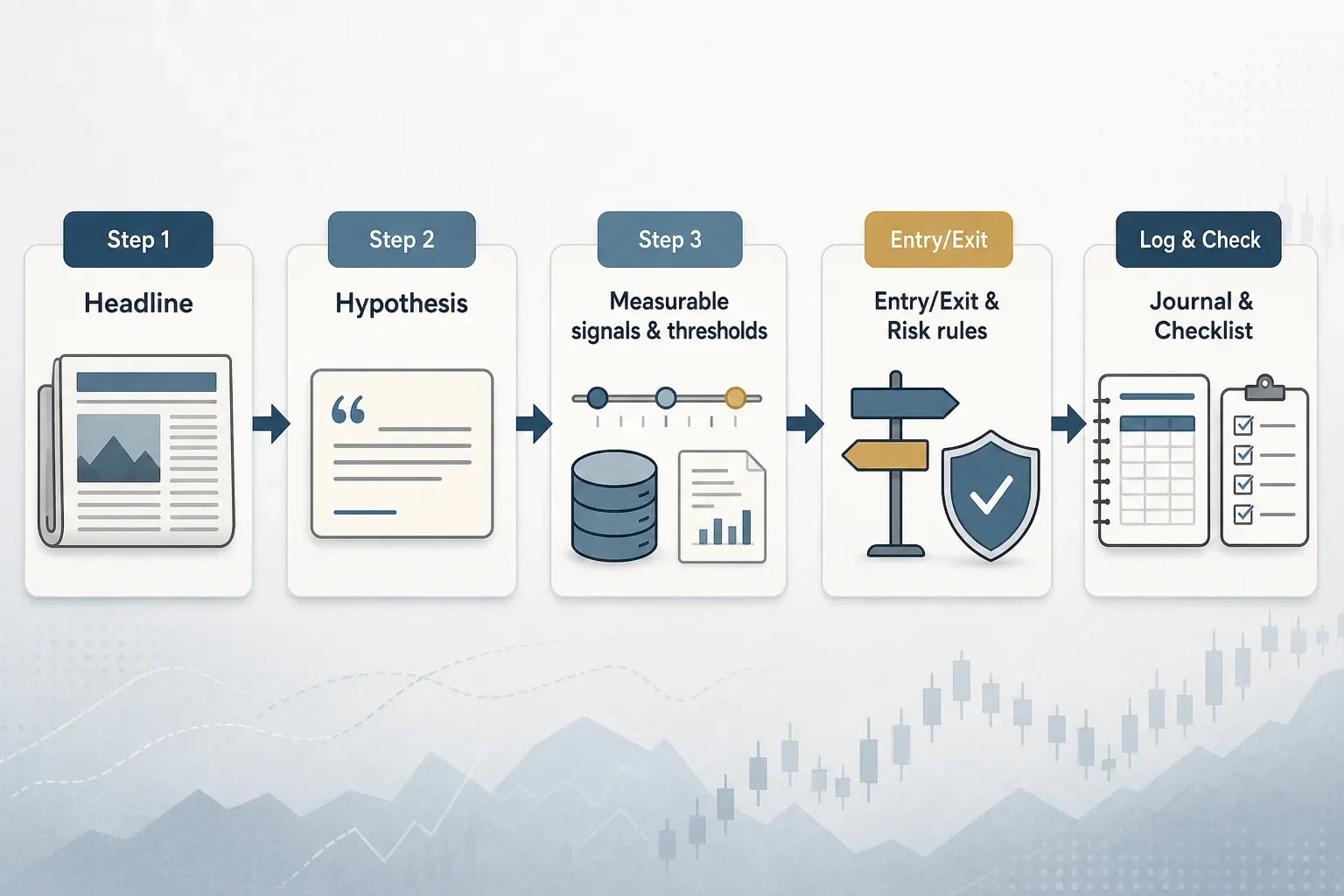
How to Turn BTC ETF Inflows and ETH Outflows into Testable Trade Hypotheses
A step-by-step guide for turning BTC ETF inflow and ETH outflow headlines into measurable trade hypotheses, with a practical template and checklist to log, test and iterate.