
Backtesting Tokenized Stocks: Data, Pitfalls and Practical Steps for Traders
A practical how-to for backtesting tokenized HK/UK/Korea equities: what data matters, market-microstructure pitfalls, a labeling checklist, slippage examples and how to use Trade Strategy to document and compare results.

# Backtesting Tokenized Stocks: Data, Pitfalls and Practical Steps for Traders
Tokenized stocks trade differently — your backtest assumptions should too. As tokenized versions of HK, UK and Korean equities appear across venues, quant and crypto-native traders need a practical workflow to evaluate strategies on tokenized instruments and compare them to their listed-underlying counterparts.
This guide explains which data and market-microstructure differences matter when backtesting tokenized equities, provides a checklist for labeling tokenized feeds, shows common slippage pitfalls with illustrative examples (non-numeric), and outlines practical next steps. It also describes how Trade Strategy can be used today to document strategies, record historical results and compare outcomes across instruments.
## Why tokenized stocks require different backtest assumptions
Tokenized stocks are not identical to their listed shares. Key differences that affect backtests include:
- Trading hours: many tokenized venues operate around the clock, while listed shares trade on exchange schedules.
- Liquidity profile: tokenized venues can show more fragmented and shallower visible liquidity than the primary exchange.
- Fees and custody: platform fees, deposit/withdrawal charges and custody models may affect net execution cost beyond headline spreads.
- Price-discovery and arbitrage: friction in settlement or limited arbitrage participants can produce divergence between token and listed prices.
- Data consistency: timestamping, quote cadence and trade-print availability can differ across feeds.
Treat tokenized instruments as a separate execution venue. Backtests that assume identical fills, spreads or settlement timing as the underlying exchange risk overstating real-world alignment.
## Data you need (and how to validate it)
Assemble the following inputs before you build venue-aware simulations:
- Tick or best-bid-offer (BBO) feeds for both the tokenized instrument and the underlying listed equity.
- Trade prints (executed prices) for each venue when available.
- Venue metadata: trading hours, lot sizes, minimum tick, fee schedules and settlement timing.
- Historical order-book depth snapshots or aggregated depth if available.
- FX rates when instruments are quoted in different currencies.
- Corporate actions aligned to each feed (splits, dividends, de-listings).
Validation checklist
- Normalize timestamps: convert every feed to UTC and confirm the time resolution matches your simulation assumptions.
- Verify ticker mappings: do not assume identical symbols mean the same instrument across venues.
- Inspect for gaps and stale quotes that indicate poor historical coverage.
- Cross-check trade prints vs. quote activity to identify venue-specific reporting artifacts.
## Market-microstructure effects to model
Explicitly model these differences rather than assuming they cancel out:
- 24/7 vs. exchange hours. Liquidity available overnight on a token venue may be substantially different from exchange-session liquidity; simulate time-of-day dependent fill behavior.
- Fragmented liquidity. Tokenized supply can concentrate among a small set of participants; scale slippage and execution risk by order size relative to visible depth on that venue.
- Fees and custody drag. Include platform fees, custody premiums and any transfer costs when computing net returns for strategies that move capital across venues.
- Latency and timestamp inconsistencies. For cross-venue signals or arbitrage, simulate conservative response times and the risk of stale quotes.
## Practical backtesting steps
1. Label and separate feeds. Treat tokenized instruments as distinct tickers with their own metadata (see checklist below).
2. Normalize prices and timestamps. Convert prices to a common quote currency and all timestamps to UTC.
3. Build a venue-aware execution model. For each simulated order, select the venue and apply a slippage model that depends on quoted spread, visible depth and time-of-day.
4. Simulate settlement and custody effects. For strategies that rebalance across custody domains, model the time and explicit costs to move value between tokenized custody and traditional brokers.
5. Store provenance. Record which feed, execution model and parameters produced each recorded result so you can reproduce and audit outcomes.
## Checklist: labeling tokenized feeds (operational minimum)
- [ ] Unique feed ID separate from the listed equity symbol
- [ ] Venue name and jurisdiction
- [ ] Trading hours / 24-7 flag
- [ ] Tick size and minimum order size
- [ ] Fee schedule and withdrawal/custody costs
- [ ] Quote granularity and historical coverage window
- [ ] Currency denomination and FX pair mapping
- [ ] Data vendor confidence / known gaps
Use explicit labels in your dataset (for example, include the venue prefix and a token flag) so backtests never conflate venues.
## Examples of common slippage pitfalls (illustrative)
Example — time-of-day fill differences
A mean-reversion strategy that posts limit orders during local nighttime on the listed exchange may experience materially fewer fills on the token venue at the same quoted price. To avoid optimistic backtest results, model fill probability as time-of-day dependent and calibrate it to observed token-venue fills in your dataset.
Example — underestimating market impact
An order that is a small fraction of daily volume on the listed exchange can represent a much larger fraction of visible liquidity on a tokenized venue. Rather than applying the same impact model across venues, compute order size as a proportion of visible depth on each venue and scale impact estimates accordingly.
Example — hidden custody and transfer costs
Tokenized platforms sometimes impose fees or minimums on withdrawals and transfers. If your strategy requires frequent cross-venue rebalancing, accumulate those fixed or per-transfer costs into your P&L simulation rather than treating spreads alone as execution cost.
(These examples are illustrative. Use your own historical data to calibrate probabilities and impact curves.)
## How to use Trade Strategy today
Trade Strategy is a decision-support platform for managing and evaluating trading strategies. You can use the platform today to:
- Create, organize and document trading strategies and their rules and assumptions.
- Record and monitor historical strategy results and save metadata about which feeds, execution models and parameters were used for recorded runs.
- Compare strategies using saved information and recorded historical results to evaluate how tokenized and listed executions diverge.
Practically, keep a dedicated strategy entry for tokenized variants with explicit fields for feed labels, slippage profiles and custody cost assumptions. Save out-of-sample simulation runs and record which assumptions produced each outcome so you can revisit and audit results.
## Recommended next steps: data, modeling and product priorities
For trading and ops teams
- Ingest both tokenized and listed venue data and keep them labeled separately.
- Build conservative, time-of-day-aware slippage models and test sensitivity to liquidity shocks using your historical records.
- Add monitoring dashboards that track real-time divergence between tokenized and listed prices, spreads and depth to spot regime changes quickly.
For product teams and vendors (market priorities)
- Prioritize onboarding tokenized feeds with clear metadata and provenance.
- Provide venue-aware backtesting templates and slippage primitives that reflect around-the-clock trading and fragmented depth as roadmap priorities.
- Produce educational checklists and worked examples for quant and operations teams to speed safe evaluation.
These are practical priorities to guide implementation and should be validated against your own data and risk tolerances.
## Conclusion
Tokenized stocks introduce useful new instruments but also meaningful backtesting and operational differences. Treat tokenized venues as separate execution venues: label and validate their feeds, adopt venue-aware slippage and settlement models, and keep meticulous records of assumptions and results. This approach improves reproducibility and makes it easier to diagnose why tokenized and listed outcomes diverge.
You can use Trade Strategy today to document strategy rules, record historical results and compare performance across tokenized instruments and their listed counterparts — helping your team maintain reproducibility and clear provenance while iterating on execution and modeling assumptions.
Read the full guide and access downloadable checklists and example workflows: https://trade-strategy.com/blog
 2026-08-11
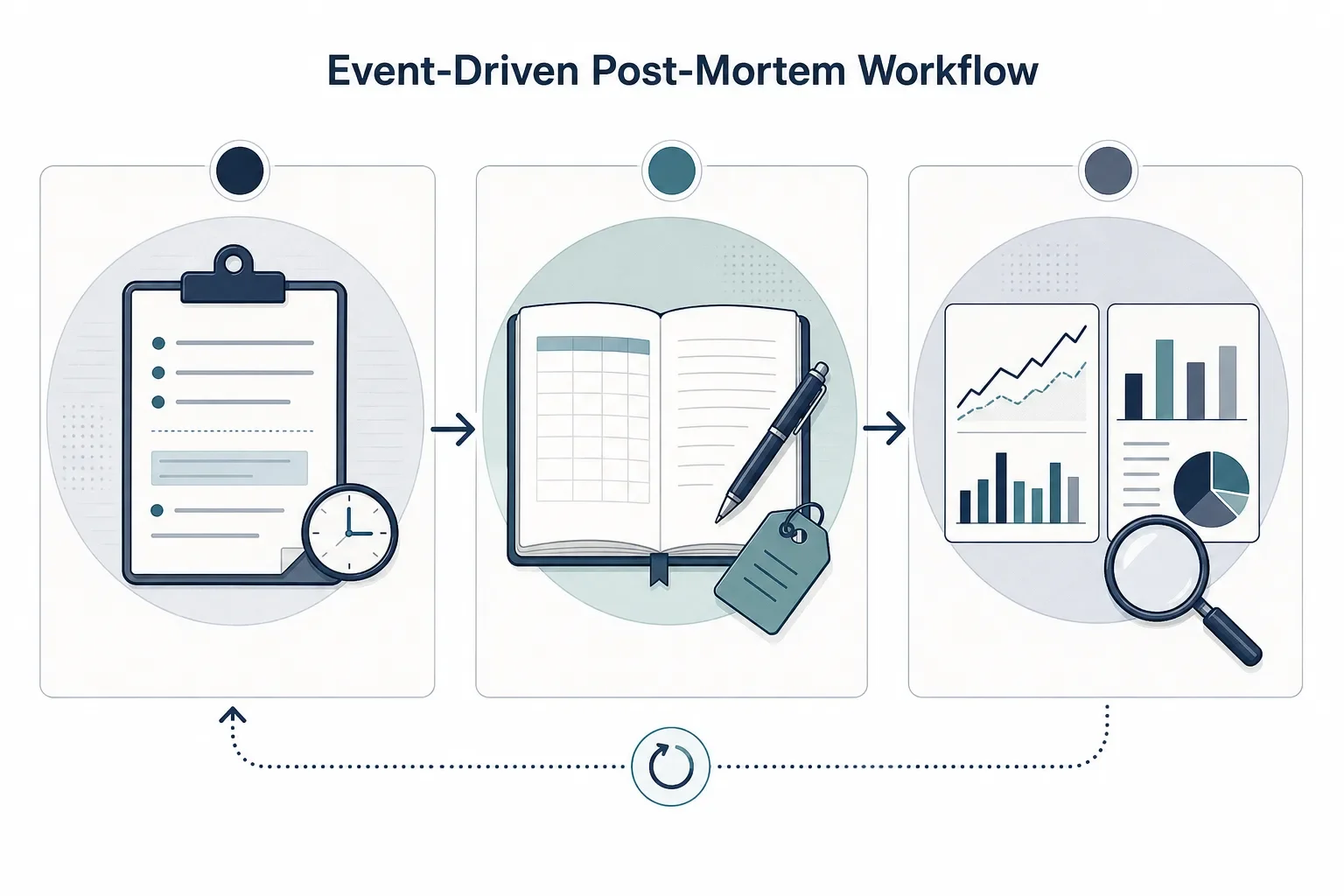
How to run an event-driven post‑mortem for your BTC strategy (step‑by‑step)
A step‑by‑step workflow for BTC event‑driven post‑mortems: record rules, log trades, compare pre/event/post windows using Trade Strategy to identify rule breakpoints and create testable updates.
 2026-08-11
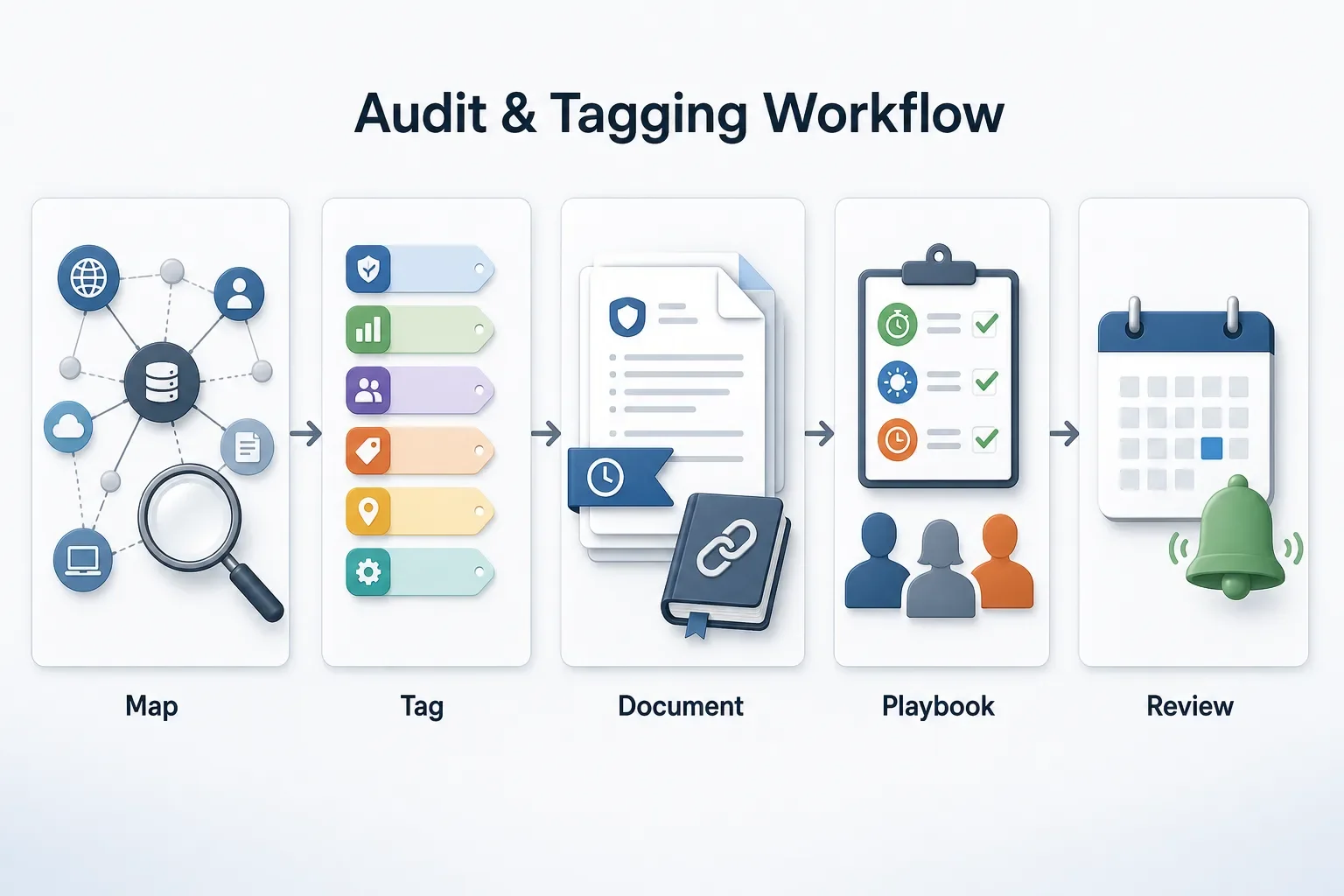
How to Audit and Tag DeFi Strategies for Regulatory Exposure
Practical, step‑by‑step workflow to map DeFi protocol touchpoints, tag regulatory exposure, preserve audit trails with documented rules and historical results, and prepare playbooks to respond quickly to enforcement events.
 2026-08-11
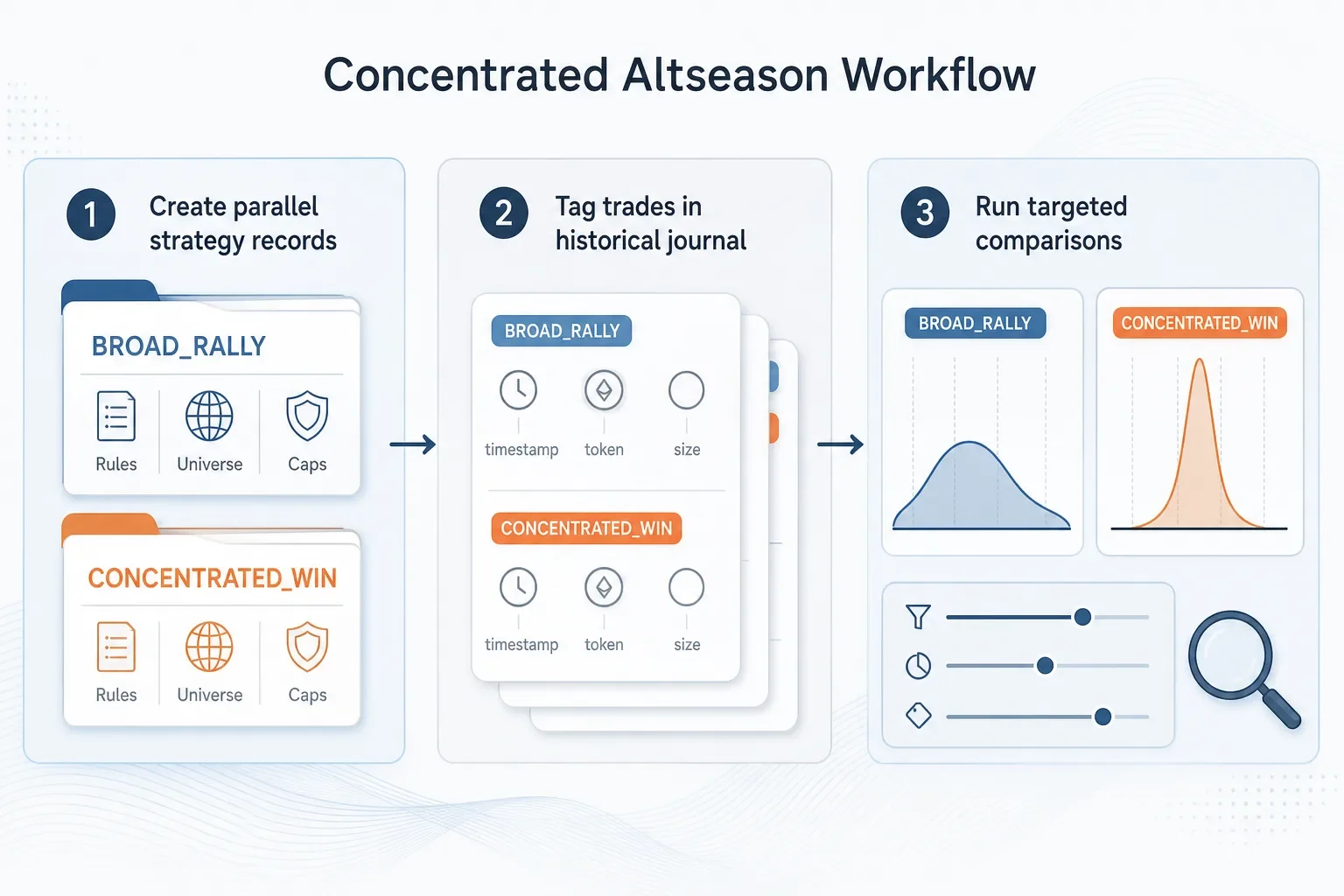
How to Adapt Your Strategies for a More Concentrated Altseason
Step-by-step workflow to adapt trading strategies for a concentrated altseason: create regime-specific strategy records, tag outcomes in a historical journal, compare results across token subsets, and apply concentration-aware sizing and monitoring.