
Zilliqa Ledger Vulnerability: An Urgent Private Key Security Checklist for Traders
A Ledger app flaw may expose private keys. Read an urgent, step-by-step checklist for traders: isolate compromised accounts, rotate keys, move funds safely, segregate live funds, and document remediation using Trade Strategy.
# Zilliqa Ledger Vulnerability: An Urgent Private Key Security Checklist for Traders
A recently reported Ledger app vulnerability affecting Zilliqa can allow attackers to recover signers’ private keys. For traders running on-chain strategies or managing custody, this type of flaw elevates operational risk: a single exposed private key can mean total loss of funds, disrupted strategies, and a frantic incident response.
This article summarizes the immediate actions trading teams should take and provides a practical checklist you can run today. It also explains how Trade Strategy’s released features—strategy management, the historical results journal, and strategy comparison—can help you document playbooks, tag account roles, and maintain an auditable record of your remediation steps.
## Immediate incident summary (concise)
- What happened: A Ledger app vulnerability was reported that may allow recovery of private keys for affected signers. The underlying details are in public reporting.
- Why traders care: Any private-key recovery vector threatens funds under self-custody or hardware signing workflows used by on-chain strategies.
- Purpose of this guide: Provide an operational checklist to limit exposure now and to harden deployments for future incidents.
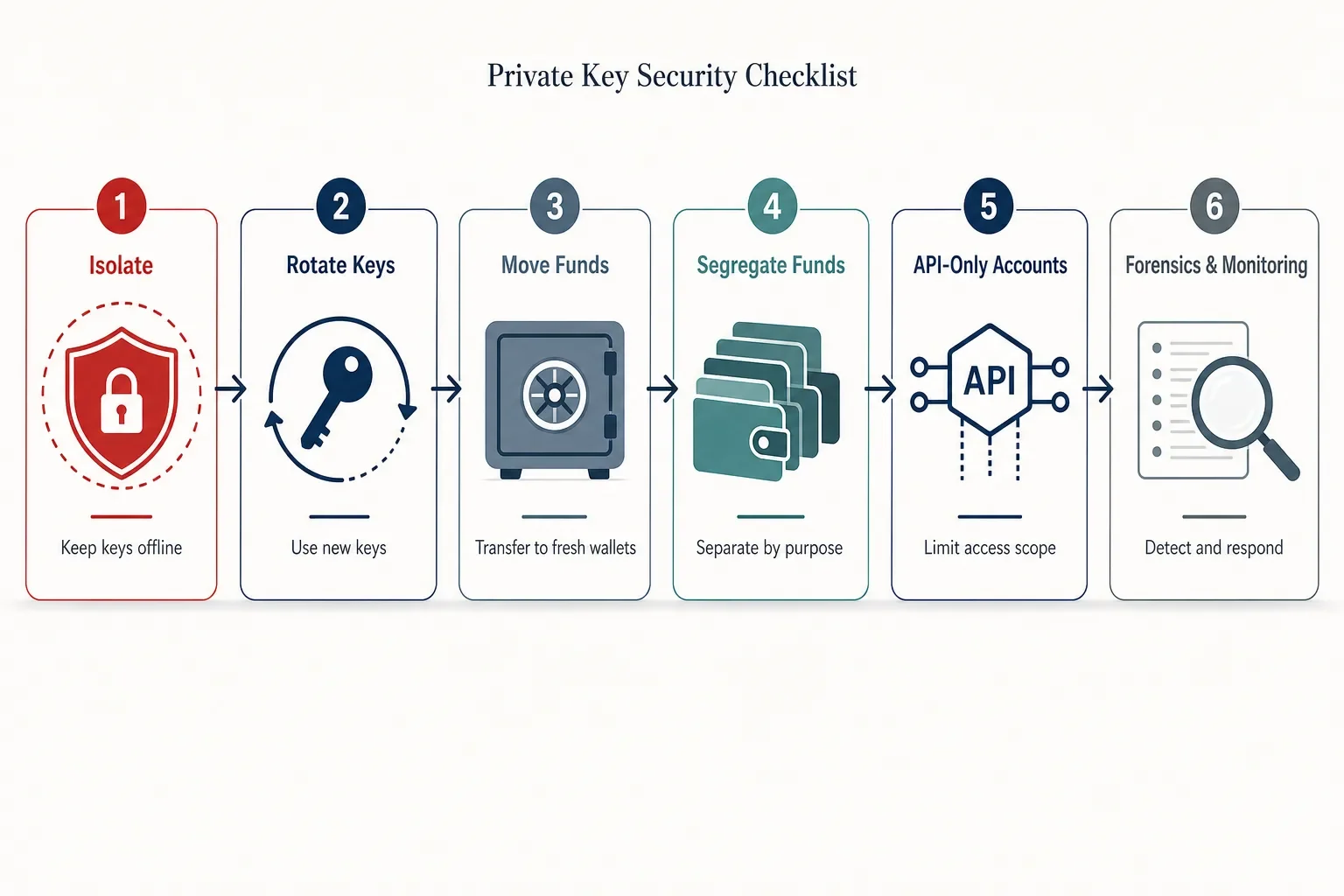
## Urgent checklist: Step-by-step actions for ops teams
Follow these steps in order. Prioritize containment first, then recovery and documentation.
### 1) Isolate suspected compromised accounts
- Immediately mark the potentially affected accounts as compromised in your internal systems.
- Pause any automated strategies or signing workflows that reference those keys.
- If you use orchestration tools, remove compromised keys from signing pools or disable the signing agent until you can confirm key integrity.
Practical example: If Account A is used for live trading and shows signs of compromise, pause live strategies that reference Account A and switch execution to a separate, pre-approved standby account.
### 2) Rotate and revoke keys where possible
- For each compromised signer, generate a fresh keypair on an unaffected device or within a trusted custody provider.
- Update smart-contract approvals and on-chain allowances that reference the old key—revoke allowances where supported.
- If the compromised key has multisig authority, follow your multisig’s recovery/rotation procedure immediately.
Note: Key rotation can be time-sensitive. Treat smart-contract revocations and allowance resets as high priority.
### 3) Move exposed funds to safer custody
- Move funds away from addresses controlled by compromised keys. Prefer cold storage or a reputable custody solution with institutional controls if immediate migration is necessary.
- When moving funds, split large balances across multiple addresses to reduce single-point exposure while transfers are in progress.
Warning: Any on-chain transfer from a compromised address can be front-run by an attacker who already controls the private key. Coordinate moves quickly and consider transaction ordering and gas strategies.
### 4) Segregate live/trading funds and restrict permissions
- Enforce strict separation: hot (active trading), warm (operational reserve), cold (long-term storage). Define maximum balances and usage rules for each tier.
- Use smart-contract wrappers, allowance limits, and time-delays where possible to reduce the damage a single key can do.
Practical example: Keep only the minimum required balance for on-chain arbitrage in the hot account. Store the rest in cold or multisig storage that requires multiple approvals.
### 5) Prefer API-only execution accounts where applicable
- When possible, use accounts with narrow API permissions for automated execution (read-only or tightly scoped signing via a gateway). Avoid using general-purpose hot keys with broad access.
- Use role-based access controls in your orchestration layer so automated systems cannot access funds beyond their defined scope.
### 6) Post-incident: forensic, notification and monitoring
- Preserve logs and metadata for affected devices and signing requests. This supports forensics and any vendor disclosure timelines.
- Notify counterparties, exchanges, and custody partners as appropriate.
- Increase monitoring on addresses previously associated with compromised keys (balance changes, unexpected approvals).
## Operational playbooks: what to document now
Documenting your incident response is as important as performing it. Use a clear, versioned playbook covering:
- Roles and escalation (who approves key rotation, who signs transfer transactions).
- Step-by-step key-rotation procedures for each wallet type you use.
- Approval flows for moving funds and revoking allowances.
- Post-rotation validation steps (on-chain confirmations, third-party notarization).
Practical example: Create a short checklist that a junior ops engineer can follow to rotate a hot key and move funds to cold storage, including required approvers and expected on-chain confirmations.
## How Trade Strategy helps you capture and enforce these procedures
Trade Strategy’s released capabilities can support your incident response and long-term operational hygiene without performing custody actions on your behalf:
- Strategy management: Create a dedicated “Secure Deployment” strategy that documents account roles (hot/warm/cold), the rules that govern transfers, and your key-rotation playbook. Treat this as an operational strategy with explicit pre-live and emergency steps.
- Historical results journal: Record each remediation action as a dated entry—key rotations, transfers, revoked allowances, and approvals. This creates a time-stamped record you can use for audits and post-incident reviews.
- Strategy comparison: After an incident, use saved strategy documents and historical entries to compare how different deployment patterns performed (for example, hot-only vs. hot+multisig) and refine your secure-deployment playbook.
Using these released features, you can keep a clear, auditable trail of decisions and actions without relying on memory or ad hoc chat logs.
## Longer-term mitigations and best practices
- Adopt multisig for high-value accounts and require multiple independent approvers for critical transfers.
- Use hardware wallets only as one element of a broader custody strategy—combine them with multisig, timelocks, and third-party custody when appropriate.
- Establish pre-approved standby accounts and rehearsed key-rotation drills to reduce decision time during incidents.
- Build monitoring that alerts you to sudden allowance changes, large outgoing transfers, or unusual signing activity.
## Conclusion
A hardware-wallet app vulnerability is a high-impact reminder that private key security must be operationalized, not assumed. Immediate containment, rapid key rotation and careful fund migration are top priorities. Equally important is documenting your playbook and keeping auditable records of every remediation step.
Trade Strategy’s strategy management, historical results journal, and strategy comparison features can help capture your secure-deployment rules, tag account roles, and record remediation steps so your team can respond faster and review what happened.
Read the full checklist and download our free "Secure Deployment for On‑Chain Strategies" checklist at https://trade-strategy.com/blog
Disclaimer: This article provides operational guidance for teams and is not personalized financial or legal advice. Do not assume every mitigation applies to your setup; consult your legal and security advisors as needed.
 2026-08-11
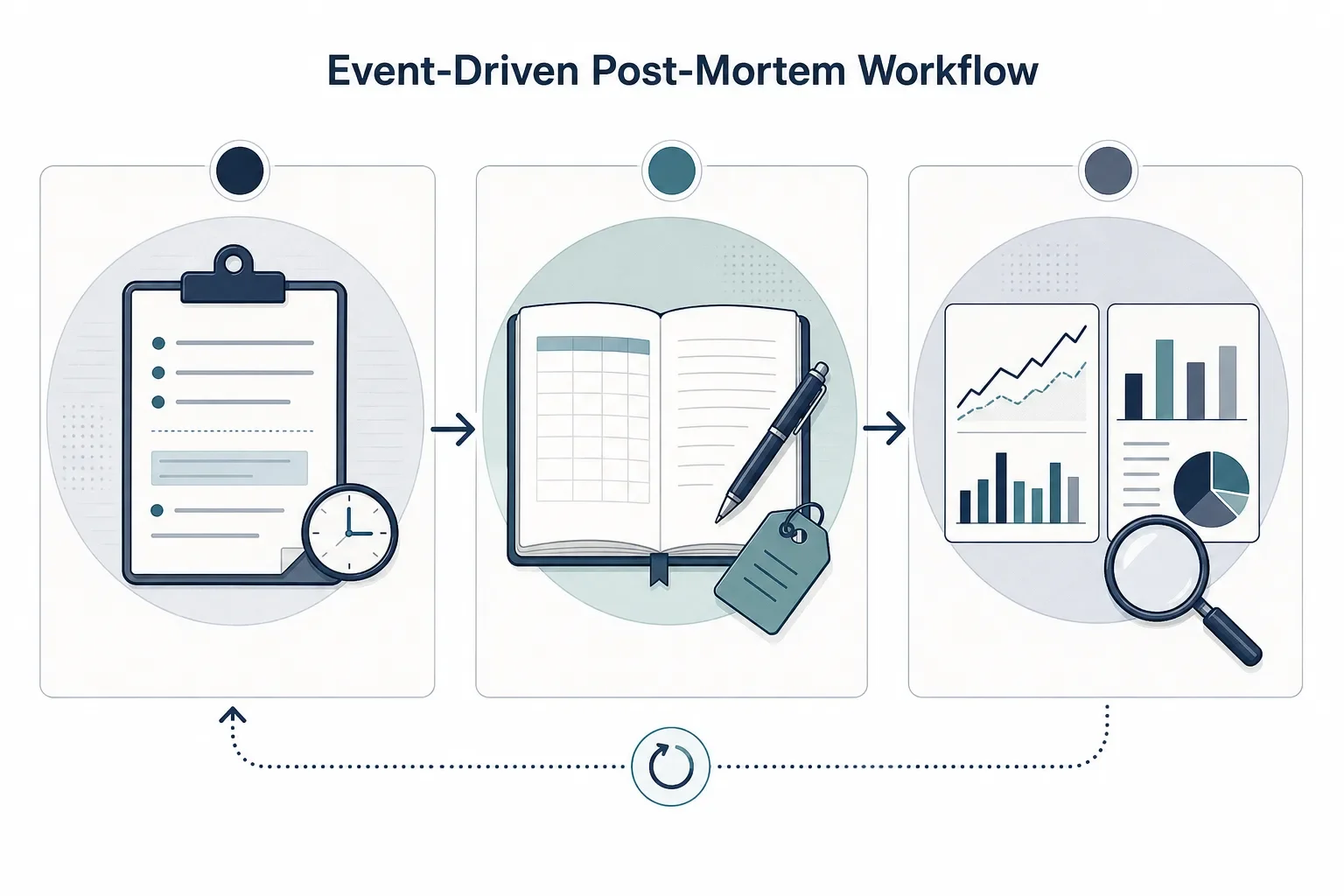
How to run an event-driven post‑mortem for your BTC strategy (step‑by‑step)
A step‑by‑step workflow for BTC event‑driven post‑mortems: record rules, log trades, compare pre/event/post windows using Trade Strategy to identify rule breakpoints and create testable updates.
 2026-08-11
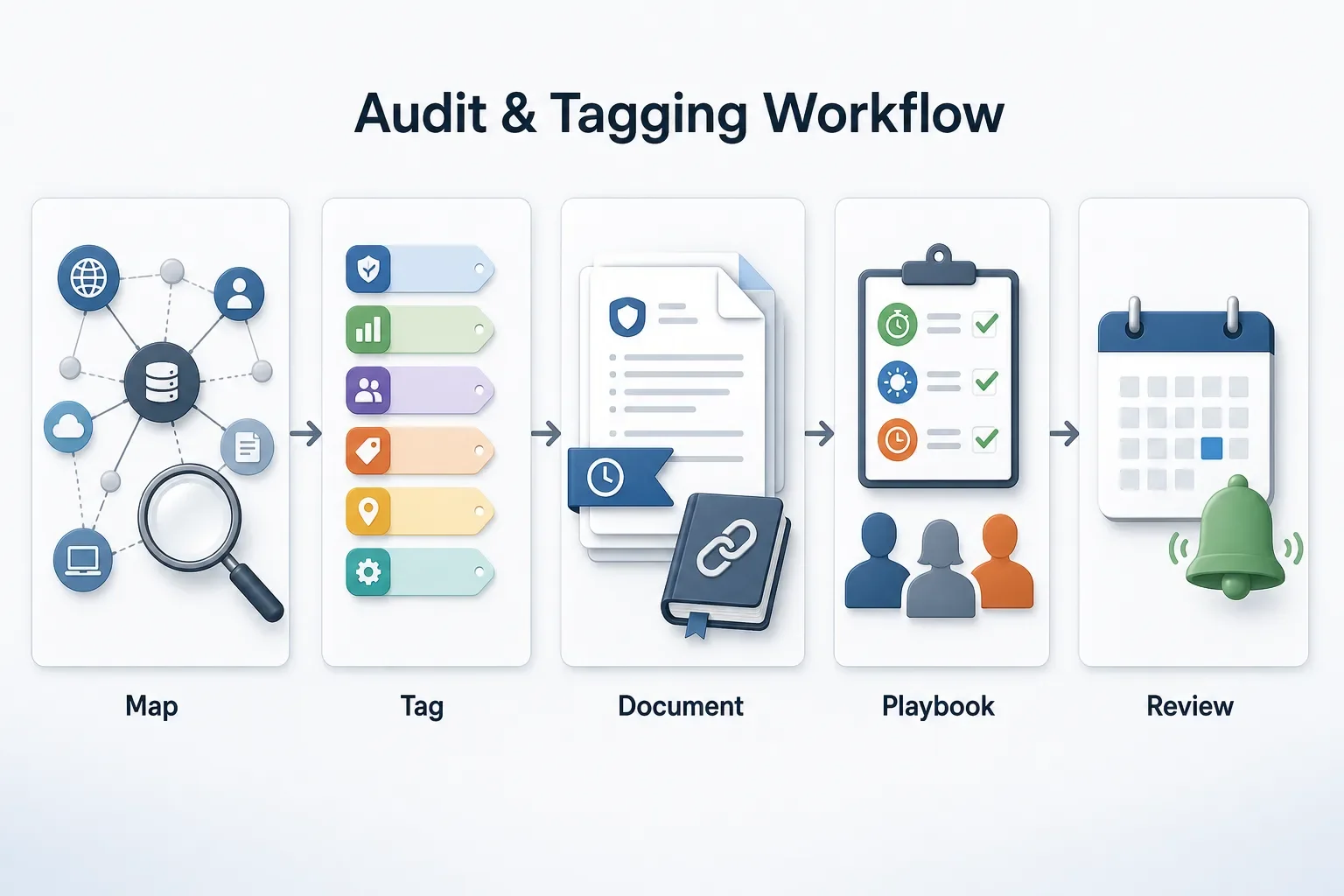
How to Audit and Tag DeFi Strategies for Regulatory Exposure
Practical, step‑by‑step workflow to map DeFi protocol touchpoints, tag regulatory exposure, preserve audit trails with documented rules and historical results, and prepare playbooks to respond quickly to enforcement events.
 2026-08-11
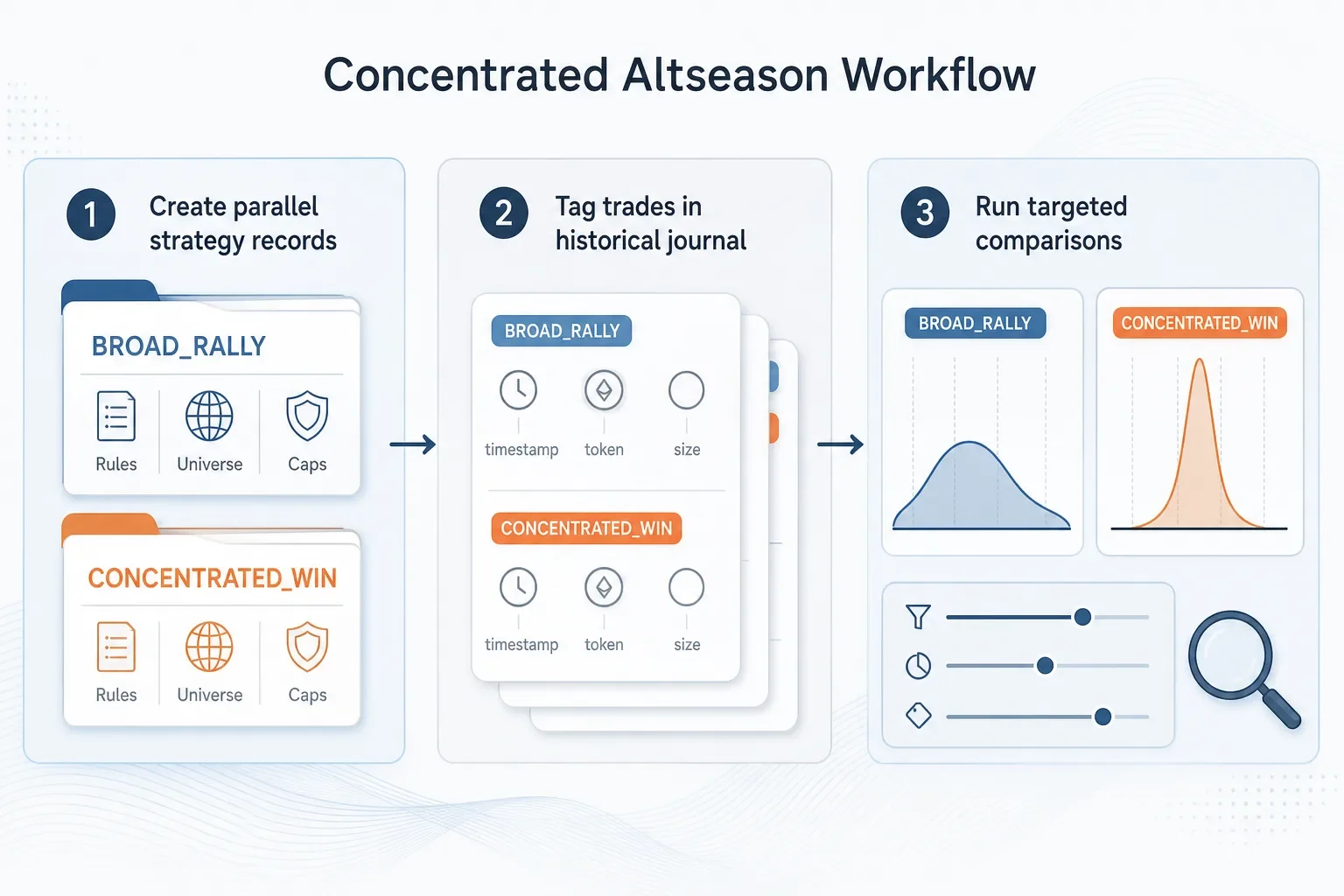
How to Adapt Your Strategies for a More Concentrated Altseason
Step-by-step workflow to adapt trading strategies for a concentrated altseason: create regime-specific strategy records, tag outcomes in a historical journal, compare results across token subsets, and apply concentration-aware sizing and monitoring.