
Exchange Delistings Playbook: Inventory, Migrate and Protect Your Strategies (BitMEX Case Study)
A practical step-by-step playbook for trading teams to detect delistings, inventory exposed strategies, clean backtests, apply risk controls and decide whether to migrate, redesign, or retire strategies — with a BitMEX case study.
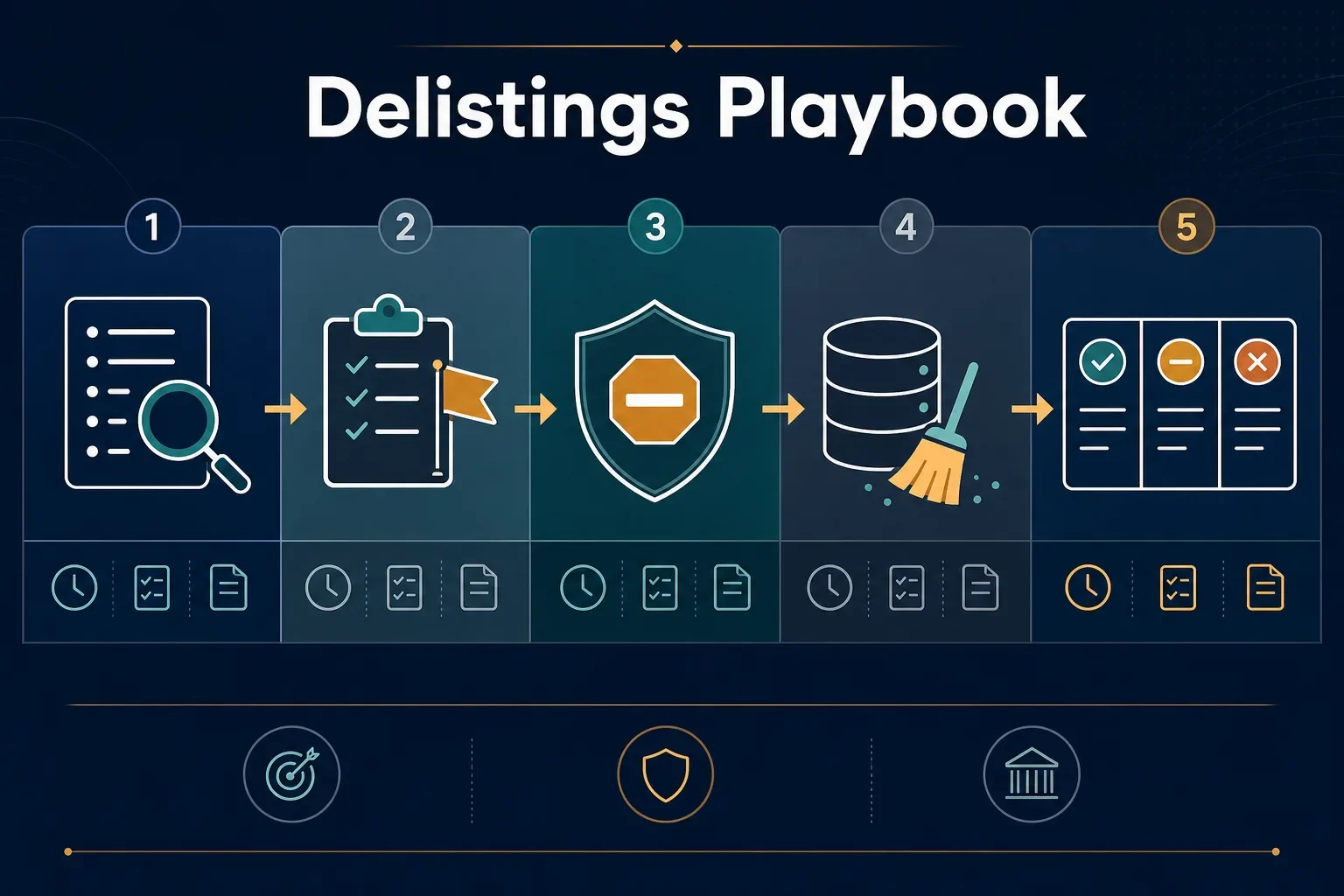
# Exchange Delistings Playbook: Inventory, Migrate and Protect Your Strategies (BitMEX Case Study)
BitMEX recently removed 65 markets — a timely reminder that exchanges can change product listings with little notice. For teams running rule-based systems, delistings are an operational risk: they can orphan positions, invalidate tickers in historical datasets, and produce divergence between live performance and backtests.
This playbook provides a step-by-step operational workflow to detect delistings, inventory affected instruments and strategies, clean historical results, apply emergency risk controls, and decide whether to migrate, redesign, or retire strategies. A short BitMEX case study includes practical pre/post checks you can run immediately.
## Why exchange delistings matter for rule-based trading
Delistings affect strategy operations in four practical ways:
- Instrument availability: rules that reference a delisted symbol will fail or stop receiving fills.
- Historical data integrity: ticker changes or removed markets can break backtests and misleadingly change metrics.
- Liquidity and execution risk: even if a like-for-like instrument exists elsewhere, liquidity and fees may differ materially.
- Operational overhead: monitoring, documenting and communicating strategy changes consumes team time.
Having a documented, repeatable process reduces downtime and helps teams make transparent remediation decisions.
## Step 1 — Detect and inventory exposures
Objective: know exactly which strategies and rules reference delisted markets.
Checklist:
1. Centralize symbol references
- Export the list of symbols referenced by each strategy.
- Search strategy docs and code repositories for exchange-specific symbols and market types (perpetual, futures, options).
2. Cross-check exchange announcements
- Use the exchange’s official delisting announcement as the authoritative source.
- Map announced tickers to your symbol list (watch for naming differences).
3. Produce an exposure inventory
- For each affected strategy record: strategy name, rule that references the instrument, position status (open/closed), last execution timestamp, and last P&L attribution.
Practical note: keep this inventory in a single living document so the team can act quickly. Trade Strategy users can create and organize strategy definitions and document rule references to simplify this mapping and make rule references discoverable.
## Step 2 — Emergency risk controls for orphaned or at-risk positions
Objective: prevent uncontrolled losses while the team evaluates options.
Immediate actions:
- Halt automated execution that references delisted tickers.
- Flag strategies with open positions for manual review.
- If the exchange allows position transfer to another instrument (e.g., roll to a similar contract), document the CMA (cost, margin, approvals) before executing.
- Apply simple liquidity filters: if the replacement market’s spread or depth is outside pre-agreed bounds, do not migrate automatically.
Escalation path: assign an owner for each flagged strategy and set a deadline for remediation decisions (e.g., 24–72 hours depending on market activity).
## Step 3 — Clean historical data and backtests
Objective: ensure your historical performance and backtests remain meaningful after delistings.
Data-cleaning steps:
1. Identify where historical data references the delisted ticker. Replace or remap to the exchange’s canonical symbol historically, if the exchange provides one.
2. If a like-for-like instrument does not exist, remove affected periods from backtests or tag them as influenced by a removed instrument.
3. Re-run backtests with two scenarios:
- Conservative: exclude the delisted instrument entirely to see worst-case impact on results.
- Replacement: run with the proposed substitute instrument (adjust for spreads, margin, and liquidity assumptions).
Document every change. Use a results journal to record the pre-change metric, the cleaning action, and the post-change metric so you can audit and explain any performance drift. Trade Strategy provides a historical results journal where users can record and monitor pre/post comparisons and the assumptions used during remediation.
## Step 4 — Make a migration decision: matrix and examples
Objective: choose whether to migrate, redesign or retire the strategy.
Decision factors (create a simple scoring matrix for each affected strategy):
- Business impact: Is the strategy core to your portfolio or a low-conviction experiment?
- Replaceability: Is there a like-for-like instrument with comparable liquidity and fee structure?
- Technical effort: How many rule changes, data mappings, and backtest reruns are required?
- Risk delta: How much does expected execution cost increase (wider spread, slippage, margin)?
Example decision outcomes:
- Migrate: High business impact + adequate replacement instrument + modest technical work.
- Redesign: High impact but no good replacement — change the strategy logic to target a different market structure.
- Retire: Low impact, high remediation cost — archive the strategy and document rationale.
- Pause and monitor: If uncertain, suspend live activity and capture performance metrics on a staged replacement.
For each selected path, document the implementation plan and rollback criteria.
## BitMEX case study: practical pre/post checks
Context: BitMEX announced removal of 65 markets. Below are practical checks teams can run immediately after that announcement.
Pre-checks (before any action):
- Confirm list of delisted tickers against your exposure inventory.
- Identify open positions tied to each delisted market and capture current P&L and margin.
- Snapshot the latest backtest results that include those instruments.
Post-checks (after remapping or remediation):
- Re-run backtests excluding delisted markets and compare key metrics (win rate, drawdown, return volatility). Record changes and explanations.
- If you migrated to alternate instruments, run a small-scale live paper trial or reduced-size deployment and track slippage, realized spreads and fills.
- Update your strategy documentation with the exact rule changes, decision rationale, and who approved them.
Concrete example: if a futures perp you used on BitMEX was removed, map it to a perp on another venue only after validating liquidity depth and historical correlation. Document the change in your results journal and compare the pre-removal P&L stream to the new stream over a trial period.
## Governance and post-mortem
After immediate remediation, run a post-mortem to capture lessons and harden processes:
- How long did detection take? Where were the bottlenecks?
- Which strategies required the most effort to remediate and why?
- Update runbooks, templates and the exposure inventory process.
Maintaining a strategy-change log and a historical results journal makes post-mortems concrete: you can point to recorded metrics and the exact rule modifications used during remediation. Trade Strategy lets users document strategy rules and record historical results to simplify these audits.
## Conclusion
Delistings are an operational reality. A methodical, documented workflow — detect, inventory, contain, clean, decide, and document — minimizes downtime and supports defensible remediation choices. Use an exposure inventory, emergency risk controls, cleaned backtests and a simple migration decision matrix to guide action.
Read the full playbook and download free migration checklists and strategy-update templates on our blog: https://trade-strategy.com/blog
If you track multiple strategies, consider centralizing rule definitions and using a historical results journal to record pre/post impacts and compare alternatives.
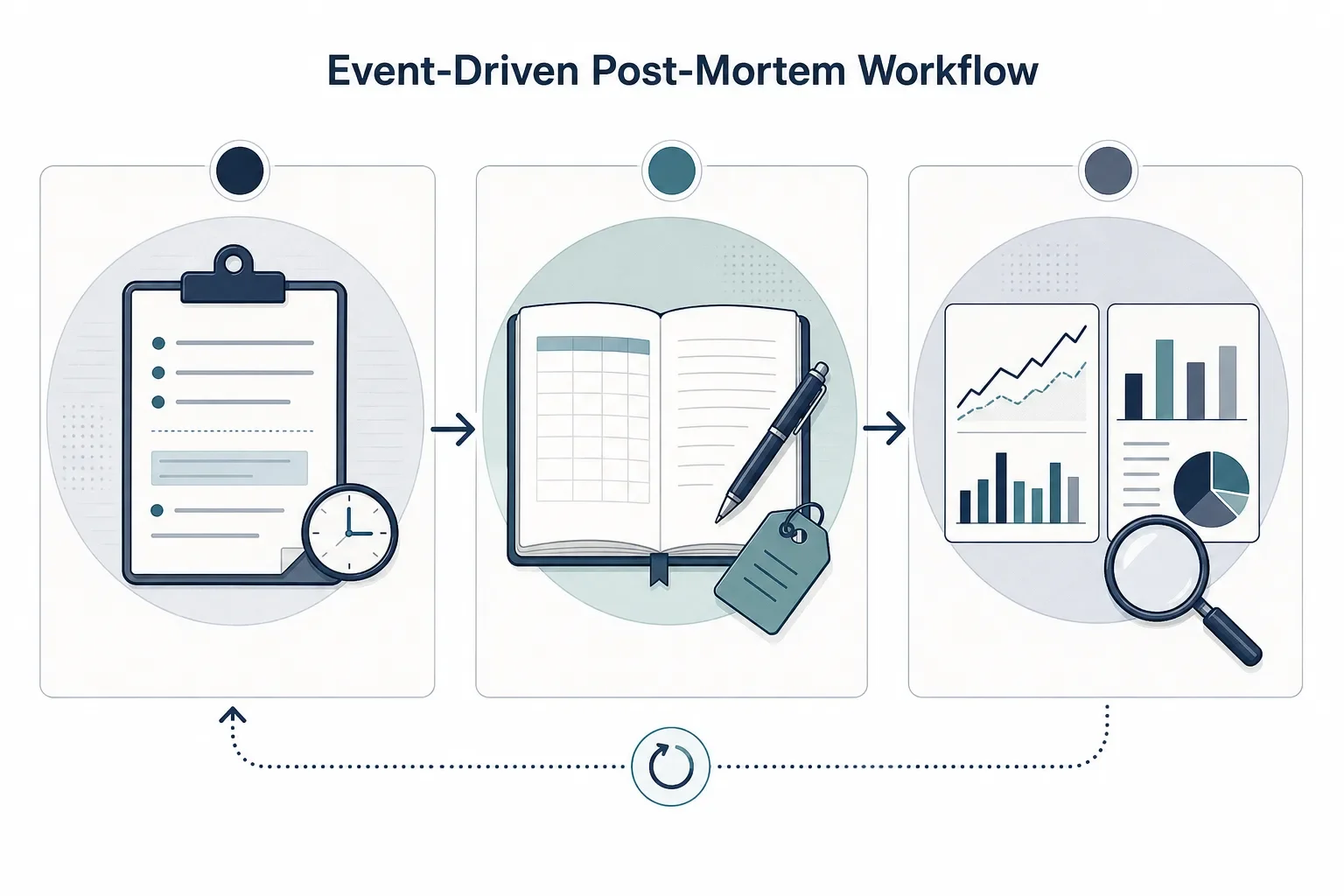 2026-08-11
How to run an event-driven post‑mortem for your BTC strategy (step‑by‑step)
A step‑by‑step workflow for BTC event‑driven post‑mortems: record rules, log trades, compare pre/event/post windows using Trade Strategy to identify rule breakpoints and create testable updates.
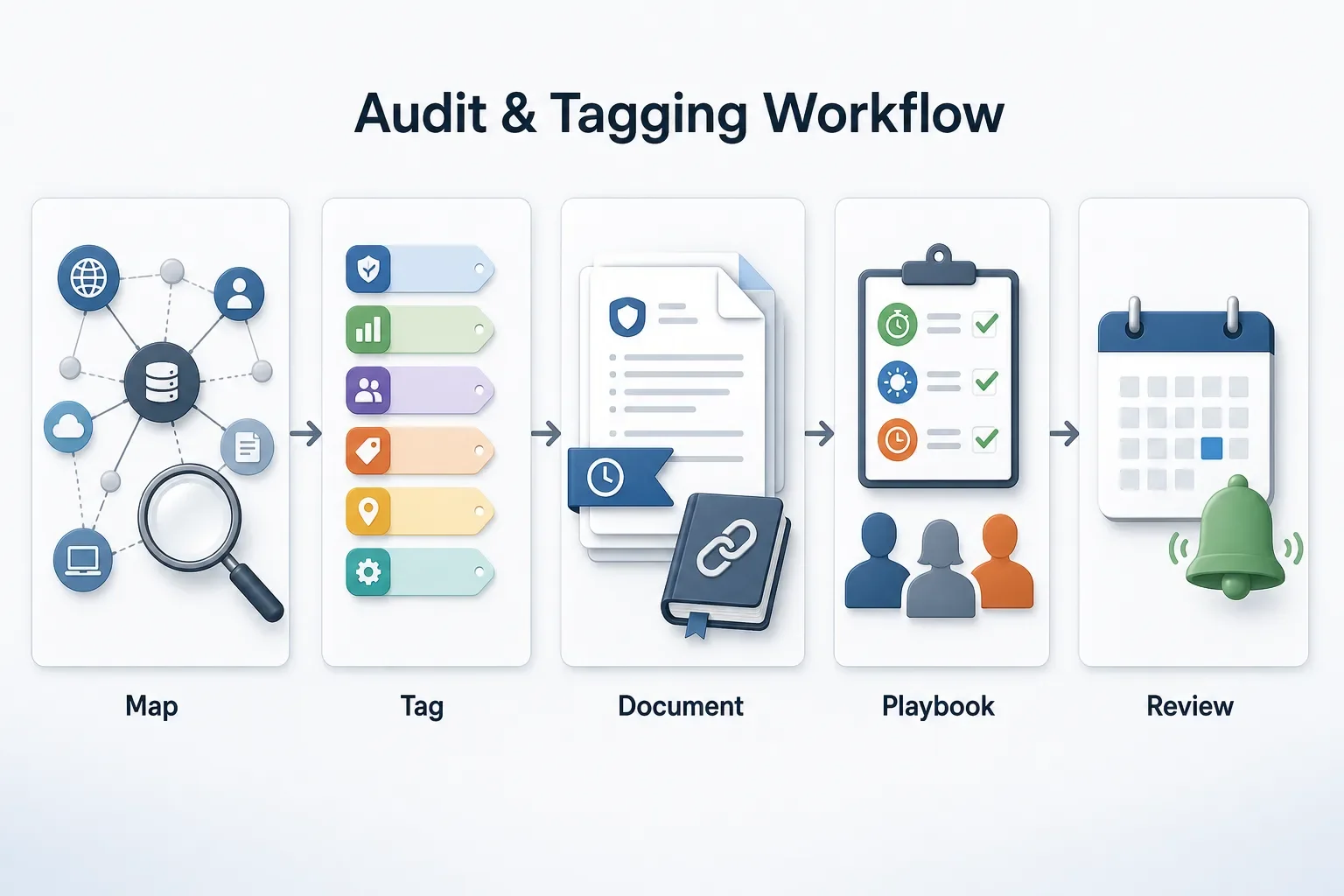 2026-08-11
How to Audit and Tag DeFi Strategies for Regulatory Exposure
Practical, step‑by‑step workflow to map DeFi protocol touchpoints, tag regulatory exposure, preserve audit trails with documented rules and historical results, and prepare playbooks to respond quickly to enforcement events.
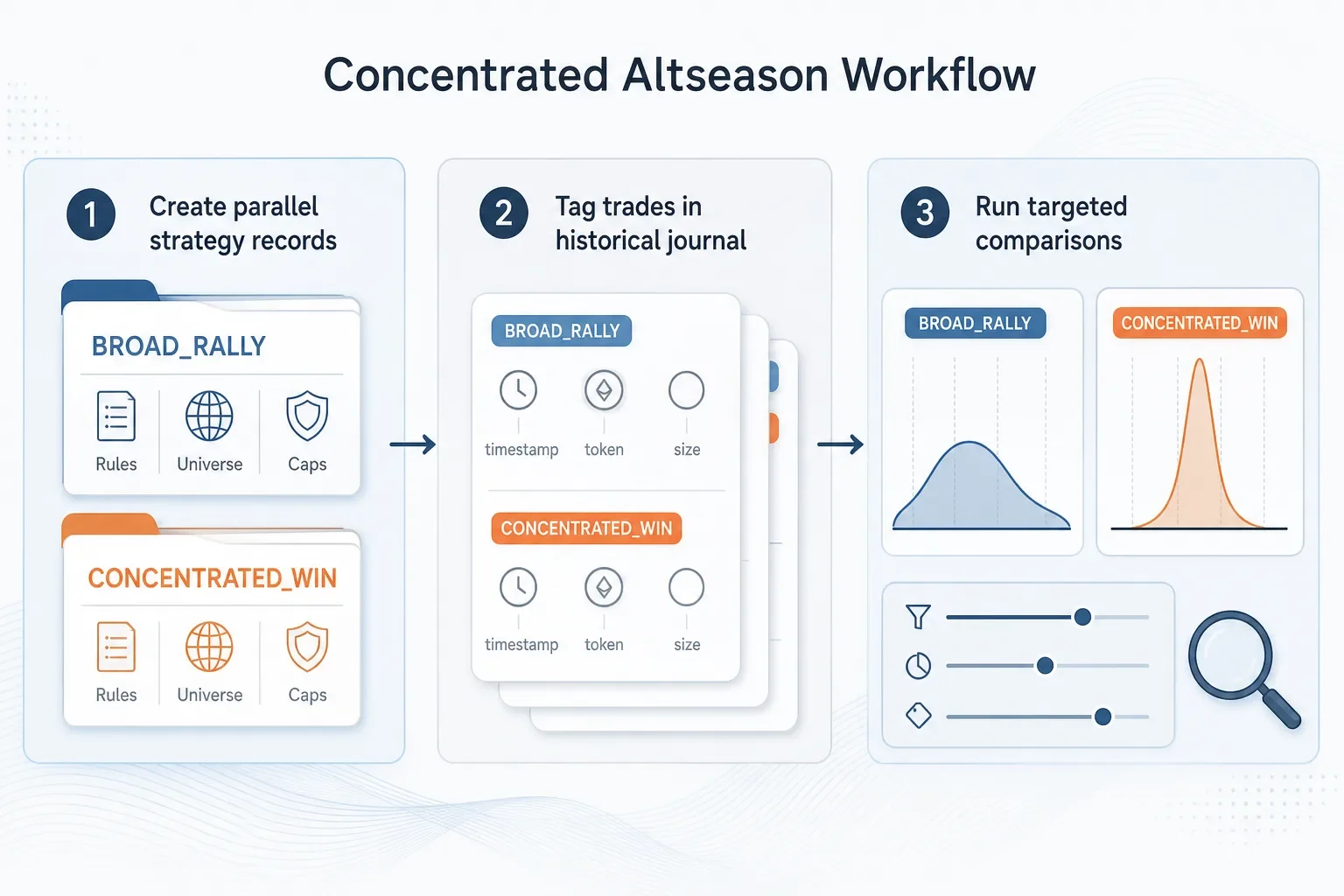 2026-08-11
How to Adapt Your Strategies for a More Concentrated Altseason
Step-by-step workflow to adapt trading strategies for a concentrated altseason: create regime-specific strategy records, tag outcomes in a historical journal, compare results across token subsets, and apply concentration-aware sizing and monitoring.