
How to adapt trading strategies when Bitcoin decouples from equities: a 5-step workflow
A tactical 5-step workflow to detect a Bitcoin–equities correlation break, document a post‑decoupling strategy version in Trade Strategy, record results and compare alternatives for repeatable decision-making.
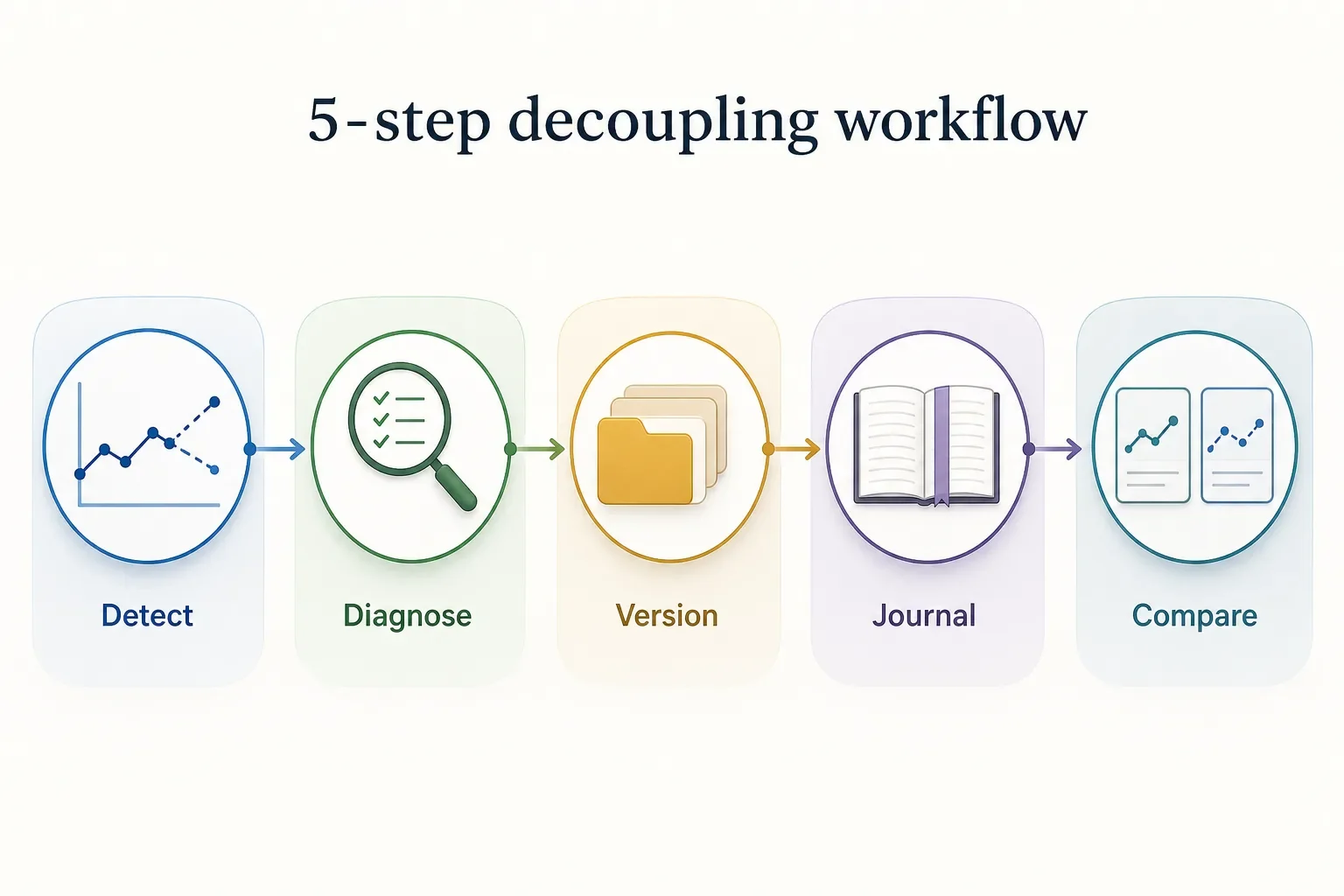
# How to adapt trading strategies when Bitcoin decouples from equities: a 5-step workflow
When Bitcoin rallies while tech stocks sell off, strategies that relied on cross‑asset behaviour can suddenly underperform. This practical, repeatable workflow helps you detect a correlation break, create a post‑decoupling strategy version in Trade Strategy, record outcomes and compare alternatives so decisions are documented and repeatable.
This guide is tactical — aimed at discretionary and systematic traders, quants and risk managers — and focuses on processes you can apply immediately. It references Trade Strategy features that support documentation, historical record‑keeping and side‑by‑side comparison. Planned AI‑assisted BTC market analysis and probabilistic direction suggestions are noted as roadmap items (planned), not current capabilities.
## Quick overview: the 5 steps
1. Detect the decoupling
2. Diagnose exposures and rule sensitivity
3. Create a post‑decoupling strategy version in Strategy Management
4. Record scenario outcomes in the Historical Results Journal
5. Compare strategy versions with Strategy Comparison and choose follow‑up actions
## 1) Detect the decoupling
Signs of a correlation break may include: BTC trending against major tech indices, volatility diverging between assets, or signal crossovers that previously coincided now falling apart.
Practical detection checklist:
- Monitor rolling correlation windows (e.g., 30/60/90 day) between BTC and your chosen equity benchmark.
- Look for persistent changes across days and timeframes, not one‑off moves.
- Track volatility regimes — rising BTC volatility while equities calm (or vice versa) can accompany decoupling.
Note: Trade Strategy is useful for documenting the detection process and the assumptions you used. Correlation calculations themselves typically come from your market data provider or analytics tools.
### Example detection scenario
You observe BTC rallying for several sessions while a tech index declines. A 30‑day correlation that used to be positive flattens or turns negative for multiple windows. That persistent shift is a trigger to move to step 2.
## 2) Diagnose exposures and rule sensitivity
Decoupling rarely affects all strategies equally. Diagnose which elements of your trading programme depend on the BTC–equities relationship.
Checklist for diagnosis:
- Inventory exposures: which strategies carry implicit equity beta (for example, momentum filters tied to risk‑on signals)?
- Evaluate signal dependencies: do entry/exit rules reference cross‑asset indicators?
- Test parameter sensitivity: which parameters (ATR multipliers, lookbacks, volatility targets) would materially change outcomes under the new regime?
Document your diagnosis in Trade Strategy’s Strategy Management so assumptions are explicit (for example: “Relies on positive BTC–equities correlation for risk‑on filter”).
### Practical diagnostic example
If an entry rule required equities momentum to be positive, mark that as a fragile assumption. Conversely, strategies driven by on‑chain flow or BTC microstructure may be less affected.
## 3) Create a post‑decoupling strategy version in Strategy Management
Treat adaptations as new versions rather than overwriting live rules. Using Trade Strategy’s Strategy Management, create a versioned strategy that captures the new rules, parameter changes and the rationale.
Versioning checklist:
- Name the version clearly (for example: “BTC_Strategy v2 — Reduced equity beta”).
- List rule changes and the hypothesis you are testing (for example: widen volatility filter, reduce position sizing, decouple equity‑based signal).
- Record intended conditions for deployment (for example: “Use when 30‑day BTC/NASDAQ correlation < 0.2 for at least 10 trading days”).
Practical adaptation examples (illustrative, not advice):
- Increase ATR or volatility threshold to avoid whipsaws during regime shifts.
- Reduce position sizing or add a volatility sizing cap to limit drawdowns if correlation fails.
- Swap or mute equity‑tied filters and rely more on BTC‑native signals.
- Introduce a temporary hedge if one is available through options or a diversified crypto basket.
## 4) Record scenario outcomes in the Historical Results Journal
Run your tests and paper runs in your execution or backtesting environment (Trade Strategy does not execute trades). Then record the outcomes and observations in Trade Strategy’s Historical Results Journal so you have a searchable, dated record of what changed and why.
What to record:
- Test setup and data used (timeframe, price source, any slippage assumptions).
- Key performance metrics observed (drawdown behaviour, changes in win rate, volatility exposure).
- Narrative observations: where did the new version show strength or weakness?
This journaled history becomes institutional memory and helps avoid ad‑hoc changes without evidence.
## 5) Compare strategy versions with Strategy Comparison and decide next steps
Use Trade Strategy’s Strategy Comparison to view saved strategy definitions and recorded historical results side‑by‑side. Comparison helps you attribute performance differences to specific rule changes and make reproducible decisions.
Comparison checklist:
- Align the same performance window and market conditions when comparing versions.
- Focus on behaviour that matters for deployment: drawdown profile, volatility exposure, and correlation to other portfolio assets.
- Decide a next action: deploy the new version conditionally, continue testing, or roll back to the prior version with mitigations.
Remember: comparison is decision‑support, not a guarantee. Keep decisions documented and include reversion criteria (for example: reenable prior rules when correlation normalises).
## Putting it together: an end‑to‑end example
1. Detection: 30‑day BTC–equities correlation falls from persistently positive to near zero over two weeks.
2. Diagnosis: Momentum filter tied to equities is flagged as a fragile assumption.
3. Versioning: Create “v2 — equity‑decouple” in Strategy Management; mute the equity momentum filter; widen ATR filter and reduce sizing by 25%.
4. Testing & journaling: Backtest or paper trade the v2 setup and log results and qualitative observations in the Historical Results Journal.
5. Comparison: Use Strategy Comparison to compare v1 vs v2 under the same recent market window and record your deployment decision and reversion criteria.
## Notes on future product aids (roadmap)
Trade Strategy plans AI‑assisted BTC market analysis and probabilistic direction suggestions as part of its roadmap. These are described as planned features and would be intended as decision support, not certain predictions. While these items are developed, consider integrating correlation analytics from your data provider to supplement your process.
## Conclusion
A sudden BTC–equities decoupling creates operational risk for strategies tuned to prior regimes. Use a structured, versioned workflow: detect the break, diagnose vulnerable rules, create a clear strategy version in Strategy Management, record outcomes in the Historical Results Journal, then compare versions with Strategy Comparison. This approach preserves institutional knowledge, reduces emotional reactivity and improves repeatability.
Read the 5‑step checklist and see an example strategy version on our blog: https://trade-strategy.com/blog
 2026-08-11
How to run an event-driven post‑mortem for your BTC strategy (step‑by‑step)
A step‑by‑step workflow for BTC event‑driven post‑mortems: record rules, log trades, compare pre/event/post windows using Trade Strategy to identify rule breakpoints and create testable updates.
 2026-08-11
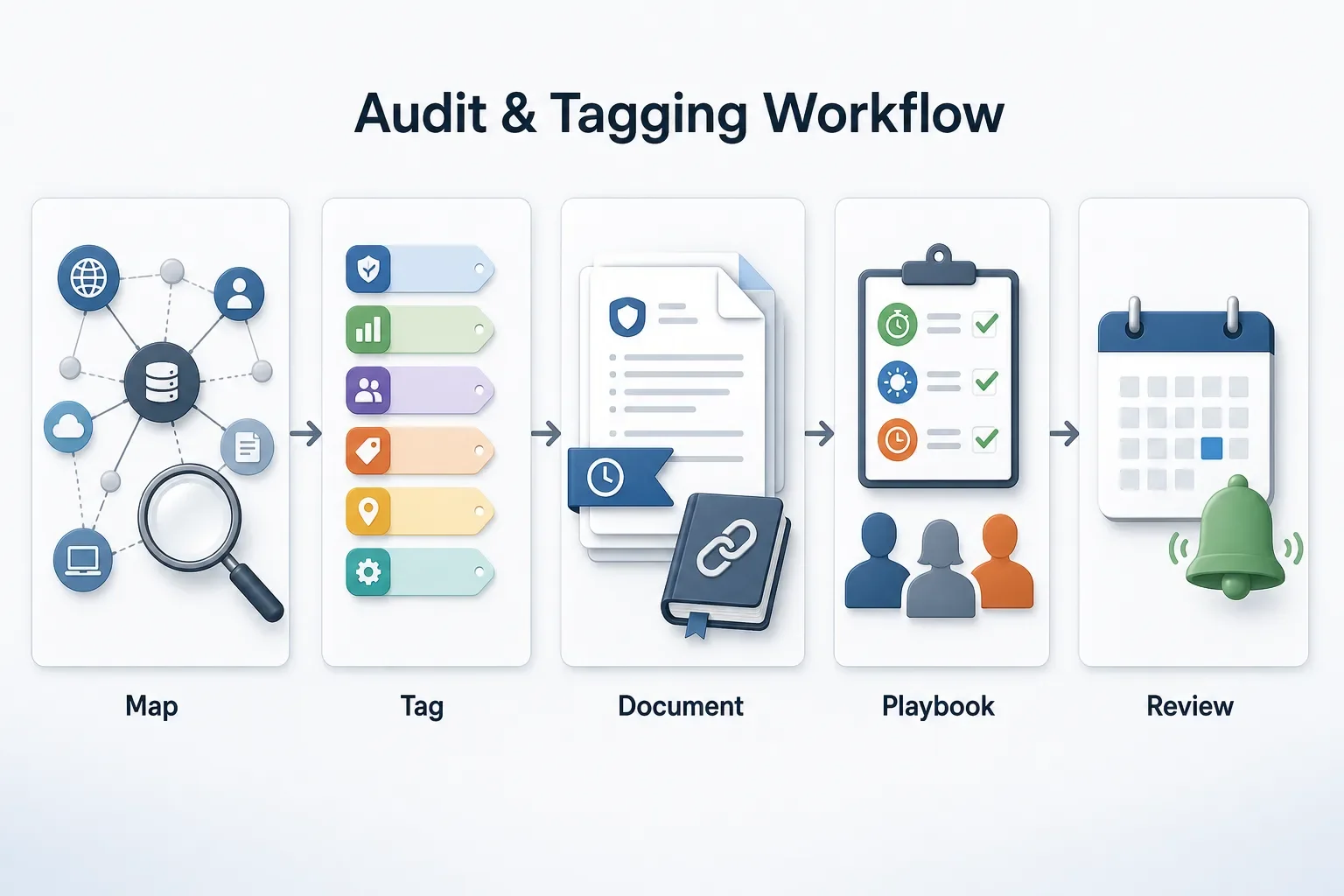
How to Audit and Tag DeFi Strategies for Regulatory Exposure
Practical, step‑by‑step workflow to map DeFi protocol touchpoints, tag regulatory exposure, preserve audit trails with documented rules and historical results, and prepare playbooks to respond quickly to enforcement events.
 2026-08-11
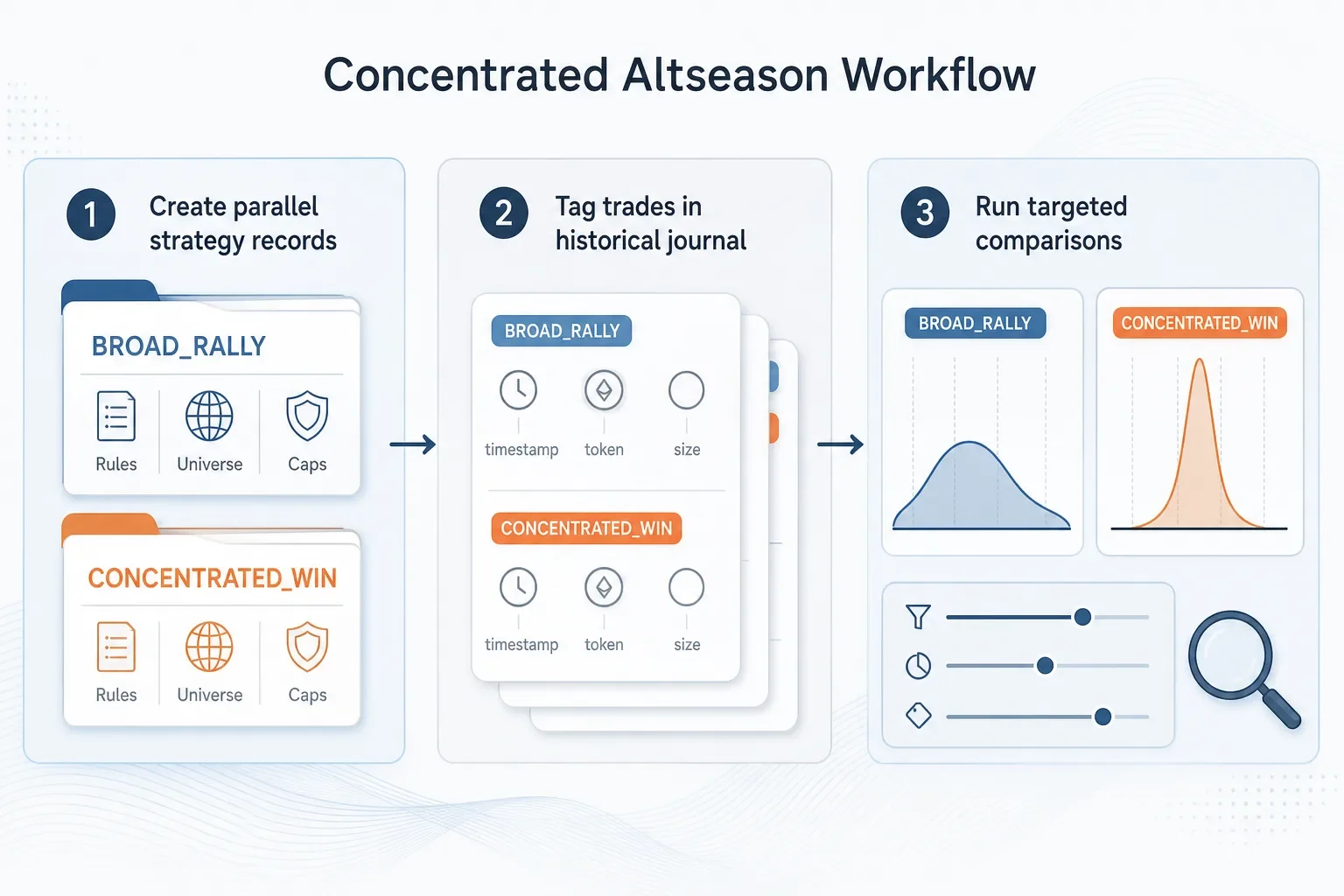
How to Adapt Your Strategies for a More Concentrated Altseason
Step-by-step workflow to adapt trading strategies for a concentrated altseason: create regime-specific strategy records, tag outcomes in a historical journal, compare results across token subsets, and apply concentration-aware sizing and monitoring.