
Scenario playbook: How to plan trading responses to Bitcoin’s quantum-risk narrative
A step-by-step playbook showing how traders can convert the "quantum risk" narrative into documented, testable strategies using Trade Strategy’s Strategy management, Historical results journal and Strategy comparison.
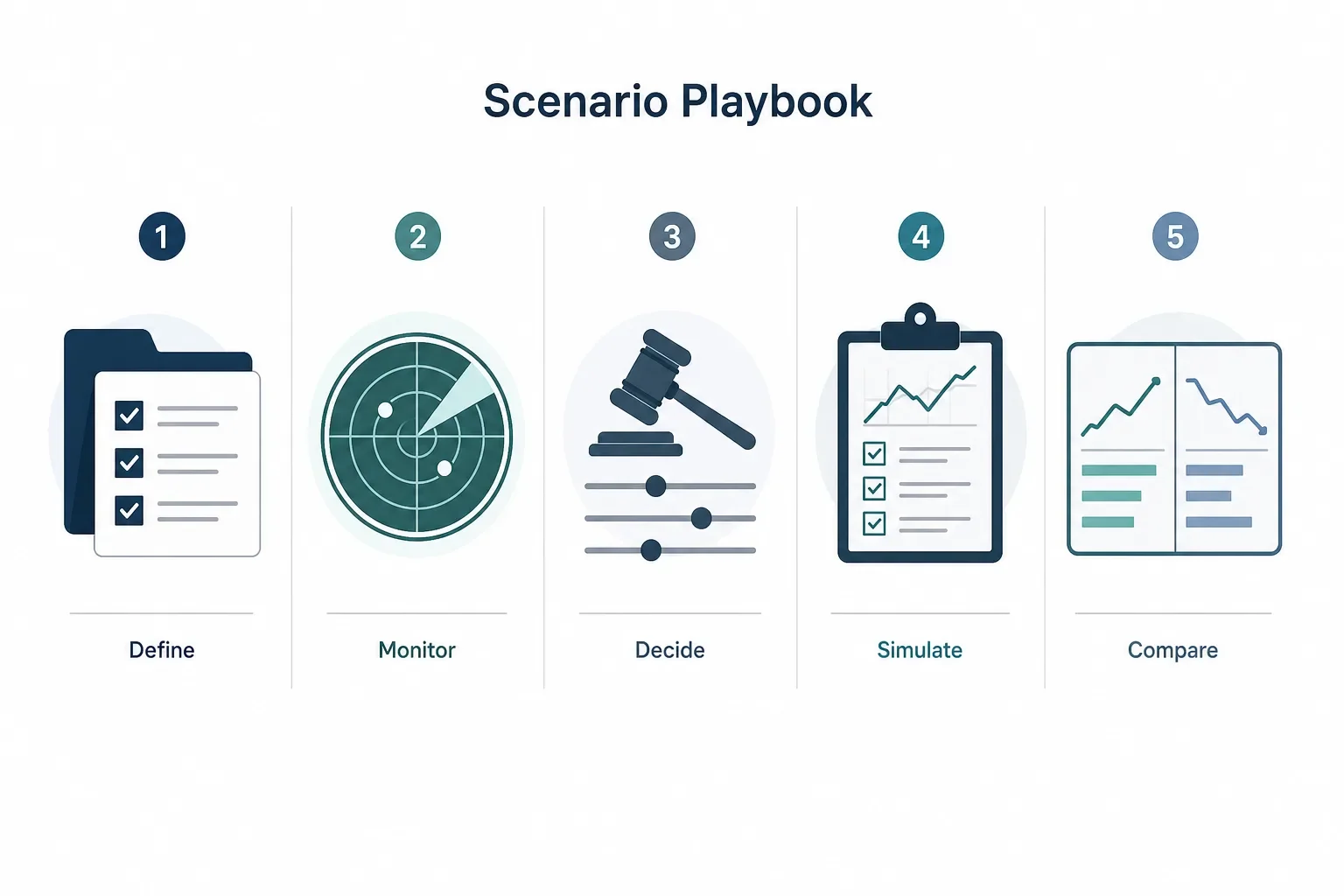
# Scenario playbook: How to plan trading responses to Bitcoin’s quantum-risk narrative
Turn an abstract tech-threat into repeatable, testable trading workflows — without guessing the timing.
The recent Cointelegraph piece framing quantum computing as a material-but-uncertain risk for Bitcoin raises practical questions for active traders: how should you change position sizing, hedging and monitoring when the probability distribution of a catastrophic protocol event is disputed and timing is unknown? This playbook walks through a step-by-step workflow you can use to convert the “quantum-risk” narrative into documented, testable trading strategies using Trade Strategy’s released features: Strategy management, Historical results journal, and Strategy comparison.
## Why scenario planning matters for low-probability, high-impact tech risks
Narratives like “quantum risk to Bitcoin” change the set of plausible future paths for the market without delivering a precise trigger date. That uncertainty is exactly why procedural, documented responses beat ad‑hoc decisions: you get repeatability, clear assumptions and a way to measure what worked and what didn’t.
This playbook treats quantum risk as a scenario template — a disciplined hypothesis with defined triggers, decision rules and a logging process so you can learn over time.
## Step 1 — Define the scenario and assumptions (Strategy management)
Start by creating a dedicated strategy in your Strategy management workspace. Capture three elements clearly:
- Scenario name and short statement: a concise label such as “Quantum-risk: protocol compromise scenario”.
- Core assumptions: the technical or governance developments that would make this scenario meaningful (for example, a credible demonstration of practical Shor-style capability, a governance failure during a hard fork, or a coordinated developer roadmap announcement). Treat these as hypotheses you intend to test, not facts.
- Time horizon and scope: is this a near-term reaction plan, a medium-term allocation framework, or a long-term contingency? Define the types of positions the strategy covers (spot BTC, futures, options, mining exposure, custody holdings, etc.).
Documenting rules and assumptions in Strategy management keeps your rationale auditable and makes it easier to share or review decisions later.
### Practical tip: keep assumptions binary and observable
Phrase triggers so they are verifiable (e.g., "public demonstration of large-scale factoring capability by a recognized research lab"), rather than vague. That reduces decision friction when you need to act.
## Step 2 — Specify signals and operational triggers
List the monitoring signals that will prompt a review or action. Group them into categories:
- Technical milestones: peer-reviewed demonstrations, reproducible qubit counts, or demonstrable algorithmic breakthroughs.
- Governance signals: Bitcoin Core developer announcements, soft/hard fork proposals, or coordinated roadmap publications from major ecosystem players.
- Market signals: volatility spikes, orderbook dislocations on major exchanges, or coordinated large holder movements.
- Third-party mitigations: availability of migration tools, signature-rotation proposals, or widely adopted protocol patches.
For each signal, specify the action that will follow: immediate review, partial hedging, full hedging consideration, or no action. Record these in the same Strategy management entry so the trigger-to-action mapping is preserved.
## Step 3 — Draft explicit decision rules and sizing
Turn your high-level intent into operational rules. Examples of rule templates you can record:
- "On verification of X trigger, initiate a pre-defined review and reduce spot BTC allocation by the strategy’s pre-set proportion."
- "If governance announcement Y lacks a clear mitigation path within Z business days, open a temporary hedge using liquid instruments until a mitigation is implemented."
- "If market liquidity on major venues falls below a threshold while technical risk is increasing, pause new long entries for the duration of the risk window."
Avoid vague verbs like "consider"; make the rule machine-readable for your own decision process so it can be applied consistently.
Important: these are operational templates — not trade instructions for others. Never treat them as personalized financial advice.
## Step 4 — Simulate and log outcomes (Historical results journal)
Before committing capital, create simulated runs or paper-trades and record them in the Historical results journal. For each simulated execution, capture:
- Date/time and trigger that initiated the run
- Action taken (entry, hedge type, allocation change)
- Rationale (link back to the Strategy management assumptions)
- Outcome tags (e.g., "contained risk", "false alarm", "missed mitigation")
- Metrics you care about (drawdown during the episode, realized slippage, operational costs)
Logging both simulated and real outcomes in the Historical results journal creates a searchable trail you can use for post‑mortems. Over time this produces evidence for whether a trigger tends to correlate with market impact and which responses were cost-effective.
### Practical example (simulation)
Create two simulated runs for the same trigger: one that reduces allocation and one that uses a liquid hedge. Record both in the Historical results journal with the same triggering event and compare operational friction and realized cost. Note differences in time-to-execute, margin requirements, and how each approach affected portfolio volatility during the simulated episode.
## Step 5 — Compare alternative responses (Strategy comparison)
Use Strategy comparison to evaluate competing approaches side-by-side. Compare strategies aligned to the same scenario but with different execution methods:
- Policy A: allocation reduction + increased cash buffer
- Policy B: maintain allocation + options-based hedge
- Policy C: reallocate from spot to short-duration futures
For each strategy, bring in the historical records and simulation outcomes. Evaluate based on your chosen criteria: cost, speed of implementation, liquidity needs, and behavioral fit for your team. Strategy comparison helps you avoid anchor bias and surface tradeoffs that are easy to miss in a single-plan mindset.
## Review cadence and governance
Low-probability but high-impact scenarios require a governance loop:
- Periodic review: schedule a quarterly review of the scenario assumptions.
- Event-driven review: any verified technical milestone should trigger an immediate review.
- Stakeholder sign-off: document who is authorized to change allocation, initiate hedges, or pause trading; keep those approvals attached to the strategy entry.
Recording approvals and review outcomes in Strategy management and the Historical results journal preserves institutional memory and reduces costly debate during stressful market moments.
## What to expect from this workflow
This is a decision-support playbook, not a protocol-level fix. The goal is to turn a headline into a set of repeatable, testable rules that produce learning. By: documenting assumptions and triggers; simulating responses and logging results; and comparing alternative policies, you create defensible actions and a feedback loop that improves over time.
## Conclusion
Quantum‑related narratives challenge traders because uncertainty centers on both probability and timing. A disciplined scenario playbook converts that uncertainty into concrete actions you can test and refine. Use Strategy management to capture rules and assumptions, the Historical results journal to log simulated and real outcomes, and Strategy comparison to evaluate competing hedges and allocation policies. The outcome is clearer decision-making, auditable records and faster learning — not a guaranteed hedge against protocol risk.
Download the free scenario template and follow the walkthrough at https://trade-strategy.com/blog to start documenting a quantum-risk strategy in Trade Strategy.
 2026-08-11
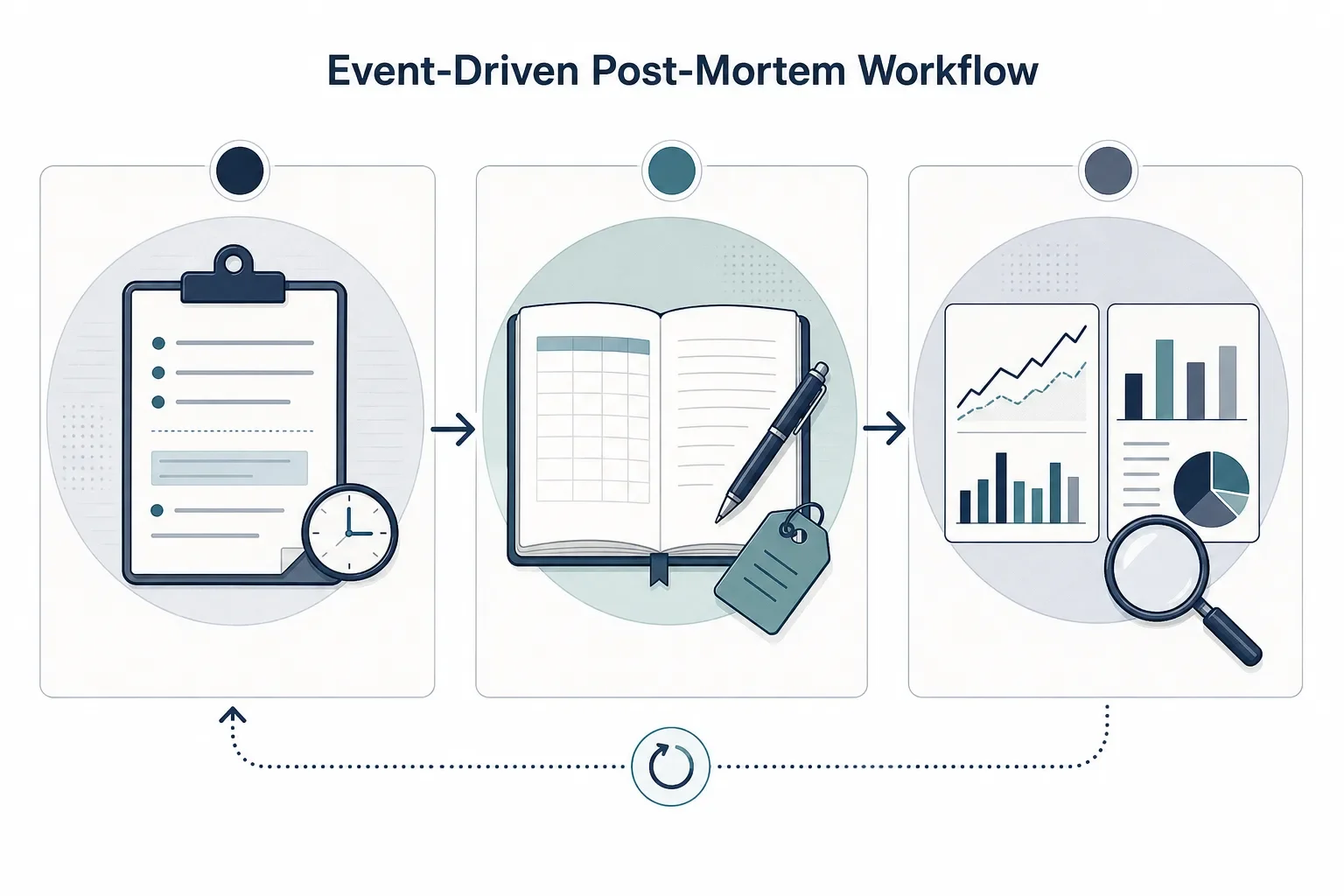
How to run an event-driven post‑mortem for your BTC strategy (step‑by‑step)
A step‑by‑step workflow for BTC event‑driven post‑mortems: record rules, log trades, compare pre/event/post windows using Trade Strategy to identify rule breakpoints and create testable updates.
 2026-08-11
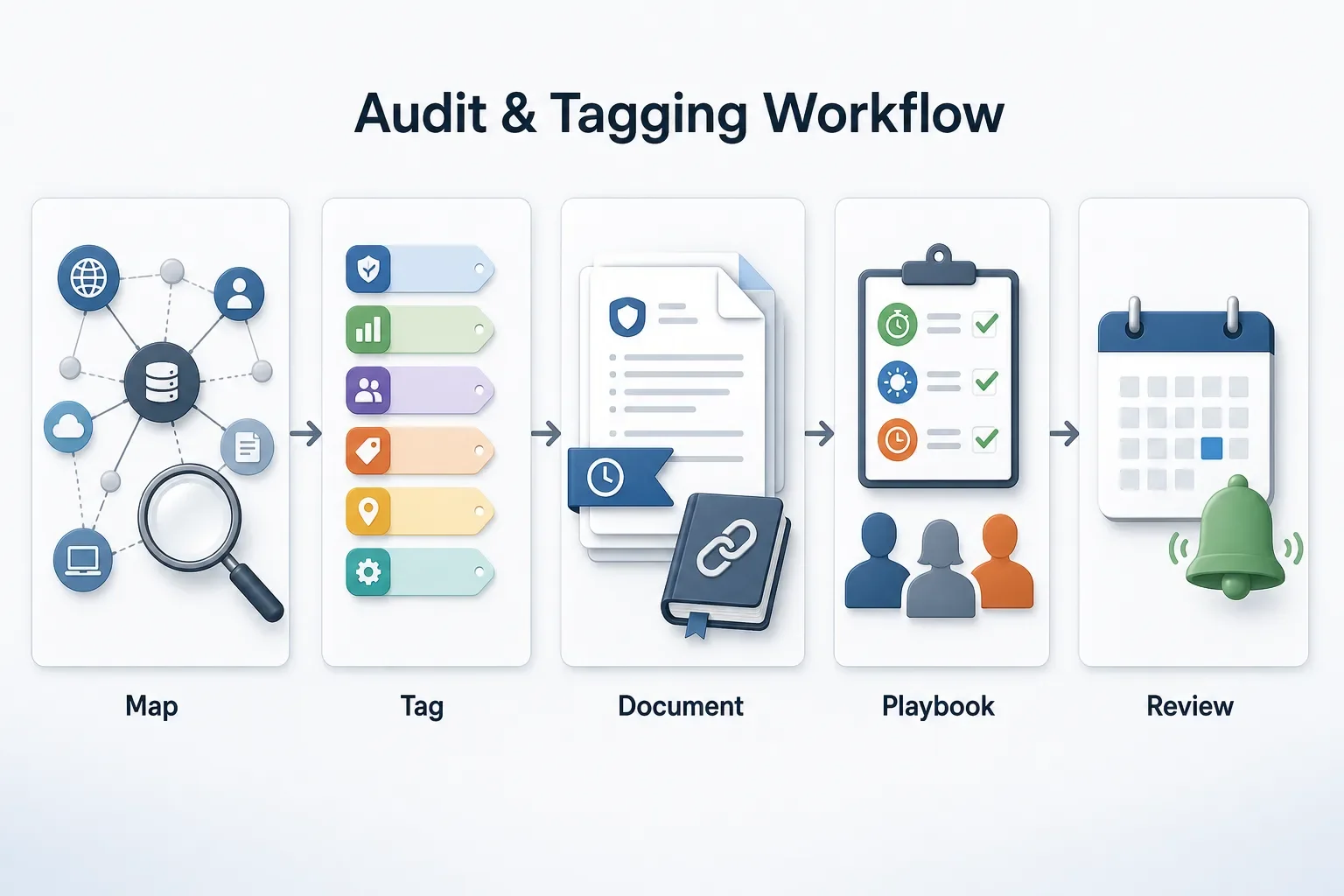
How to Audit and Tag DeFi Strategies for Regulatory Exposure
Practical, step‑by‑step workflow to map DeFi protocol touchpoints, tag regulatory exposure, preserve audit trails with documented rules and historical results, and prepare playbooks to respond quickly to enforcement events.
 2026-08-11
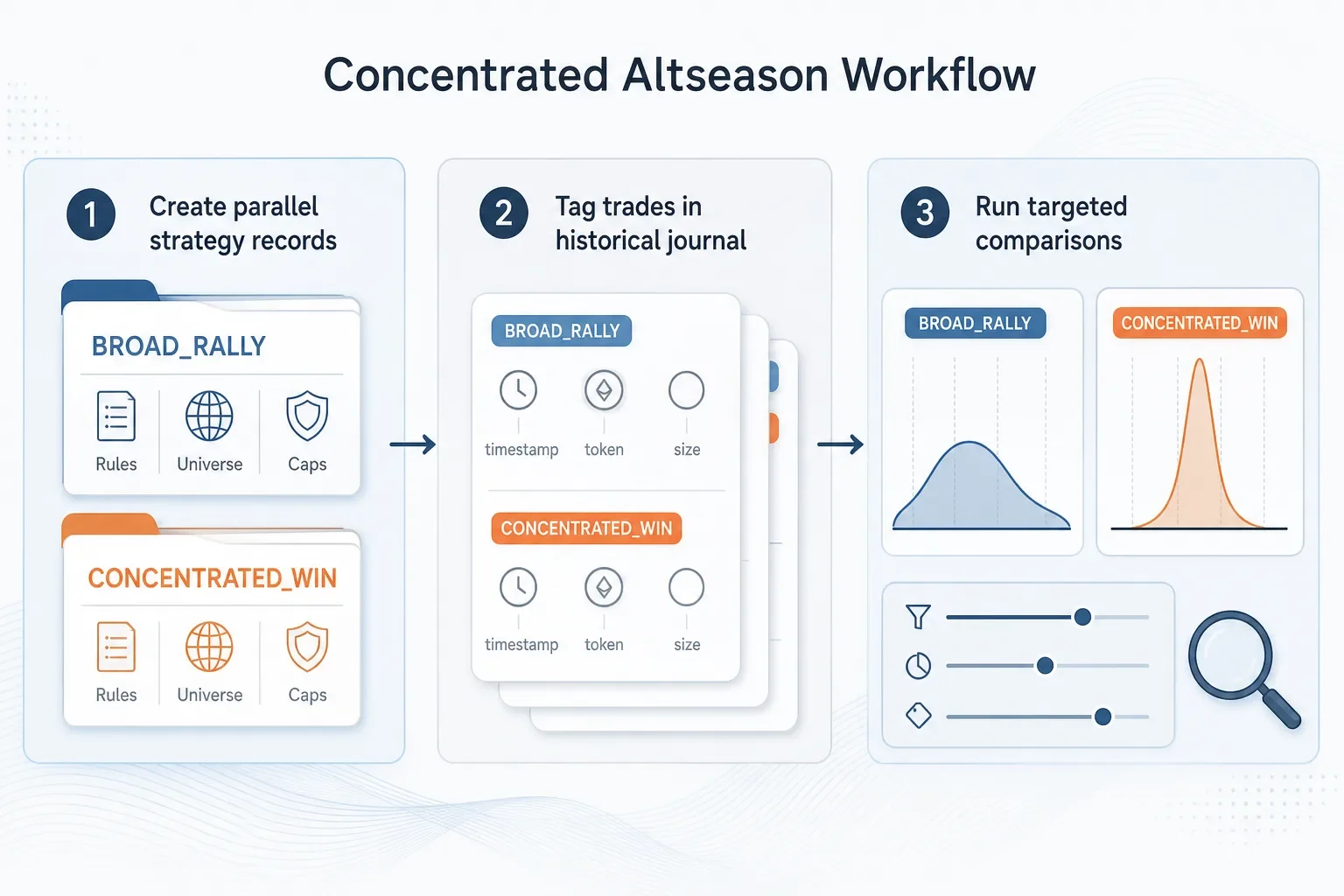
How to Adapt Your Strategies for a More Concentrated Altseason
Step-by-step workflow to adapt trading strategies for a concentrated altseason: create regime-specific strategy records, tag outcomes in a historical journal, compare results across token subsets, and apply concentration-aware sizing and monitoring.