
How to migrate perpetual-futures strategies after the BitMEX shutdown: a practical checklist
A practical, ops-focused checklist to migrate perpetual-futures strategies after BitMEX shuts down: stabilize positions, shortlist replacement venues, re-run validations, reconfigure execution, and document every decision.
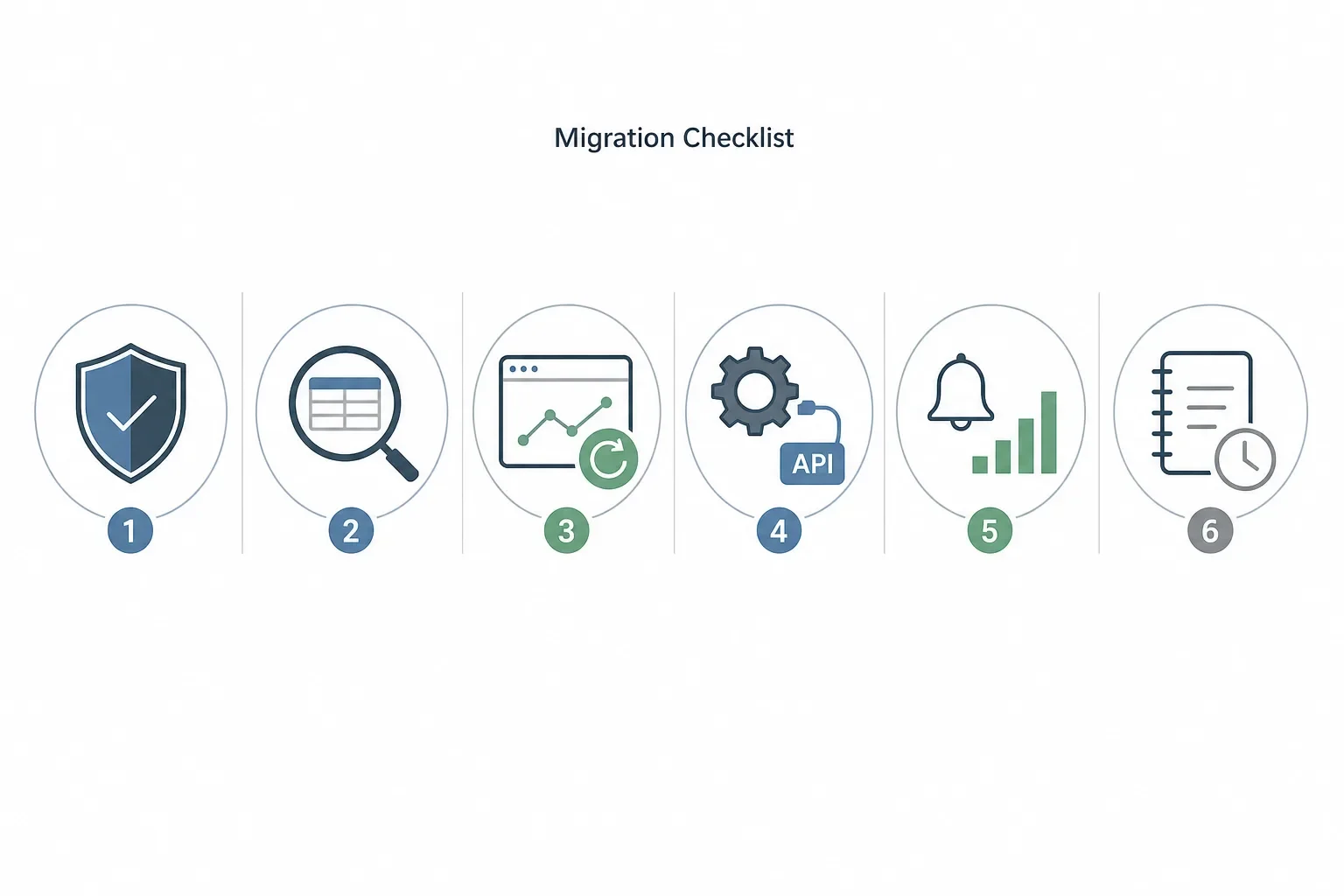
# How to migrate perpetual-futures strategies after the BitMEX shutdown: a practical checklist
BitMEX is closing — here’s a step-by-step checklist to move and revalidate your perpetual strategies with minimal disruption. This is an operations-focused guide for quant traders, prop desks and execution engineers who must pause or move live perps, choose replacement venues, and re-run validations under new liquidity, fee and funding conditions.
## Quick overview: priorities during a forced migration
When a venue you rely on shuts down, your immediate goals are:
- Secure positions and capital (avoid avoidable liquidations).
- Identify candidate replacement venues quickly.
- Re-run validations and stress tests on alternate market data.
- Document decisions, assumptions and results so the team can redeploy confidently.
This checklist walks through those steps, with practical examples and a note on how Trade Strategy can help you record and compare the work.
## Step 1 — Stabilize: pause, hedge or liquidate positions
### Immediate actions
- Audit open positions and margin state across all accounts. Prioritize positions near maintenance margin.
- If your risk rules include automated deleveraging or global stop logic, trigger them according to pre-defined escalation paths to avoid ad-hoc decisions.
- Consider partial liquidation or manual hedges where immediate settlement is required; avoid creating concentrated one-sided exposure in the process.
### Practical example
If a strategy typically runs 5x on BTC perps and an exchange signals cessation, reduce target leverage incrementally (e.g., from 5x to 3x) while executing through limit orders or staged market orders to avoid sweeping order books and causing slippage.
Note: every desk’s response will differ; document the chosen path and the reasons for it.
## Step 2 — Shortlist replacement venues: what to evaluate fast
Create a quick comparison matrix and score candidates on the following criteria.
- Liquidity and depth: top-of-book size, realized slippage at your typical order sizes, presence of market makers.
- Funding-rate regime: historical funding volatility and skew relative to index price — does your strategy assume stable funding?
- Fees and rebates: taker/maker fees, rebates for market-making, and any tiering or volume requirements.
- API reliability and latency: known outages, WebSocket and REST trade flows, rate limits and order types (post-only, IOC, reduce-only).
- Margin and settlement mechanics: isolated vs cross margin, bankruptcy procedures, settlement lag.
- Counterparty and jurisdictional risks: KYC, withdrawal limits, custodial constraints.
### Practical example: scoring matrix
Create a spreadsheet with columns for the criteria above and rows for each exchange. Assign a simple score (1–5) for each criterion for a rapid first-pass ranking. Follow up the top two candidates with a deeper technical validation.
## Step 3 — Re-run validations on alternate data
Once you have candidate venues, re-run backtests and execution simulations using venue-specific data where possible.
- Data sources: obtain historical tick/level data or funding histories from the replacement venues. If full tick data isn’t available, use best-ex available OHLC + funding-rate history and conservative slippage models.
- Slippage and liquidity modelling: run scenario tests with your usual order sizes and with worse-case liquidity to estimate execution cost.
- Funding sensitivity: re-run profitability and risk checks with a range of funding-rate realizations (base case, +1SD, -1SD).
- Stress tests: simulate exchange outages, price gaps and delayed order acknowledgements to understand operational exposures.
### Practical example: revalidation checklist
- Re-run the strategy off-exchange using venue-specific fills and funding history.
- Run walk-forward tests for the most recent 3–6 months focusing on times of elevated volatility.
- Run paper-trading simulations on the replacement venue (or with simulated latencies) before committing real capital.
## Step 4 — Reconfigure execution and risk settings
- Update order routing logic to use the selected venue APIs and adhere to their order-rate limits.
- Update margin and liquidation thresholds in the risk engine to reflect the new venue’s mechanics.
- Set conservative default sizes and add throttles for order bursts until live performance is validated.
### Practical tip
Deploy a short-lived canary: route a small percentage of flow to the new venue, monitor execution quality and system behaviour, then ramp up if all checks pass.
## Step 5 — Operational monitoring and alerts
- Add venue-specific alerts (latency spikes, funding extremes, order rejects).
- Track daily realized slippage vs historical baselines and funding divergence from benchmarks.
- Maintain a runbook for venue outages, including pre-approved fallback exchanges and a contact list for operational escalation.
## Step 6 — Documentation and decision records
Documenting what you changed and why is critical for auditability and speed of recovery.
- Record the migration decision, candidate venues considered, and selection rationale.
- Save revalidation outputs: backtest variations, slippage scenarios and funding-sensitivity runs.
- Log the live canary results and any post-migration tuning.
## How Trade Strategy helps
Trade Strategy provides released capabilities that support migration record-keeping and review:
- Strategy management: create and organize strategy entries and capture rules and assumptions used during migration.
- Historical results journal: record revalidation runs, paper-trade outcomes and live canary results so the team has a timestamped audit trail.
- Strategy comparison: compare pre- and post-migration variants side-by-side using saved information and recorded historical results to surface performance shifts attributable to venue differences.
Using these features helps teams keep a single source of truth for decisions and makes it easier to review what changed during the migration.
## Example migration timeline (48–72 hours)
- Hour 0–6: Stabilize positions, set global risk limits.
- Hour 6–24: Shortlist venues, run shallow liquidity checks, and score candidates.
- Hour 24–48: Re-run core validations (funding sensitivity, slippage scenarios), configure APIs.
- Hour 48–72: Deploy canary flow, monitor closely, and scale up if acceptable.
Adjust pace depending on position sizes, liquidity and internal approval processes.
## Conclusion
A rapid exchange shutdown forces choices that combine risk, operational execution and quantitative revalidation. Use a structured checklist: stabilize positions, shortlist and validate venues, reconfigure execution and risk, and document everything. Trade Strategy’s released features for strategy management, historical results journaling and strategy comparison can help teams record migration decisions, store revalidation outputs and compare venue-adjusted strategy variants to support faster, more auditable migration decisions.
Read the full migration checklist and download a one‑page checklist: https://trade-strategy.com/blog
 2026-08-11
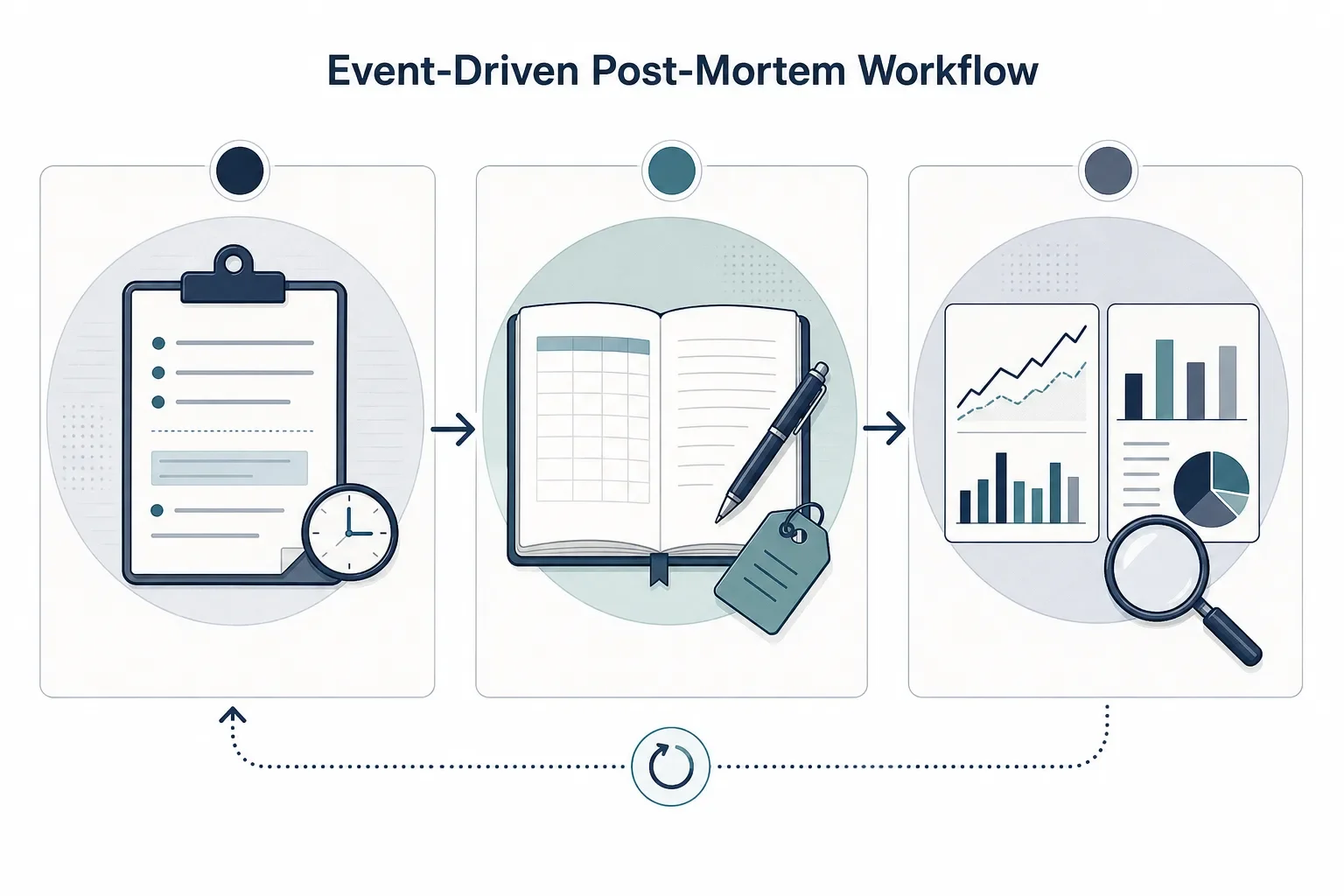
How to run an event-driven post‑mortem for your BTC strategy (step‑by‑step)
A step‑by‑step workflow for BTC event‑driven post‑mortems: record rules, log trades, compare pre/event/post windows using Trade Strategy to identify rule breakpoints and create testable updates.
 2026-08-11
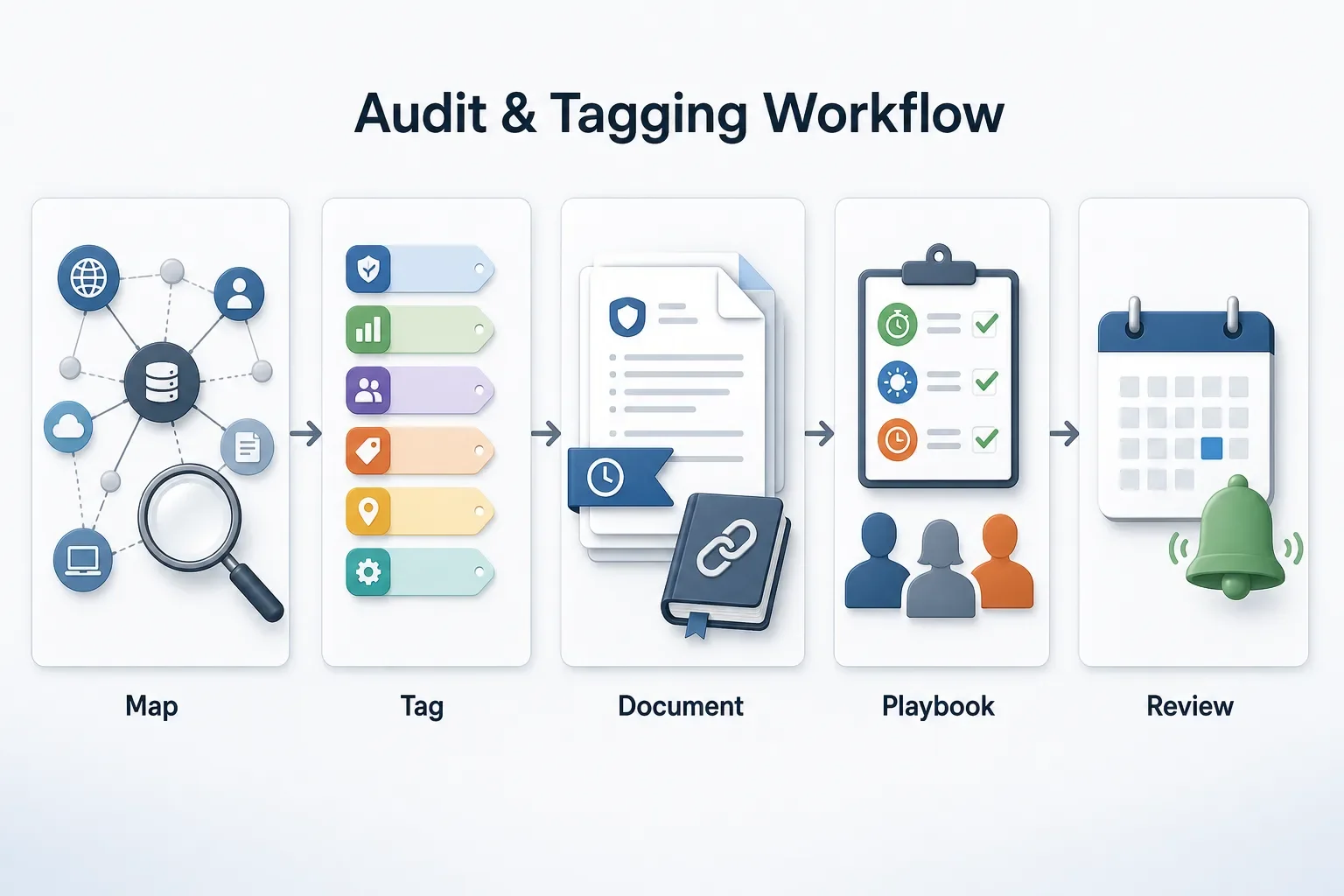
How to Audit and Tag DeFi Strategies for Regulatory Exposure
Practical, step‑by‑step workflow to map DeFi protocol touchpoints, tag regulatory exposure, preserve audit trails with documented rules and historical results, and prepare playbooks to respond quickly to enforcement events.
 2026-08-11
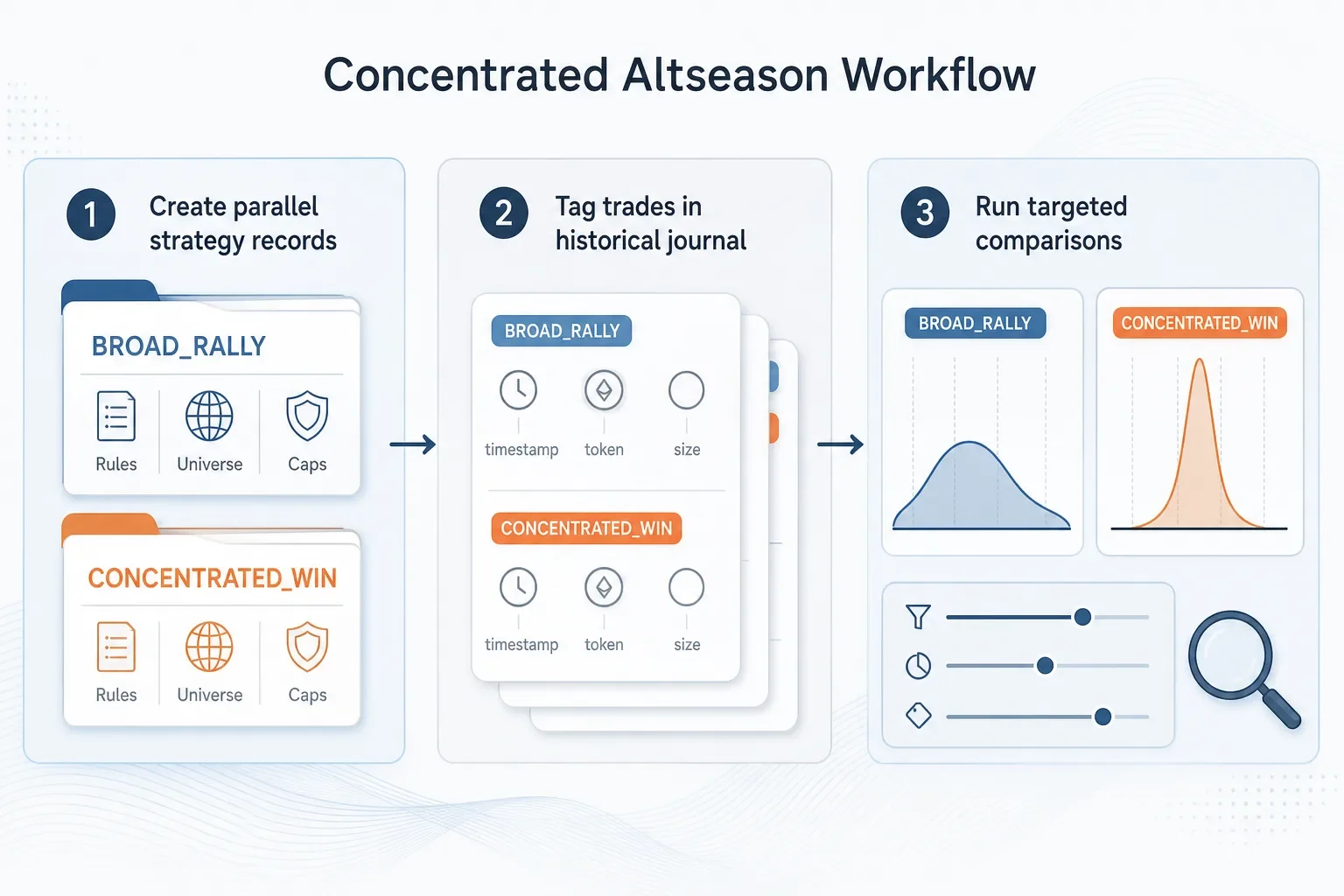
How to Adapt Your Strategies for a More Concentrated Altseason
Step-by-step workflow to adapt trading strategies for a concentrated altseason: create regime-specific strategy records, tag outcomes in a historical journal, compare results across token subsets, and apply concentration-aware sizing and monitoring.