
Step-by-step: Record, compare and learn from BTC trades around the US jobs report with Trade Strategy
A hands-on tutorial for event-driven BTC strategies: define an event rule for the US jobs report, log pre/post outcomes in a historical-results journal, and run side-by-side comparisons to learn and iterate.
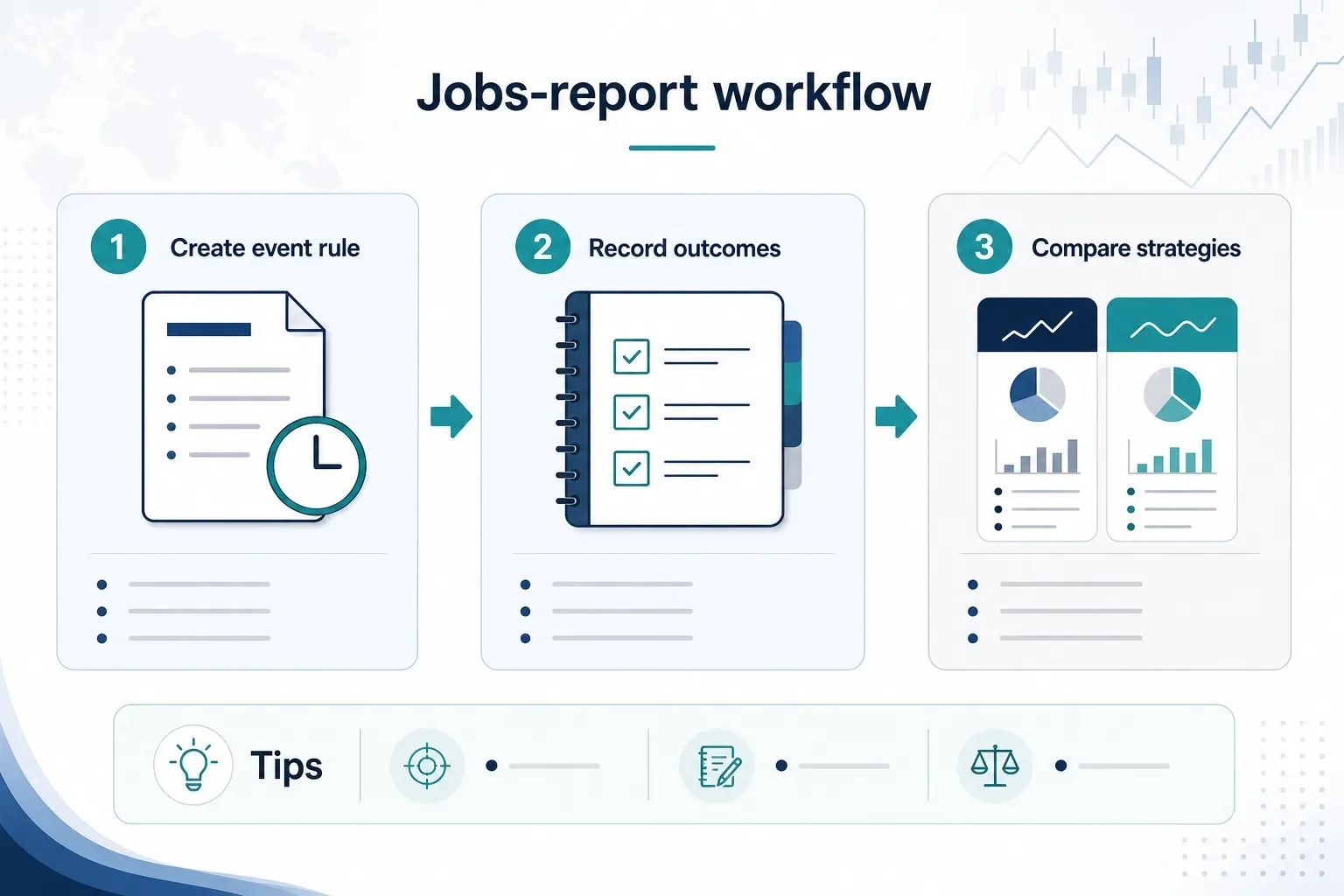
# Step-by-step: Record, compare and learn from BTC trades around the US jobs report with Trade Strategy
A hands-on walkthrough for systematic strategy developers: create an event rule, log pre/post outcomes in a historical-results journal, and run side-by-side comparisons of alternate approaches. This guide focuses on reproducible documentation and learning — not guaranteed outcomes. It shows a repeatable workflow you can apply to US jobs reports and other macro releases.
## Introduction
Macro releases such as the US nonfarm payrolls often produce rapid repricing across risk assets. For BTC traders that can mean elevated intraday volatility, temporary changes in cross-asset correlation, and shorter-lived market structure. A disciplined, repeatable workflow turns each release into a data point you can analyze. That reduces surprise, improves risk control, and helps you iterate strategy changes based on documented outcomes rather than memory or anecdote.
Primary source for release timing and headline details:
- BLS Employment Situation: https://www.bls.gov/news.release/empsit.nr0.htm
(Optional background coverage):
- Market reporting around events (example): Coindesk live updates article
## Workflow overview — three practical steps
1. Define an event rule and codify pre-event assumptions in strategy management.
2. Run your approach in paper or live markets, then record pre/post-event outcomes in the historical-results journal.
3. Use strategy comparison to inspect differing approaches across the same event type and extract lessons.
Released Trade Strategy features used in this workflow: Strategy management, Historical results journal, and Strategy comparison. If you have the Elite plan, the platform also provides AI-powered recommendations that analyze recorded results and strategy parameters as probabilistic decision support — not a certainty or personalized advice.
## Step 1 — Create an event rule (what to capture)
Checklist for an event rule you can apply consistently:
- Event window: define pre-event and post-event windows (examples: pre-event 60 minutes, post-event 120 minutes). Be explicit about timezone and align with your data feed/exchange.
- Trigger: US nonfarm payrolls release timestamp. Localize to the exchange timestamp you use for order/quote data.
- Signals to capture: entry signal name, signal parameters, direction assumption (long/short/neutral), and timestamp of signal relative to event.
- Sizing & risk controls: position sizing rule, pre-event max exposure, stop distance rules, time-based exits.
- Metrics to record: realized P&L, position size, max adverse excursion (MAE), max favorable excursion (MFE), number of stop hits, slippage.
- Cross-asset captures: record a reference move (e.g., WTI or S&P 500) over the same windows to analyze correlation behavior.
- Notes: liquidity observations, notable news items, and whether any manual intervention occurred.
Example name and metadata: "JobsReport—Conservative" with fields above saved in Strategy management so every event uses the same structure.
## Step 2 — Record outcomes in the historical-results journal
Populate the journal immediately after the event while memory is fresh. Use structured fields and short qualitative notes so entries stay comparable across events.
Sample journal template (use consistently):
- Strategy name:
- Event date/time (UTC):
- Pre-event assumption (volatility / correlation):
- Position size / sizing rule:
- Entry time & price:
- Exit time & price:
- Realized P&L (explicit currency):
- MAE / MFE:
- Stop hits (count):
- Cross-asset note (e.g., WTI % change):
- Liquidity note / slippage observed:
- Lesson learned / next test tweak:
Illustrative, clearly synthetic example (for template training only):
- Strategy name: JobsReport—Conservative
- Event date/time (UTC): 2026-07-02 13:30 UTC
- Pre-event assumption: low correlation with equities; moderate volatility
- Position size: 0.5 BTC
- Entry: 2026-07-02 13:28, 41,200 USD
- Exit: 2026-07-02 15:30, 41,350 USD
- Realized P&L: +75 USD (synthetic)
- MAE / MFE: -1.8% / +2.2% (synthetic)
- Stop hits: 0
- Cross-asset note: WTI -0.6% in window
- Liquidity/slippage: minimal on maker fills
- Lesson: reduce pre-event size when WTI down >0.5% pre-event
Label any numeric examples as synthetic or illustrative. Over many events this structured journal builds a comparable dataset.
Practical tips for consistent entries:
- Use consistent timezones and timestamp formats.
- Tag entries with the exact strategy version and parameter set.
- Record whether trades were paper or live.
## Step 3 — Compare strategies side-by-side
Load saved strategies and their historical results in Strategy comparison. Focus comparisons on the fields you recorded:
- Distributional metrics: median and interquartile range of realized P&L, MAE and MFE, percent of events with stop hits.
- Event alignment: ensure you compare the same release timestamps so differences reflect strategy choices, not different conditions.
- Qualitative overlays: scan notes for recurring cross-asset patterns (e.g., oil weakness often coincides with more adverse moves).
Use comparisons to answer targeted questions: Does smaller sizing reduce MAE without eliminating MFE? Does a hedging rule reduce slippage or simply reduce upside?
Keep plots and simple summary tables focused on distributions rather than single-event outcomes. Small sample sizes are common — treat early results as hypothesis-generating, not definitive.
## Practical example — testing a simple oil hedge
1. Add a cross-asset capture to your event rule: record WTI % change during pre-event window.
2. Define two strategy variants:
- NoHedge: normal sizing
- HedgeIfOilMove: reduce sizing by 50% if WTI moves > 2% in pre-event window
3. Run both variants across available events (paper or live) and record results in the journal.
4. In Strategy comparison, load both strategies and filter for the same events. Compare MAE, realized P&L distribution and stop-hit frequency.
Interpretation guidance: if HedgeIfOilMove shows lower MAE but also lower MFE, document that trade-off and define a metric for acceptable opportunity cost (for example, target MAE reduction per unit of lost upside) before further changes.
## How to turn observations into experiments
- Define an explicit test: what you change, why, and what metric will determine success.
- Pre-register the test (strategy name, parameter change, sample size target, start/end dates).
- Treat each jobs report as one trial; watch for structural regime changes over time.
- Avoid overfitting: if you tune rules to every event, you may chase noise.
If you have the Elite plan, consider using the platform’s AI-powered recommendations to highlight parameter sensitivities in your recorded dataset. Interpret those recommendations as probabilistic decision support to inform experiments — not definitive trading instructions.
## Conclusion
A disciplined jobs-report workflow converts isolated macro events into repeatable experiments. By codifying event rules in Strategy management, recording outcomes in the Historical results journal, and using Strategy comparison to analyze alternatives, you create a structured process for learning and iteration. Use clear templates, tag metadata consistently, and treat AI recommendations (if available on the Elite plan) as probabilistic support for your decisions.
Try the workflow using your own data and risk rules at Trade Strategy and see how consistent documentation improves your event-driven decision-making.
CTA: Explore Trade Strategy — https://trade-strategy.com
---
Sources
- BLS — Employment Situation: https://www.bls.gov/news.release/empsit.nr0.htm
- Sample market coverage: Coindesk live updates (example article)
 2026-08-11
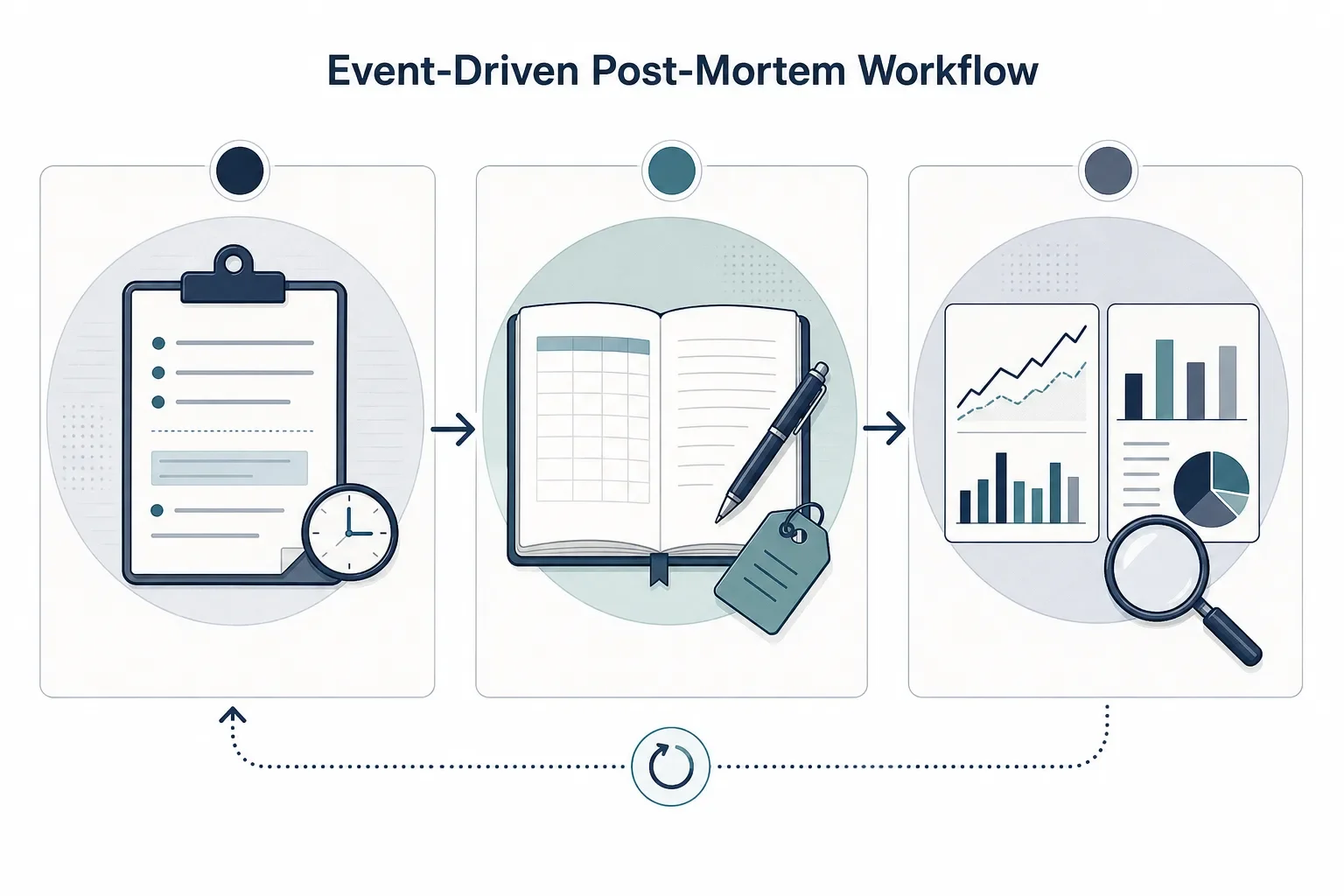
How to run an event-driven post‑mortem for your BTC strategy (step‑by‑step)
A step‑by‑step workflow for BTC event‑driven post‑mortems: record rules, log trades, compare pre/event/post windows using Trade Strategy to identify rule breakpoints and create testable updates.
 2026-08-11
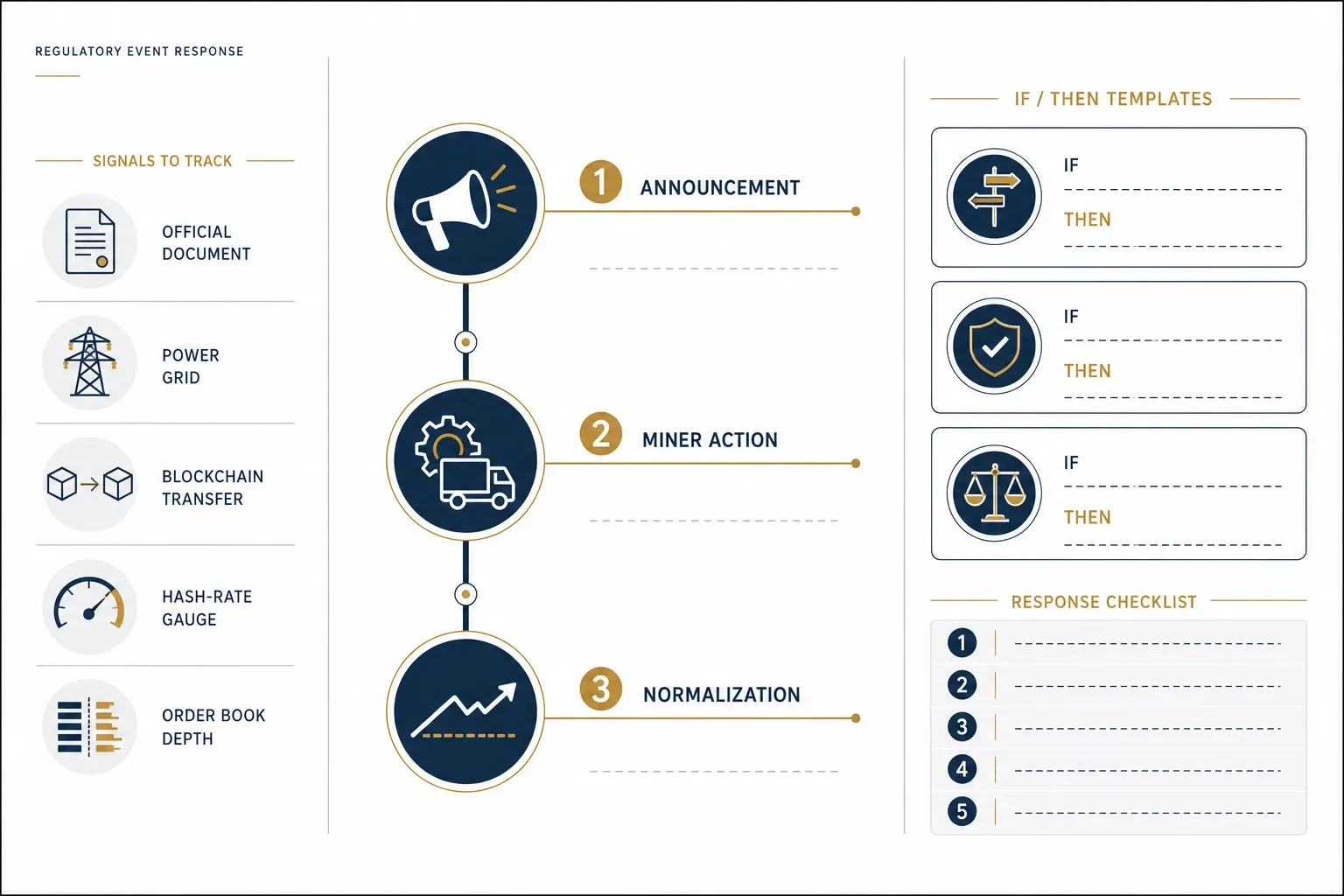
How Kazakhstan mining-policy reports change BTC’s short-term risk — an event-driven playbook
Reports that Kazakhstan considered mining rules tied to its national reserve highlight how jurisdictional policy can reallocate hash rate and create short-term BTC volatility. This playbook gives mechanics, if/then templates and a Regulatory Event Response checklist.
 2026-08-07
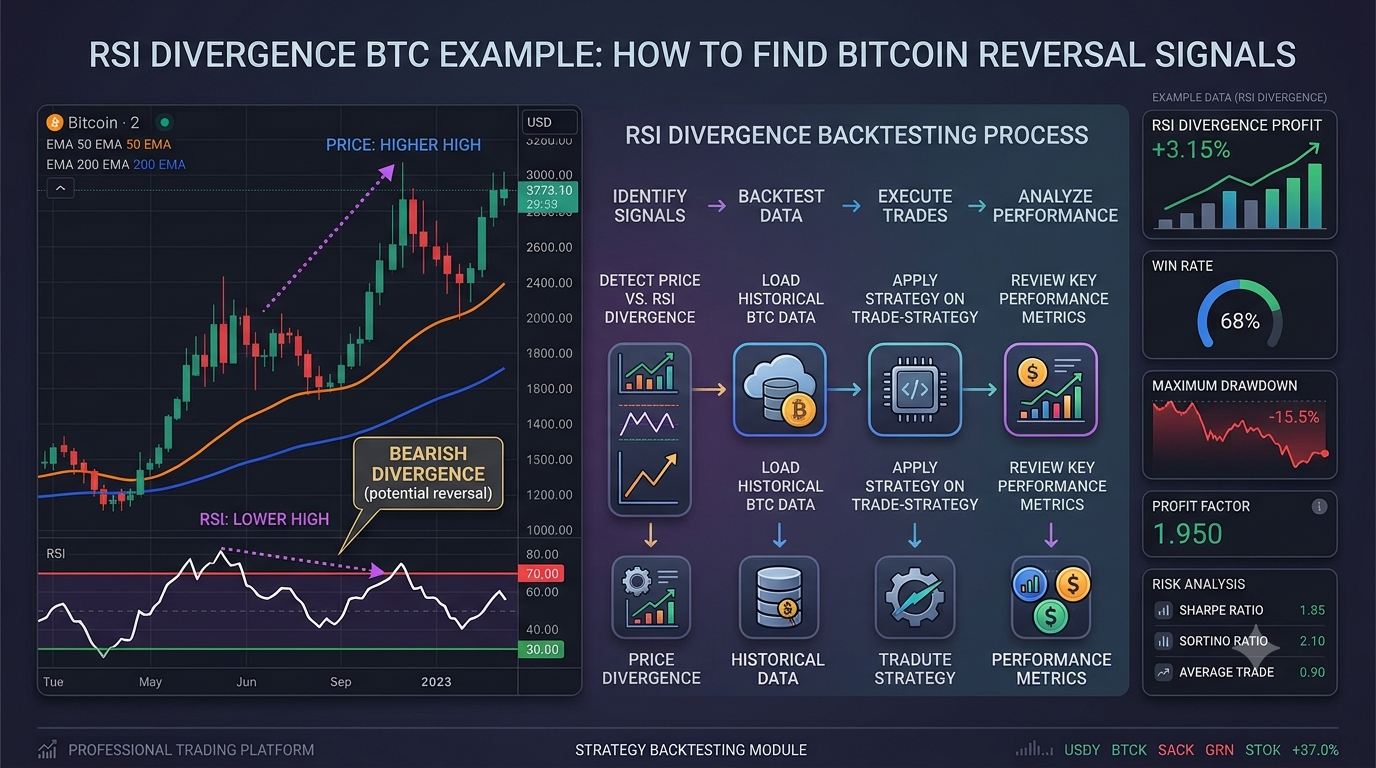
BTC Paper Trading Strategy: How to Test Bitcoin Trading Without Risking Real Money
Discover how BTC paper trading works and why every beginner trader should use simulation before risking real money. Learn how to build a Bitcoin paper trading strategy, analyze historical data, evaluate backtest results, and test your ideas using Trade-Strategy.