
Audit - Document - Compare: A step‑by‑day time‑of‑day performance audit for 24/7 markets
A reproducible, evidence‑first workflow for auditing strategy performance by hour in 24/7 markets: define sessions, tag trades, review hourly P&L, document rules, and compare variants. Use Elite AI recommendations as probabilistic decision support.

# Audit - Document - Compare: A step‑by‑day time‑of‑day performance audit for 24/7 markets
The traditional 9‑to‑5 banking day is fading. For traders running crypto or around‑the‑clock systematic strategies, that shift raises operational and performance questions: which hours produce the most reliable edge, when do liquidity and volatility hurt returns, and which rules should change for extended hours?
This article gives a reproducible, evidence‑first workflow you can run today: tag trades by session, review hourly P&L in the Historical Results Journal, document extended‑hours rules in Strategy Management, and compare session performance with Strategy Comparison. If you are on the Elite plan, the platform's AI‑powered recommendations can help prioritise which rule changes to test by analysing recorded results and strategy parameters as probabilistic decision support—not as guarantees.
## Why a time‑of‑day performance audit matters
Continuous markets amplify differences between local trading hours. Overnight and extended sessions can have lower liquidity, different counterparty behaviour, and distinct volatility regimes. Without a deliberate audit you risk:
- Misattributing losses to strategy design when time‑of‑day is the real driver
- Overfitting rules to a dominant session and losing edge during others
- Operational surprise during handovers or unattended hours
A short, repeatable audit answers where your strategy thrives, where it struggles, and which rules deserve prioritised testing.
## Step 1 — Define sessions and tag trades (reproducible setup)
Decide a session segmentation that fits your strategies and operations. Examples:
- Simple three‑block UTC segmentation (Asia 00:00–08:00, Europe 08:00–16:00, US 16:00–24:00)
- Exchange local day/night split (matching the exchange’s highest liquidity windows)
- Custom business hours vs. overnight for your desk
For reproducibility, record the session definition in Strategy Management as an assumption for the strategy. Tag every trade with the session it occurred in (a field or label in your trade record). Consistent tagging is the foundation for reliable aggregation and comparison.
Practical example: add a trade metadata field named `session_utc` and populate it at execution time or during import: `session_utc=US`, `session_utc=EU`, `session_utc=ASIA`.
## Step 2 — Aggregate hourly P&L in the Historical Results Journal
With trades tagged, use the Historical Results Journal to record and monitor historical results by session and by hour. Key checks to run:
- Hourly P&L heatmap across your backtest and live trades
- Win rate and average trade P&L by hour
- Drawdown incidence by session and hour
Make sure your journal entries include timestamps in a single timezone (UTC recommended) so hourly aggregation is consistent. Export or snapshot the results for records and to support change decisions.
Practical example: create a weekly report showing mean hourly P&L and standard deviation for each session. Look for hours where mean P&L is negative and volatility is high — those are candidates for rule changes or reduced sizing.
## Step 3 — Document extended‑hours rules in Strategy Management
Convert observations into formal rules and assumptions in Strategy Management. Effective documentation includes:
- The session definitions used for analysis
- Liquidity and execution assumptions (e.g., expected spread expansion overnight)
- Risk controls that apply only in specific sessions (reduced size, longer time‑in‑market limits)
- Monitoring and handover processes for live operations
Documenting these rules ensures repeatability and makes it easier to onboard team members or re‑run an audit after changes.
Practical example: for a strategy that loses money between 02:00–04:00 UTC, add a rule: "Reduce position sizing by 50% during 02:00–04:00 UTC until re‑tested" and record the rationale and data that motivated the rule.
## Step 4 — Compare sessions and strategy variants with Strategy Comparison
Use Strategy Comparison to test hypotheses: is poor overnight performance a function of size, signal filtering, or time‑in‑market? Save strategy variants (same core logic with different session rules) and compare them using recorded historical results.
Run comparisons focused on:
- Same strategy with and without session‑specific sizing
- Alternate filters or latency assumptions applied only to extended hours
- The effect of disabling trading during low‑liquidity hours
Document the comparison inputs and results in Strategy Management so the next audit can reproduce the test conditions.
## Step 5 — Prioritise changes with Elite AI recommendations (probabilistic decision support)
If you’re on the Elite plan, the platform’s AI‑powered recommendations can analyse your recorded results, trade history, and current strategy parameters to surface well‑justified suggestions for improvement. Treat these recommendations as decision‑support: they help you prioritise which rule changes to test first based on probabilistic evidence, not as guaranteed signals.
Use the AI recommendations to rank experiments (for example: sizing reduction test, signal smoothing, or session disablement) by expected information value. Then run controlled A/B tests using Strategy Comparison and record the outcomes in the Historical Results Journal.
## Practical testing cadence and governance
- Run the full audit quarterly or after material market regime shifts.
- Keep a changelog in Strategy Management with the rationale, expected impact, and test results for every rule change.
- Use small, timed A/B tests to reduce exposure while you validate hypotheses.
## Conclusion
The move away from a strict 9‑to‑5 day makes time‑of‑day analysis essential. A reproducible workflow—tag trades by session, aggregate hourly P&L in the Historical Results Journal, document rules in Strategy Management, and compare variants with Strategy Comparison—gives you evidence to act. If you use the Elite plan, AI‑powered recommendations can help prioritise which experiments to run, acting as probabilistic decision support rather than guarantees.
Start with a single strategy, run the audit once, and you’ll quickly see whether your edge is tied to specific hours. Repeat and document changes so the next cycle runs faster and produces clearer conclusions.
Try for free! https://trade-strategy.com
 2026-08-11
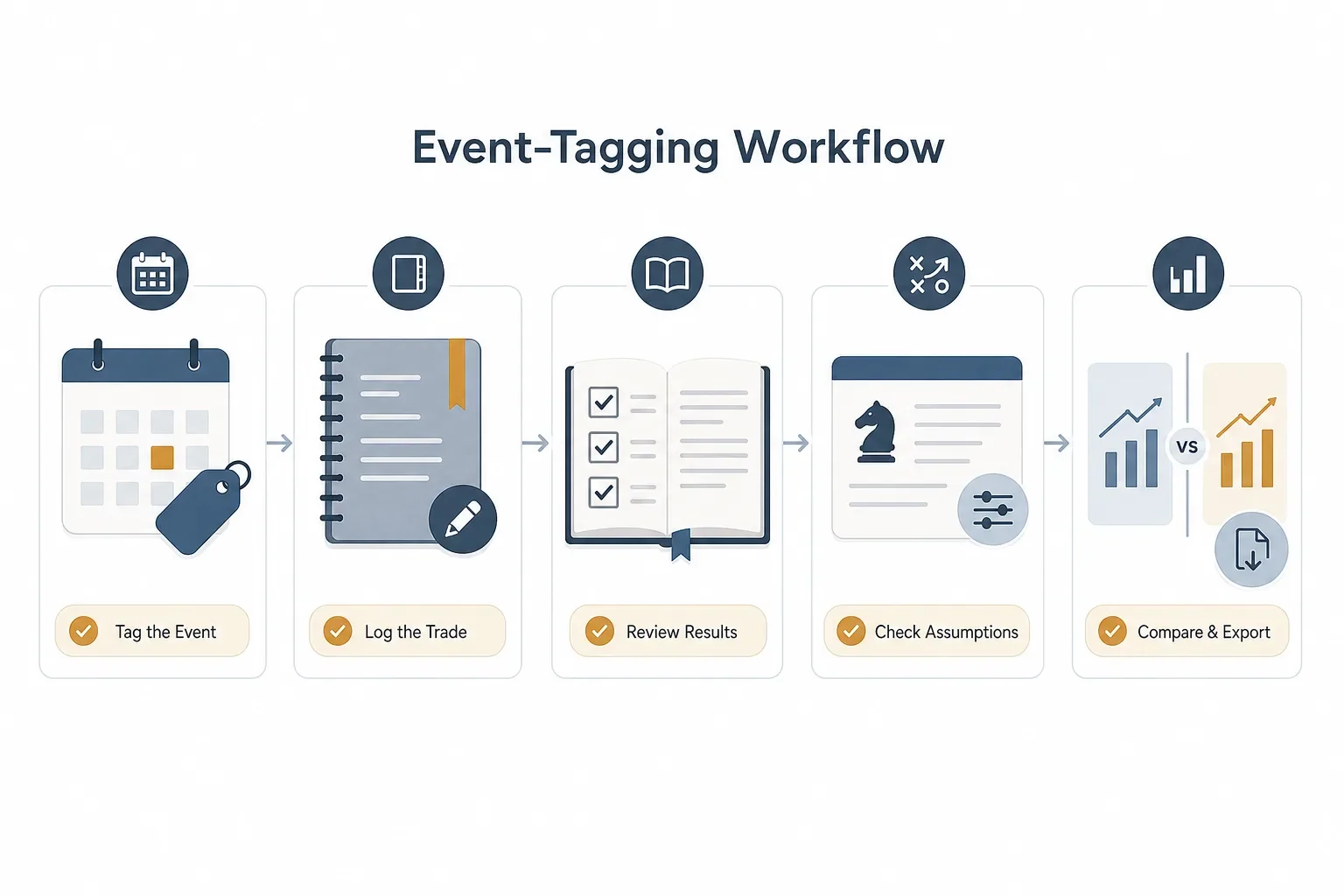
How to Audit Your Crypto Strategies After Earnings-Driven Volatility: A Step-by-Step Event-Tagging Workflow
A practical, step-by-step workflow to tag trades around earnings-driven crypto volatility, record outcomes in a Historical results journal, and use Strategy management and Strategy comparison to spot resilient rules.
 2026-08-11
When AI Flows Cool and Crypto Breaks Out: A Practical Playbook for Regime-Shift Trading
A practical playbook for detecting and responding to regime shifts when AI-driven flows cool and crypto potentially breaks out. Steps to detect, tag, re-test and compare strategies using Trade Strategy's released features.
 2026-08-11
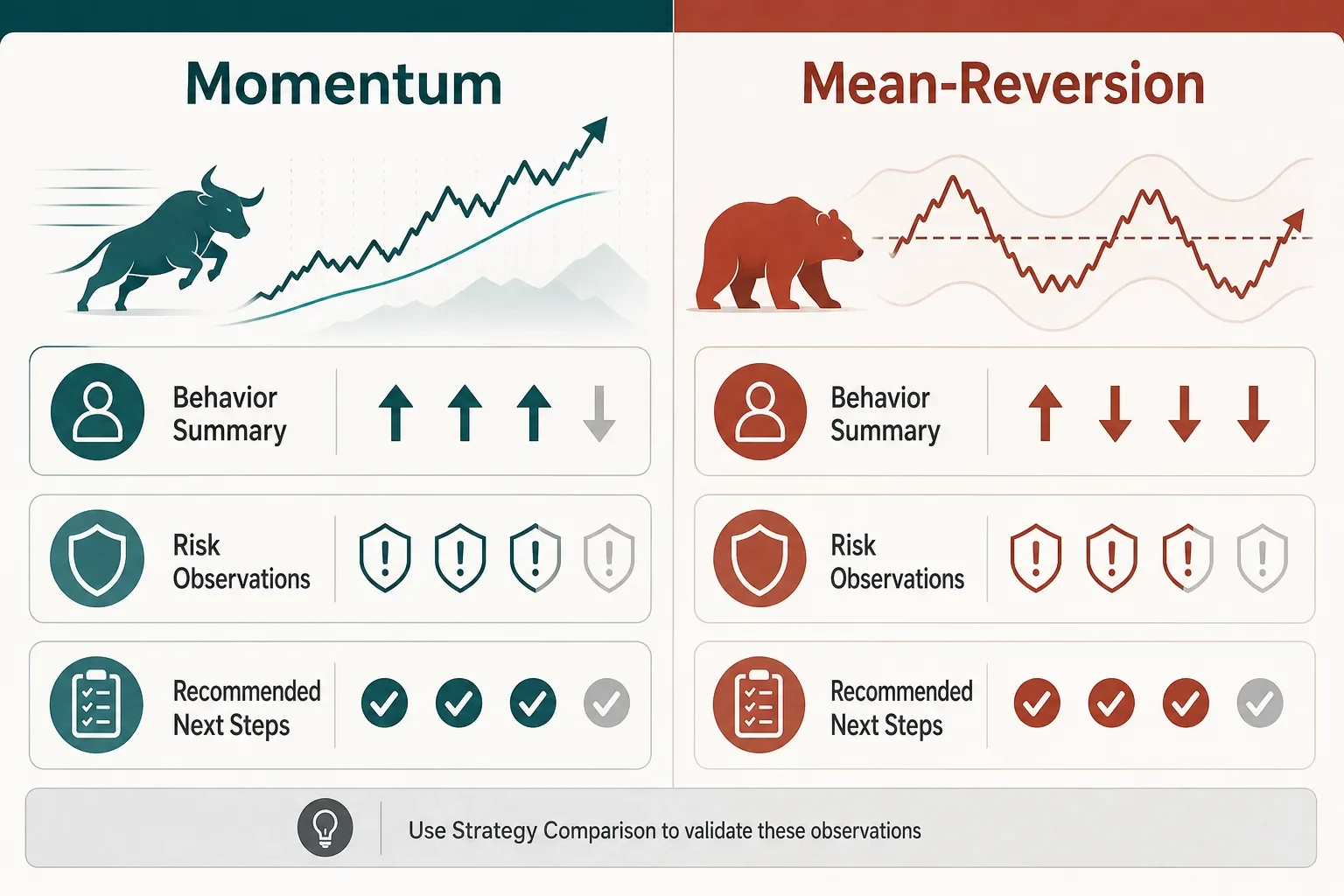
When Markets Decouple: A Trader’s Checklist for Post‑Event Strategy Reviews
A step‑by‑step playbook for post‑event reviews: capture hypotheses, tag trades by catalyst, log outcomes, and use Strategy Comparison to see what held up during the Korea chip crash vs. Bitcoin rally.